The food movement has succeeded in identifying and raising awareness about the vast environmental and public health risks inherent in the world's food systems. Still waiting for a clear path to sustainability, however, is what to do about it.


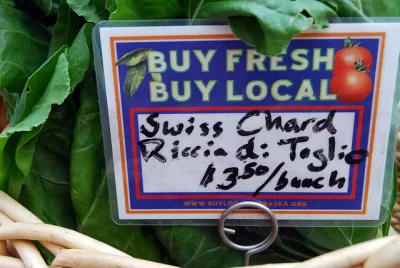
Tamar Haspal, food columnist for The Washington Post, argues a point that might be difficult for some food reform advocates to hear: "The food movement has a problem: It’s right about what’s wrong with our system, but wrong about how to fix it."
After defining the "food movement" as a "loose coalition of sustainability-minded people calling for the food system to be more focused on environmental and human health," Haspal makes the case that buying fresh and local won’t save us. The reasons for Haspal's skepticism about the reach of small, local, organic farms are four, with more detail included in the article:
- They don’t grow the right stuff.
- They can’t grow the right stuff.
- The land is in the wrong place.
- Seasons.
Haspal's column concludes with a call to action to the food movement to change its focus toward solutions in the food system that can make a much bigger difference.
FULL STORY: Why small, local, organic farms aren’t the key to fixing our food system


Crisis Could Result in a More Sustainable Food System
The food system, from supply to distribution and consumption, is undergoing a rapid transformation. Community supported agriculture could potentially benefit.

Op-Ed: Habitat III Should Consider Food Systems
The UN's Habitat III conference will be held in October of this year. Thomas Forster argues that urban areas are being considered in isolation, without enough attention to rural areas and food systems.
Study: Location Matters for Farmers' Markets
Research conducted in Flint, Michigan, found that changing the location of the local farmers' market had a dramatic effect in how residents shopped.

The state-sanctioned urbicide of Austin
People don’t kill cities. Freeways do.

US to reduce Colorado River water deliveries to Mexico
A new Colorado Treaty amendment reduces Mexico’s Colorado River water allocation by 250,000 acre feet.

New Jersey’s second-largest city bans standalone data centers
Jersey City will continue to allow co-location facilities, such as those meant for research institutions that store their own data.

Amtrak not solely to blame for New Jersey commuter rail's unreliability, report finds
A new study from the Garden State Initiative found that NJ Transit’s budget grew 20% across a 4 year period, but reliability declined significantly over the same period.

EPA erases limits on planet-warming pollution from power plants
Under Monday’s plan, power plants would still have some limits on how much mercury, arsenic and other contaminants they can emit.

Phoenix announces new on-demand transit service, more frequent RAPID buses
Both new services will launch in October, and are part of Phoenix's Project Effective Access Solutions for Easing Congestion.

FREE Course: Walkable City 1: Why Walkability?
After describing his path towards focusing on walkability as the essence of good planning, Jeff Speck marches through his five principal reasons for making more walkable places.
Reinventing Malls: Planning Alchemy—Turning Gray Fields Into Gold
The course focuses on the opportunities and imperatives that shape reinvention of mall sites.

Eagle County Government
Harvard University Graduate School of Design
Nashville Planning Department
The Architects Foundation
University of Cincinnati Online
The Pocatello Development Authority
The Urban Renewal Agency of the City of Pocatello
Journal of the American Planning Association