The 50th anniversary event had some inspiring moments, but the lack of audience engagement left much to be desired.



Half a century after Habitat I, the first United Nations Conference on Human Settlements, I joined delegates in Vancouver to attend the 50th anniversary event. I arrived eager to see what had become of the conference's ambitions, and to learn about the future of urban spaces. Unfortunately, I left Habitat-50 disappointed.
While the symposium taught me a good deal about Habitat I, and offered inspiring speakers, I heard very little about the future, and nowhere near enough about the practicable solutions that might exist to the intractable problems of our times.
What I saw were missed opportunities for solutions-focused thinking, participant engagement and diverse voices … and too many empty chairs.
Habitat was once a community-led, grassroots event
Alongside the official 1976 UN Habitat I conference that occurred in downtown Vancouver, the grassroots Habitat Forum unfolded eight-and-a-half kilometres away at Jericho Beach. Urban historian Trevor Boddy described how American draft dodgers, citizen activists and Vancouver’s counter-culture worked by kismet to transform the old military hangars into usable meeting spaces for the Habitat Forum; over the course of days, in the rain, working together with ingenuity and creativity.
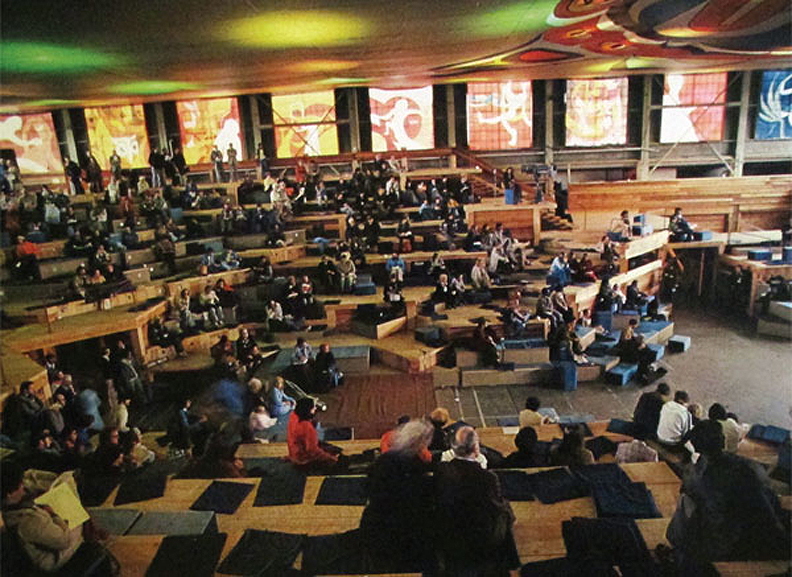
I know better than to declare 1976 a golden age of inclusion. Still, the recollections of the five panelists who had attended Habitat in 1976 suggested a thriving grassroots culture and little reason to defer to experts. It sounded like a tipping point, before the activism of the sixties had been fully sucked into the apparatus of government. How ironic, then, that for all intents and purposes, the Habitat-50 symposium had developed a program that was too full of speeches and panels to accommodate any dialogue with the people.
In 2026, participants are asked to leave their questions at the door
Habitat’s 50th anniversary celebration brought together an impressive collection of knowledgeable speakers. Many had devoted their working lives to housing, urbanism and social justice. Their contributions deserved attention.
But the predominant arrangement of the sessions was familiar: accomplished professionals delivering prepared remarks to a room containing other accomplished professionals, several of whom would shortly deliver scripted remarks of their own.
The problem with the symposium agenda was the cumulative arrangement of the prepared remarks. There was so much time reserved for delivering ideas and memories, so little for working them through together.
If you have attended conferences, you know the choreography. The speaker approaches the end of the allotted time. The speech does not. The moderator fails to intervene. Somewhere, the Q&A portion of the panel session quietly dies. And the break-out sessions for dialogue were entirely a figment of my own expectations — not present in the actual agenda for the two-day symposium.

At Habitat-50, audience participation depended on whatever minutes remained after the presentations had been completed, and after the moderator’s own questions had been asked and answered (sometimes, again, with scripted remarks). Rarely, we heard some questions from delegates. Sometimes, we merely rushed on to the next panel, or to a shortened break.
I wanted conversations in smaller groups: opportunities to test an idea, disagree, ask an unfinished question. Instead, we mostly listened. Participatory planning was among the subjects under discussion, which gave the format an irony I suspect nobody intended.
I have spent decades in municipal planning and professional organizations. I know the reassurance of an agenda and the seductive promise of one more presentation, one more knowledgeable speaker. Why leave anything to the unknown?
But when we discuss things like public engagement, surely our own gathering is a reasonable place to try some.
A room with room
The long, narrow room — the venue for the Habitat-50 Symposium — often looked, by my estimate, over half empty. Delegates came and went; many never picked up their lanyards, as if they had never come at all. At times, I thought at least three chairs in five were unoccupied.
The empty seats sharpened my discomfort. So much knowledge had been assembled. Who was it reaching?
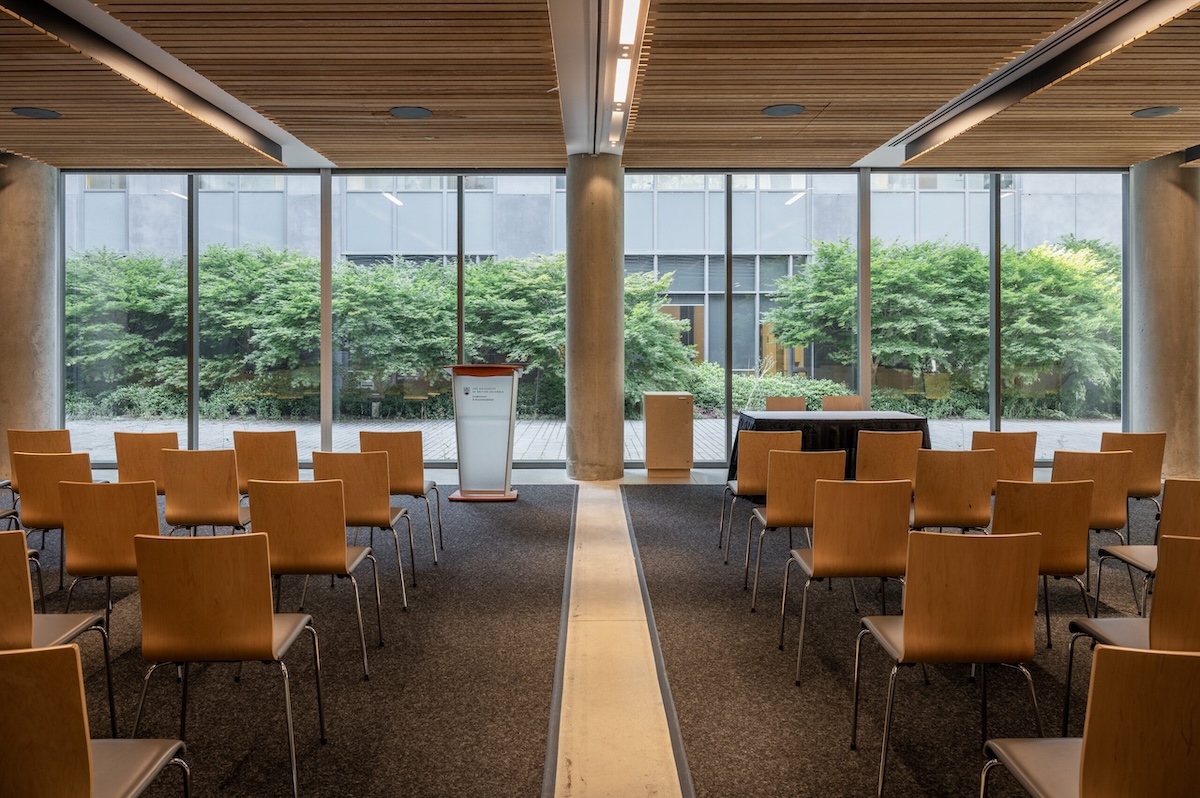
We were on a college campus (that of the University of British Columbia, or UBC) but largely missing were the youth voices, the students who may be ready to pick up the baton — to become our next generation of urban housing activists. The symposium often felt like an older generation speaking to itself.
Few Indigenous and international speakers were on the program. In retrospect, I saw they were clumped together on the agenda during one afternoon—a half-day which I missed, as I was teaching the next generation of urban planners on the other side of campus. On Day 2, I did hear from speakers who were working closely with communities facing housing insecurity, but I wanted to hear more diverse perspectives during the whole of the symposium: for example, the voices of people experiencing housing insecurity themselves.
Of course, experience and academic analysis matter. As Andy Yan said in his speech, “Diagnosis [of what has caused our housing crisis] is not in itself a solution, but it’s a precondition to finding a solution.”
And yet, an anniversary needs to better involve the many people who have a developing vision of how we will transform the future, who are not simply looking to the past. Habitat-50 needed the voices of those who will inherit its unfinished business. I wanted students dialoguing with the panellists, shaping the agenda for the future and helping determine what happens next.
Passing the baton requires loosening your grip.
Reasons to stay hopeful
During the parts of the two-day symposium that I could attend, I heard speakers who broke through the conference rhythm of prepared remarks. Alexandra Flynn (Director, UBC Housing Research Collaborative), Sara Stevens (Chair of Urban Design in the UBC School of Architecture and Landscape Architecture) and Lindsay Brown (a self-described writer, designer, and activist), as well as the aforementioned Trevor Boddy and Andy Yan, reminded me how compelling knowledgeable people can be when their presentations feel like an invite to the audience, a foray into a set of bright green ideas.
Moreover, organizer and UBC historian Eagle Glassheim brought a quiet thoughtfulness I deeply appreciated. A gathering does not need everyone to perform the urgency of our times at maximum volume.
The women and housing solutions panel was another highlight. Its focus brought the conversation close to the practical work of making sure our housing serves people in the here and now, and in the future. I wanted more time to explore what those experiences of housing real populations in need could teach the rest of us.
What remains undone from Habitat 1
Omar Siddique, Head of Office for UN-Habitat Canada, emphasized in his prepared remarks that many of today’s urgent concerns, including land speculation, were already on the table in 1976. We already have enough international commitments, he said. Implementation is the formidable task that stands ahead.
Penny Gurstein, professor emeritus and former director of UBC’s planning school, urged a return to the local level to bring about progress: “Get people engaged again.”
Yes. And while we’re lamenting the loss of all that grassroots energy, I thought to myself, could we make a little room for it here?
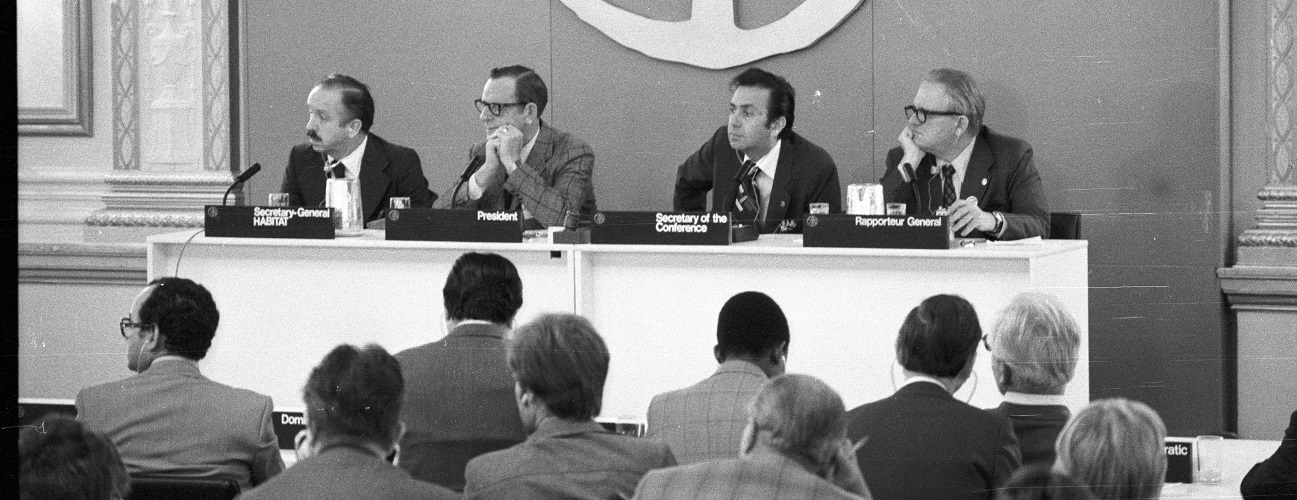
I would have welcomed shorter presentations, firmly moderated questions from the audience, then small-group discussions involving speakers and delegates together. Giving students responsibility. Inviting people living the housing crisis to help frame the questions. Paying for their time. Asking each group to identify something participants could actually undertake, and take with them into the future. An anniversary can honour those who started something while making room for people who might take it somewhere unexpected.
I left grateful to the people who had assembled the symposium, and frustrated because its subject deserved more liveliness. I also left with a recommendation from one of the panellists who had inspired me: to read Rebecca Solnit’s book, "Hope in the Dark." It felt apt. Hope for resolving land speculation and the housing crisis was available to us in that room. I wanted an opportunity to put it to work before we all went home.
—
Emilie K. Adin is the Immediate Past-President of the Planning Institute of British Columbia and Yukon, and an Adjunct Professor at the School of Community and Regional Planning at the University of British Columbia. Find out more about Emilie at emiliekadin.com.
Universities in Canada Have Been Developing Housing Near Campus for Decades
Universities in the Vancouver area and across Canada are developing housing and investing in amenities, and getting a return on investment that helps the bottom line

Transit leaders progress high-speed rail from Portland to Vancouver, B.C.
Washington state officials may reveal feasible routes for the high-speed rail in late 2027.

Budget constraints threaten light rail for Oregon, Washington’s new bridge
The current proposal includes only the infrastructure for the light rail, without funding for the train and tracks.

Planetizen Federal Action Tracker
A weekly monitor of how Trump’s orders and actions are impacting planners and planning in America.

Washington state to charge fee to drivers with fuel-efficient cars
Revenue from the fee will go towards supporting the state’s highways.

Illinois considers spending $1 billion in taxpayer money on data center
A quantum computing campus and data center are currently under construction in Chicago.

‘Demolition of our heritage:’ Some US tribes speak out against BAAJA
A coalition of indigenous groups in the United States are concerned about provisions in the bill that may weaken their ability to halt large energy projects.

How LA’s new mayor plans to tackle affordable housing crisis
Mayor-elect Nithya Raman has proposed overhauling the city’s permitting process.

Interactive map reveals Pennsylvania's abandoned oil, gas wells — many on residential property
It is difficult for residents to know if a well is near their home, or if it poses a threat to them.

FREE Course: Walkable City 1: Why Walkability?
After describing his path towards focusing on walkability as the essence of good planning, Jeff Speck marches through his five principal reasons for making more walkable places.
Reinventing Malls: Planning Alchemy—Turning Gray Fields Into Gold
The course focuses on the opportunities and imperatives that shape reinvention of mall sites.

City of Charlotte
City of Rosemead
Rutgers University, Edward J. Bloustein School of Planning and Public Policy
University of Michigan School for Environment and Sustainability (SEAS)
Hunter College, City University of New York (CUNY)
The Architects Foundation
University District Partnership

