Los Angeles has the nation's largest dog population, but a measly 14 dog parks. Adaptive reuse can help bridge this gap.


Planetizen is a place for all planners — current and future — to exchange ideas. This piece is part of an ongoing Planetizen series written by high-school students with an interest in planning issues.
The recreational needs of the Los Angeles community, whether two-legged or four-legged, are not being met. Los Angeles faces a persistent shortage and mismanagement of its parks: in the Trust for Public Land’s annual Park Score index, which measures public parks’ acreage, accessibility, investment, amenities and space equity in the 100 most populated cities in the United States, Los Angeles ranked 93rd. L.A. also faces a less recognized challenge: many of its existing green spaces are poorly matched to the needs of the surrounding communities. Rather than acquiring expensive new land, the city should look towards adaptive reuse: reconfiguring underutilized park assets to better serve current neighborhood needs.
One area where this mismatch between community needs and available parks is particularly apparent is dog recreation. Los Angeles is home to the country’s largest dog population, and yet has a measly 14 dog parks. The Los Angeles Recreation and Parks Department’s stated goal is increasing dog parks from 0.4 to 2.0 per 100,000 residents, a 400% increase. In an urban setting like L.A., finding the space for these new park assets is a huge challenge.
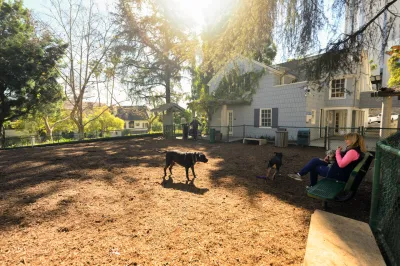
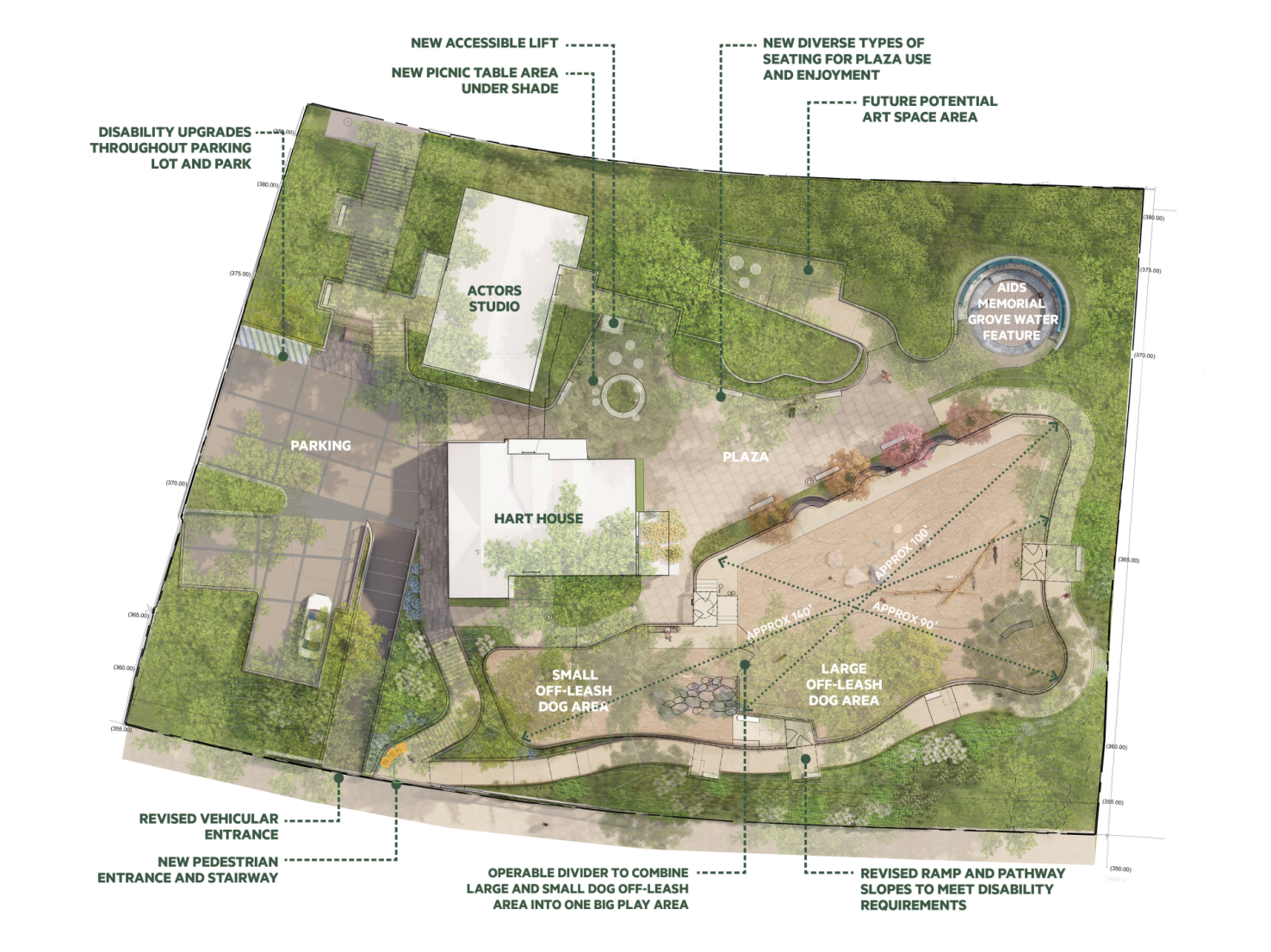
Despite the city’s shortage of park space, many existing parks remain underutilized, in particular smaller “pocket parks” that are often designed for passive recreation and do not match the needs of the surrounding neighborhood. A great example is Hart Park in West Hollywood, which sat neglected for 43 years before the city developed it into a dog park: The city created separate fenced-in play areas for large and small dogs, and added biodegradable wood chips as ground cover. After Hart Park’s transformation into a haven for dogs and owners, it “exploded to life” according to former West Hollywood Mayor and City Council Member Steve Martin.
The tragedy — and potential — of Selma Park
My field observations of Selma Park in Hollywood mirror this phenomenon. I decided for my high school Capstone project to "reactivate" this small, underutilized park that sits next door to my middle school campus. I reached out to a UCLA Urban Planning PhD candidate for advice, who suggested I approach the project from an Ethnographic angle by immersing myself in the culture of the park.
After conducting over a dozen hours of observation across more than 20 visits, I recorded zero child users. The park's most consistent users in past years have been individuals experiencing homelessness, until Los Angeles Mayor Karen Bass' Inside Safe program provided alternate accommodations for 61 unhoused people from the site in 2023. Now, the playground sits empty except for a few monitors from the Hollywood Partnership. Neighborhoods change, demographics shift, yet our parks stay stagnant.
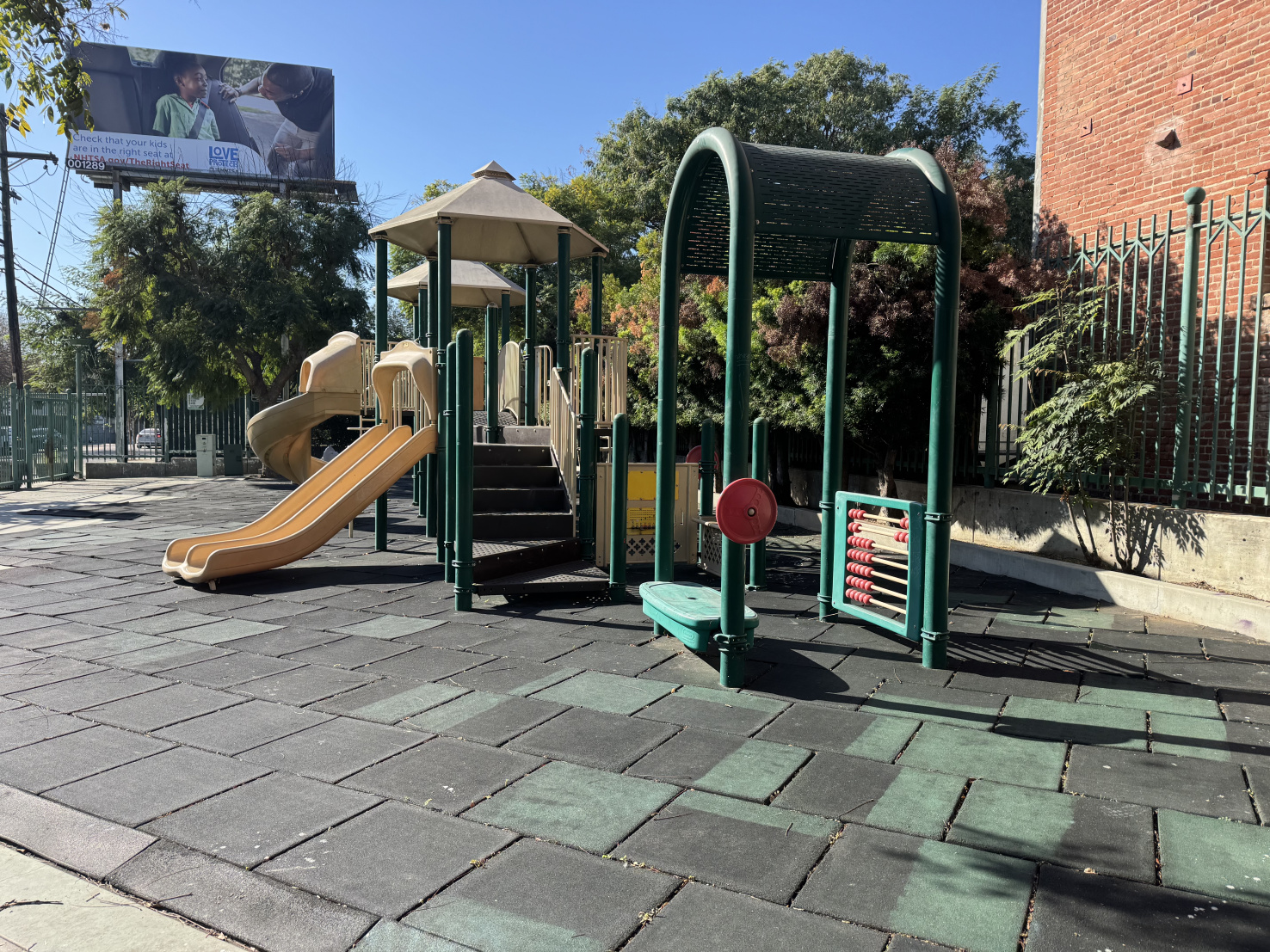
Selma Park would better serve its community as a dog park, and is my proposed pilot for a park-centered adaptive reuse program in Los Angeles. The park is already fenced, already has a secondary internal fence that allows for large and small dog separation and serves a neighborhood where the under-5 population has significantly declined since 1990. If the park was adapted into a dog park, it could explode to life in much the same way Hart Park did.
The human benefits of dog parks
Converting unused parks to off-leash dog areas is not about pandering to dogs over people. Dog parks strengthen our communities and social bonds by allowing people of different ages, genders, races and incomes to mingle and form bonds that may have never existed otherwise. Dog parks also address a practical reality: dog owners will exercise their dogs regardless of whether a designated space exists. As dog owners and non-owners alike struggle to find recreation space, clashes abound over owners flaunting leash laws and dogs showing up in inappropriate places. Providing safe off-leash dog parks improves compliance and lowers the risk of conflict and safety issues for everyone.
Just as planning experts call for larger underutilized areas like former landfills, airports and utility corridors to be converted into regional park attractions, underutilized pocket parks are prime targets for adaptive reuse closer to home. Los Angeles can identify pocket parks and playgrounds in neighborhoods with low child populations and high dog ownership, and convert them to off-leash dog areas using existing fencing and minimal modifications.
If the pilot works in Selma Park, the same model can be applied to underutilized parks citywide, and doesn't need to be limited to dog recreation. In neighborhoods with larger adult populations, underused playgrounds could be reconfigured into other much-needed amenities such as pickleball courts or community gardens, matching evolving community needs instead of trying to serve a population that no longer exists. Los Angeles has already set a goal, and adaptive reuse is the lowest-cost option to meet it.
—
Aysie Bower is a senior at Larchmont Charter School who conducted field research on Selma Park and authored a policy brief on adaptive park use. She hopes to study Public Policy and Urban Studies in the future.

Demise of Entertainment Industry Mirrors Demise of Housing in LA
Making movies has a lot in common with developing real estate: producers = developers; screenwriters = architects; directors = general contractors. The similarities are more than trivial. Both industries are now hurting in L.A.

Los Angeles Finalizing Three Long-Awaited Community Plan Updates
Los Angeles is poised to approve a trio of long-planned zoning code updates—for the neighborhoods of Boyle Heights, Downtown, and Hollywood—as the first test cases for a new citywide zoning code update known as re:code LA.
New Hollywood Community Plan Draft Released
One of the most controversial community planning documents in Los Angeles history was approved by the city in 2012 and thrown out by a judge in 2013. The new draft environmental impact report for the plan is now publicly available.

Planetizen Federal Action Tracker
A weekly monitor of how Trump’s orders and actions are impacting planners and planning in America.

Data reveals that NYC’s bet on congestion pricing has paid off
After almost two years of the program, reports show positive impacts on traffic and air quality and no disruptions to parking.

HUD modernizes 50-year-old manufactured housing framework
The Next Generation Manufactured Housing Action Plan establishes new energy-efficiency standards for manufactured homes, and new guidelines for anchoring them.

Data center backlash set to sway midterm elections
Data centers figure in state and federal races and are the subject of dozens of ballot measures.

Developers sue Mississippi landowners who object to pipeline through their land
Because the Federal Energy Regulatory Commission approved the pipeline project, the developer can use private land without the consent of the owner.

A gas leak in NYC is costing residents $300 million
More than 90% of NYC’s electricity is from natural gas. About 2% of that gas is leaking and escaping into the air.

FREE Course: Walkable City 1: Why Walkability?
After describing his path towards focusing on walkability as the essence of good planning, Jeff Speck marches through his five principal reasons for making more walkable places.
Reinventing Malls: Planning Alchemy—Turning Gray Fields Into Gold
The course focuses on the opportunities and imperatives that shape reinvention of mall sites.

One Hundred Miles
County of Mendocino
planning NEXT
The Architects Foundation
University of Cincinnati Online
Montrose County
Northern Illinois Transit Authority (NITA)
The Pocatello Development Authority

