Community / Economic Development
How Should Industry be Integrated Into the Urban Fabric?
Are we on the brink of a third industrial revolution? Guest 'PlaceShaker' Scott Bernstein thinks maybe, and looks to past successes for key patterns and ideas for injecting walkability into areas with industrial or 'special' uses.
The Newest Thing in Mobile Commerce: The Book Truck
Inspired by the food truck movement, book-publisher Penguin Group (USA) has rolled out two new book-buying venues: the Penguin Book Truck, and the Penguin Book Pushcart.
America's Most Effective Urban Revitalization Incentives Under Threat
The low-income housing and new-markets tax credits are two of the most effective tools for stimulating affordable housing creation and the revitalization of low-income neighborhoods. Don't let them fall victim to tax reform, argues Michael Rubinger.

Rebuilding in Flood Plains - It's Difficult to Resist
Reporting from Cedar Rapids, Iowa, where a 2008 flood devastated 14% of this city of 126,000, John Eligon writes of the extensive rebuilding that has occurred in the flood plain - largely without protection from future floods.
Teaching Urban Lessons from Rural Landscapes
Chuck Wolfe's photoshoot in the Palouse region of southeastern Washington State shows the timeless issues of human settlement, from agrarian to urban.
What Makes a City 'Global'?
In an era of mobile people and capital, the most ambitious cities position themselves as international players. By examining the 10 key traits of successful "global" cities, Brookings hopes to help local leaders "gauge their global starting point."
Should the World Follow America's Lead and Raise Property Taxes?
Unlike the United Sates, Canada, and Great Britain, few countries raise substantial revenues from property taxes. The Economist argues that property taxes are among the most efficient, stable, and progressive forms of taxation and should be embraced.
Paris Is What People Want; How Can We Make More of It?
Hazel Borys concludes her whirlwind European travelog. This week: a look at the DNA of Paris, and how to replicate it elsewhere.
A Framework to Assess the Hidden Costs of Big-Box Stores
A narrow approach to land use policy makes it difficult for communities to assess, and consider, the full impact of new big-box stores. But on Cape Cod, a regional planning framework allows the hidden consequences of big boxes to inform decisions.
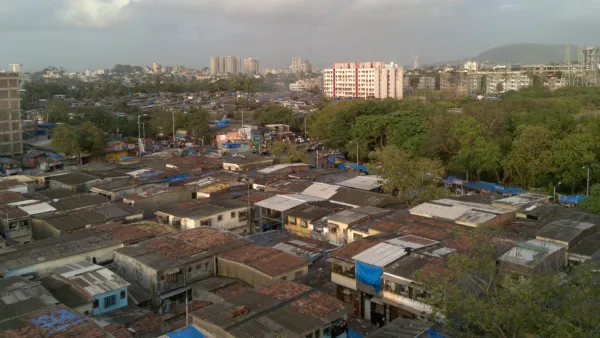
Is Urban Planning Effective in the Developing World?
A common question raised by those working in the developing world is whether urban planning is useful in those environments. Since questions often focus on planning of a comprehensive type, they overlook planning's intrinsic value and flexibility.
Beyond Zoning: Obstacles to Walkable Neighborhood Development
If the market demand is there, why isn't more mixed-use housing getting built? Follow the money.
Low Impact Streetscape Provides a Model for Main Street Revivals
Despite a prickly political atmosphere, the Seattle suburb of Bainbridge Island recently transformed the main artery of its town center, Winslow Way, in what author Mark Hinshaw, FAIA, calls “a really cool way.”
Can Mobile Homes Help Solve America's Affordability Crisis?
Homeownership is slipping out of reach for many Americans, caused largely by the lack of affordable housing inventory. There is a solution to the inventory shortage that many buyers, advocates and policymakers are overlooking: Manufactured Housing.
Does New Orleans Need a New Tourism Icon?
The centerpiece of a $500 million plan for redeveloping New Orleans' riverfront is an 'iconic' sculpture, replacing the empty World Trade Center tower. Roberta Brandes Gratz argues the city should focus on small steps instead of a tourism boondoggle.
How the Internet is Helping Cities in the Western World to Loosen Up
While cities in the developing world embrace the chaos and risk inherent in their informal landscapes, the Western world excels at regulation. But this dynamic is starting to change, to the dismay of incumbent industries and establishment regulators.
Utilize Existing Assets, Rather than Mega-Projects, to Revive America's Legacy Cities
A new report from the Lincoln Institute of Land Policy examines American cities suffering significant population losses, and concludes that investing in existing assets such as historic areas and transit systems offers the best path to prosperity.
What Makes Berlin’s Cultural Clusters Sing?
Last week, PlaceMaker Hazel Borys explored the comfortable charms of London. This week her whirlwind travelog continue with this study of Berlin's cultural clusters. Get your public space on!
Can New York's Most Suburban Borough Develop a Real Downtown?
Laura Kusisto looks at plans set to be unveiled this week for revitalizing Staten Island's north shore neighborhoods - one of the Bloomberg administration's top priorities in its waning days.
Divergent Views on the State of America's Cities; Can They Both Be Right?
Kaid Benfield discusses two influential new publications that posit very different takes on the state of America's cities. While he finds elements to agree with in both, Benfield ultimately finds himself an optimist when it comes to our urban future.

Zoning Our Way to HOA Insanity
If local's so great, why is the HOA, the country's most popular form of micro-governance, such an impediment to complete, complex and convivial communities? Scott Doyon has some ideas.

FREE Course: Walkable City 1: Why Walkability?
After describing his path towards focusing on walkability as the essence of good planning, Jeff Speck marches through his five principal reasons for making more walkable places.
Reinventing Malls: Planning Alchemy—Turning Gray Fields Into Gold
The course focuses on the opportunities and imperatives that shape reinvention of mall sites.

City of Rosemead
Rutgers University, Edward J. Bloustein School of Planning and Public Policy
One Hundred Miles
University of Michigan School for Environment and Sustainability (SEAS)
Hunter College, City University of New York (CUNY)
The Architects Foundation
City of Cambridge
Montrose County
The Pocatello Development Authority









