Community / Economic Development
Food Deserts Won't be Quenched by Mobile Markets
While mobile food markets can bring healthy produce to neighborhoods without grocery stores, their current model for driving food around cities is not financially sustainable.
Op-Ed: Billionaire Philanthropy Defeats Democratic Process
Following the splashy announcement of media mogul Barry Diller's plans to finance a $170 million park at Manhattan's Pier 54, a New York Times column renews the call for more equity in open space around New York City.
Cyber Monday: A Placemaker's Case for Character-Rich Retail
As the shopping season begins, can the satisfaction associated with little shops cause us to be resilient and spend a little less? Maybe we should ease up on our zoning restrictions, and at least make it possible.
Congressional Inaction Will Trigger Virginia Gas Tax Increase
Virginia's new 3.5% wholesales sales tax on motor vehicle fuels is set to increase to 5.1% on Jan.1, not because Congress failed to raise the two-decades-old federal gas tax but for something entirely unrelated to transportation: online sales taxes.
Keeping the Jobs In House
Humboldt Construction Company, a wholly owned subsidiary of a Chicago CDC, has been providing local employment and high-quality work for over 30 years.
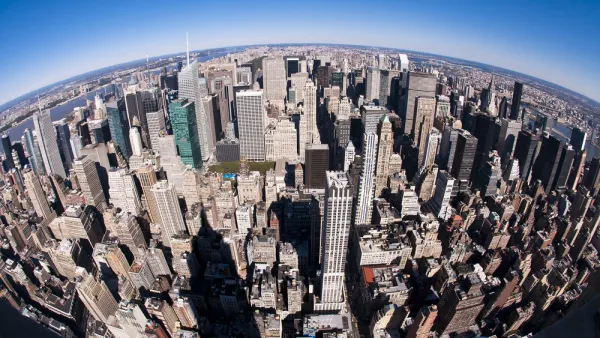
London School of Economics: Cities Should Adopt '3C Model' for Growth
A report from the London School of Economics focuses on the growth of cities around the world between 2012 and 2030, proposing a "3C model" for growth to ensure economic prosperity and to limit emissions.
After the Streetcar: What Next for Arlington Affordable Housing, Transit?
A collection of media coverage since the decision examines how Arlington will achieve its goals now that it voted to end funding for a $333-million plan to build a 7.4-mile streetcar line down Columbia Pike.
Historic, Green, Affordable, and at (Some) Scale?
Iberville Offsites received the 2014 National Trust/HUD Secretary’s Award for Excellence in Historic Preservation for restoration of homes as low-income affordable housing
Cincinnati Hopes to Stay on a Roll with New Development Director Oscar Bedolla
Cincinnati recently hired Oscar Bedolla as its new trade and development director. Bedolla will play a key role in facilitating development in a city hoping to maintain its current upswing.

60 Minutes Examines America's Failing Infrastructure
Steve Kroft of 60 Minutes reviews road, rail, bridges, and ports to see how much investment is needed to improve the country's infrastructure, beginning in Pittsburgh and ending at a key Amtrak rail bridge in New Jersey.
Land Trusts: the Middle Ground of Housing
The Boston Globe recently ran an op-ed in support of community land trusts and inclusionary housing, which was penned by the National Housing Institute/Shelterforce and the Lincoln Institute of Land Policy.
Disappointment, Pessimism, Rage: Is this America at Middle Age?
Community conversations often devolve. Could it be partly due to the "midlife crisis" of the North American demographic? Can we look forward to a time of more social connectedness in the next decade, as we recalibrate to less "me," more "we?"
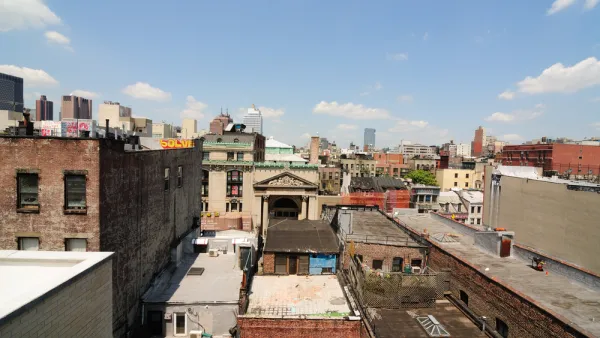
Managing the 'Uneven Growth' of the Urban Boom
A new exhibit at the New York Museum of Modern Art examines the growing pains of urbanism's ascendance.
Focus on Scale-Up, Not Start-Up
Jose Corona of Inner City Advisors urges: to truly transform local neighborhoods, we must shift our attention to invest in enterprise scale, not start-ups, as a long-lasting solution for creating good jobs.
Inglewood Mayor Rebrands a City Once Known for Crime
James Butts is committed to turning Inglewood around, with economic investment and property development now on the rise.
Selling Urbanism: Don’t be an Aristarchus
As urban planners, we must not only innovate, but make our innovations count in the marketplace of ideas. We must make the benefits of livability easily understood, with a clear path for making them happen. Scott Doyon encourages rooted innovation.
Shadow Transnationalism and Planning
The Chester Rapkin award goes to University of Oregon's Gerardo Sandoval for work on the impact of transnational communities and planning.
Whole Foods Moving into a Food Desert in Chicago's Englewood Neighborhood
Why would Whole Foods—a company colloquially known as "Whole Paycheck" and as a staple of wealthy neighborhoods—open an 18,000-square-foot location in one of the most impoverished parts of Chicago?
How D.C.'s Historic Buildings—Some in Danger—Enrich its Neighborhoods
Historic buildings add character to neighborhoods. When torn down, pieces of history are also stripped from the city; when restored, they can act as catalysts for revitalization.
Cities Dominating the Economic Recovery
The affordability crisis and congestion are just two of the signs of the dominance of cities in the economic recovery, according to an article in the Washington Post. In fact, outside of cities, it doesn't look much like a recovery at all.

FREE Course: Walkable City 1: Why Walkability?
After describing his path towards focusing on walkability as the essence of good planning, Jeff Speck marches through his five principal reasons for making more walkable places.
Reinventing Malls: Planning Alchemy—Turning Gray Fields Into Gold
The course focuses on the opportunities and imperatives that shape reinvention of mall sites.

KFH Group Inc.
Greater Baltimore Committee
Eagle County Government
The Architects Foundation
University of Cincinnati Online
The Pocatello Development Authority
The Urban Renewal Agency of the City of Pocatello