It’s tempting to write off the havoc that data centers are wreaking in communities across the country as an IT problem. The truth? It’s a planning problem.



This article is part of an ongoing column on AI and planning by urban planning professor and AI expert, Tom Sanchez. Learn more about Tom and read more installments of his column.
ALSO: Tom’s new book Artificial Intelligence for Urban Planning was recently published by Routledge. The book discusses how planners can effectively use AI in their daily practices, engage constructively with technical specialists, and critically assess the appropriateness of these technologies in different planning contexts. Check it out.
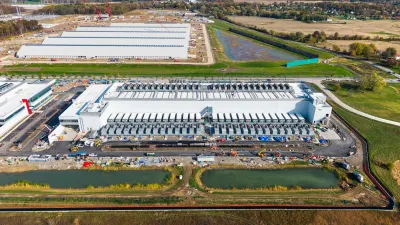
I was recently working on a presentation on AI for urban planning, and as I asked ChatGPT to suggest some graphics to include, I started thinking about how and where all of the processing was happening that made this possible. I’ve been hearing more and more about the warehouses full of computers that draw huge amounts of power and water to process these requests. I’ve spent a lot of my time recently focused on the application of these technologies for planning our communities, and not enough time on their physical footprint. And that footprint is growing at a staggering rate.
As planners, we’re experts on the impacts of traffic congestion, climate change, and housing affordability. But as with these areas of concern, it’s important to apply the same critical eye to the infrastructure of the digital age. The “cloud” is expanding all around us in a wave of industrial development that presents one of our most profound, and often invisible, planning challenges.
So, what exactly is the problem?
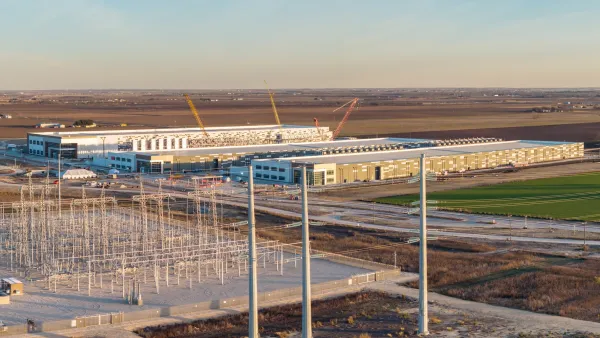
A data center is essentially a very specialized, hyper-intensive factory. It absorbs, fabricates, processes, and stores data. And like any factory, it has inputs and outputs. Some of the inputs are immense amounts of electricity and water. The outputs are heat, carbon, and a strain on local grids that is becoming more and more apparent – and concerning.
The numbers are becoming hard to ignore. The International Energy Agency (IEA) reported in late 2025 that data centers, cryptocurrencies, and AI collectively consumed about 460-500 terawatt-hours of electricity globally in 2024, which was about 2% of total global demand, and that this could double by 2027. That’s the equivalent of adding the entire electricity demand of Japan. By one account, training a model like ChatGPT-3 was equivalent to the electricity used by about 120 U.S. homes in a year (OpenAI will not state how much power was needed to train ChatGPT-5). The catch is that in many regions, often the ones with cheap land and available grid capacity, that power still comes from fossil fuels. Based on estimates I’ve seen, a single data center campus would have an annual carbon footprint equivalent to the emissions of about 80,000 passenger vehicles in a year. This is quite a challenge for any planner trying to reconcile a climate action plan with their community’s digital (or economic) future.
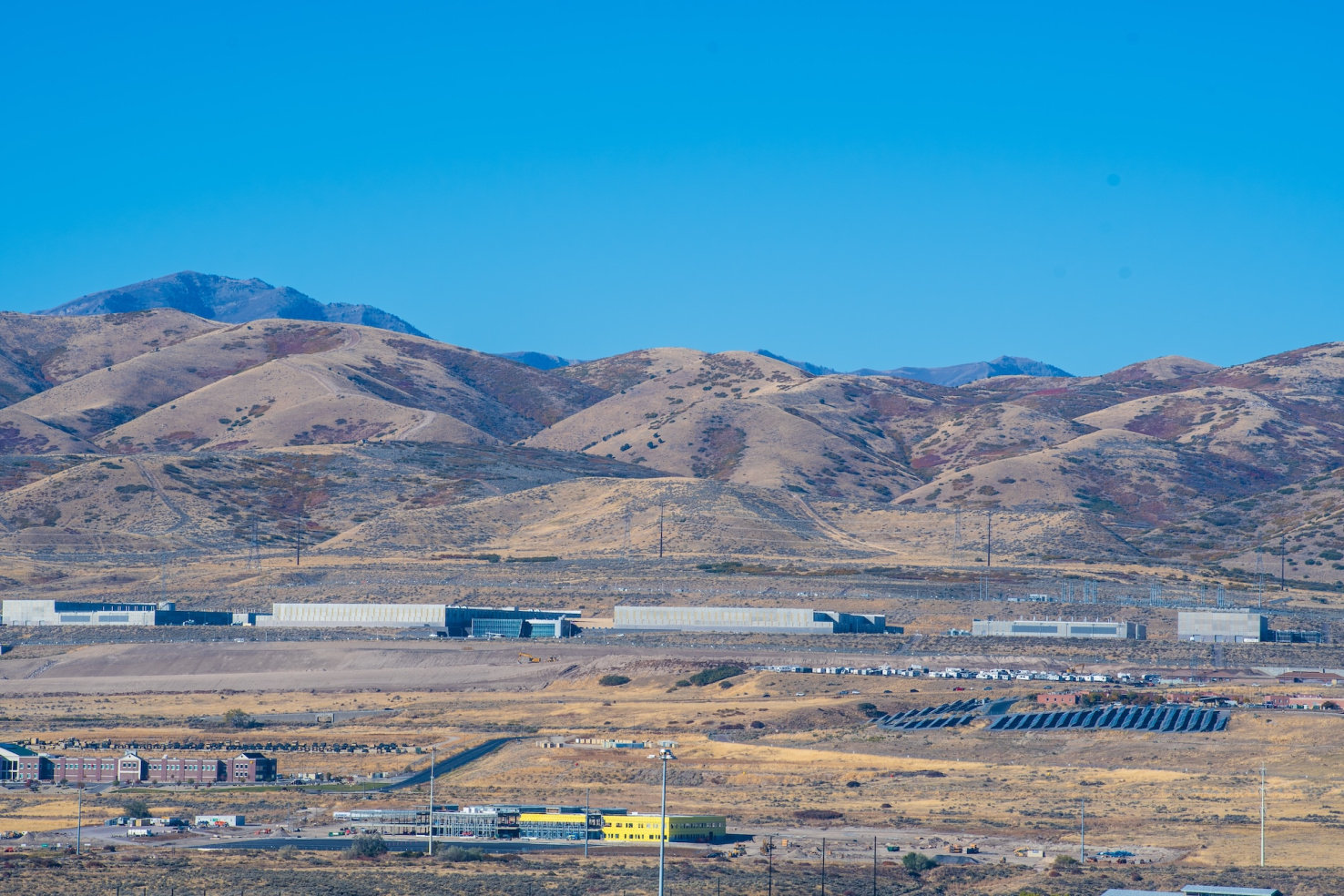
Then there’s the cooling involved. All that heat from the servers must be managed, and many facilities rely on evaporative cooling. In a 2024 report, the Uptime Institute noted that, despite efficiency gains, water use remains a "critical and growing issue," with large facilities consuming millions of gallons per day.
From a trust perspective, the Uptime Institute also reports that communities are likely to become more skeptical as water use becomes more visible, particularly in water-stressed regions. The lack of standardized water metrics and clear disclosure creates a credibility gap, making it harder for the industry to demonstrate responsible stewardship. In short, rising water demand combined with weak transparency threatens public confidence, not because water use is inherently unacceptable, but because it is insufficiently measured, explained, and governed.
The local impacts: It’s a land use issue, after all
Beyond the global stats, this boom lands on the desks of our local planners as a very tangible, and often contentious, land use challenge. And communities are starting to push back, but the concerns aren't the typical NIMBY variety. There’s very little traffic from employees. Instead, people talk about the constant, low-frequency hum that permeates neighborhoods, along with the power and water concerns, all for few permanent jobs. The tax revenue is seductive for some city councils, but the community benefit feels abstract, while the costs feel very local and visceral. Just look at the ongoing debates in places like Loudoun County, Virginia ("Data Center Alley"), where officials are now grappling with stricter zoning and environmental reviews after years of rapid expansion.
In addition, the search for cheap land and power is changing rural and exurban landscapes. I’ve driven through some rural counties where the data centers have taken the place of farm operations seemingly overnight. At the same time, there is concern expressed about this boom in building centers as it relates to the “AI bubble” and the possibility that the hype will not play out the way the AI companies are making it sound. According to Dr. Laura Schmahmann, who is researching these trends, “Data centers can generate substantial tax revenue that is very attractive to cities and counties in economically distressed areas. However, we don’t yet know the long-term implications of accommodating these data centers. For example, who will have to foot the bill for the infrastructure if the AI bubble bursts and demand for data centers drops?” Her perspective comes from not only her research, but also nearly a decade as a practicing planner.
With the hope of a booming tax base, it could create a monoculture of an industry with a low number of jobs per acre and stressed infrastructure. A July 2025 article in the Wall Street Journal detailed how data centers are causing utilities like Dominion Energy in Virginia to significantly revise peak load forecasts upward, potentially delaying coal plant retirements and raising costs for all ratepayers. This isn't just about a site plan; it's also about the regional grid capacity.
What’s a planner to do? Moving from reaction to strategy
We can’t stop technological progress. But we can and must plan for it intelligently. “The problem is that data centers, like energy infrastructure and mining, are being concentrated in particular areas, which are not where the consumers are. So it’s more about communities being prepared for it, if or when it comes,” commented Schmahmann.
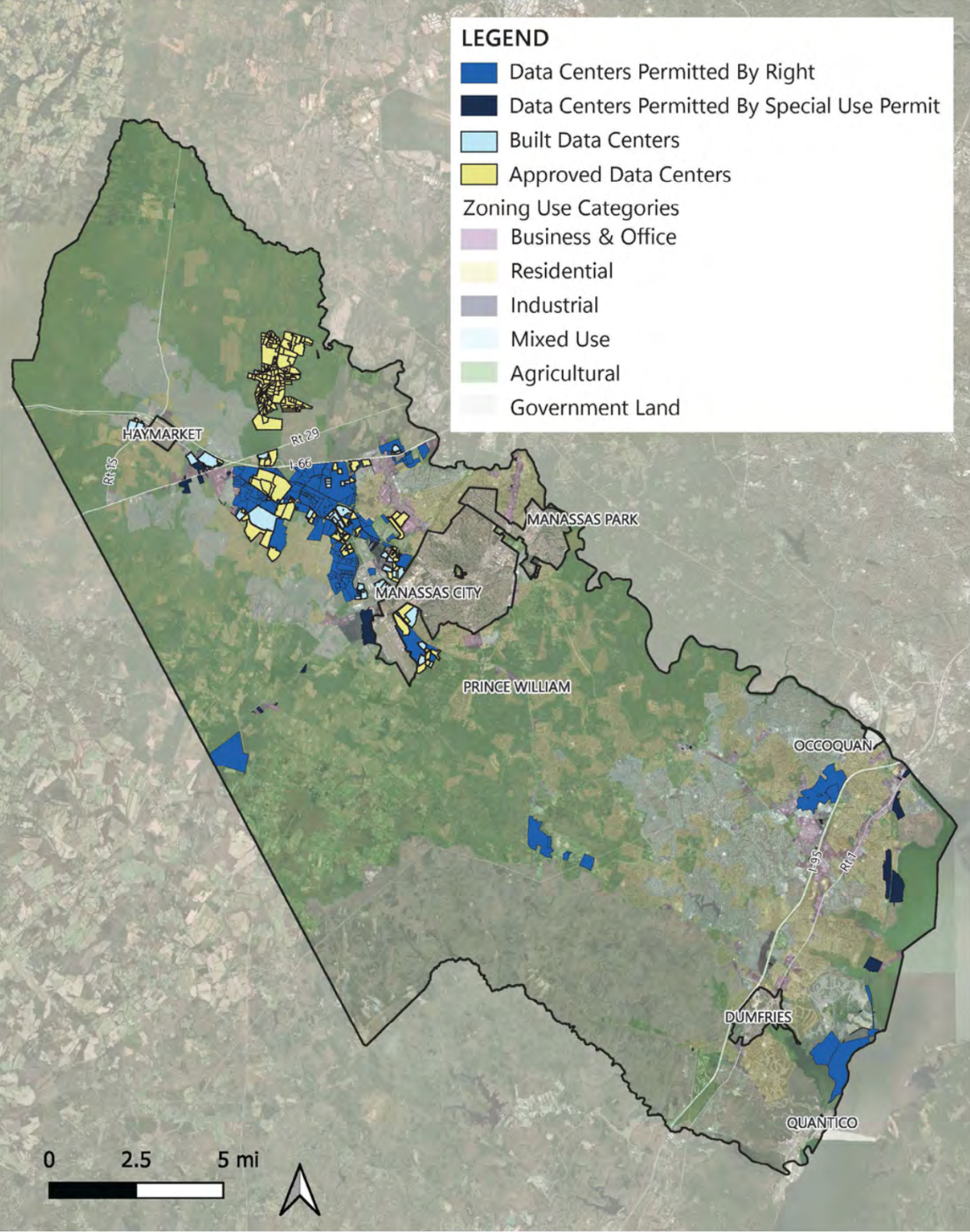
First, we have to get our own house in order. Most zoning codes treat a data center the same as a lightweight storage warehouse. This is a problem in itself. We need to create a specific “Digital Infrastructure” use category that requires a conditional use permit that allows us to ask the hard questions upfront. There should also be a demand for projected water consumption and source, the peak energy demand, and a commitment to using new, local renewable energy. We need to know their noise profiles as well as if they’ve designed for waste heat capture. Prince William County, Virginia, for example, recently adopted new zoning rules requiring developers to demonstrate compatibility with community goals for decarbonization and water use.
This leads to what I find to be a very interesting part of this puzzle, the opportunity for circular thinking. Up to 40% of a data center’s energy is dissipated as low-grade heat. Instead of wasting it, could that heat be used to warm adjacent greenhouses, apartments, or a district energy system? Microsoft, for example, has been piloting projects in Europe where data center heat warms nearby homes. Other research is examining the capture of waste heat to be strategically integrated as part of new mixed-use eco-districts, with waste heat becoming a community asset. That’s the kind of integrated, visionary planning we should be driving, not just reacting to proposals for isolated, fortress-like compounds or campuses.
The bottom line for practitioners
My personal takeaway from a recent dive into this issue is that the environmental challenge of data centers isn't a problem for the IT department. It’s very much a planning problem. It’s a direct result of the digital services on which we, our cities, and our residents are increasingly dependent.
Planners’ unique role is to bridge the virtual and the physical. We have the tools, like comp plans, zoning codes, design guidelines, and the public process, to ensure this critical infrastructure is sited thoughtfully, managed sustainably, and integrated in a meaningful way. Planners can help to protect the public and our communities from the vast expansion of the cloud.
So, the next time you (and I) use an AI tool to suggest language for a report or a graphic for a PowerPoint presentation, we should take a second to think about where that processing happens or is happening. We should consider the full range of impacts involved with making all of this happen.
–
I want to thank Dr. Laura Schmahmann, for her insights and thoughts for this column. She is an Assistant Professor of Landscape Architecture and Urban Planning at Texas A&M University.
Sources & Further Reading for Planners:
International Energy Agency (IEA), "Electricity 2025" Report.
Jones, Emma Strubell et al., "Energy and Policy Considerations for Deep Learning in NLP," Joule (2020).
Uptime Institute, "Global Data Center Survey 2024."
The Wall Street Journal, "Who Pays? AI Boom Sparks Fight Over Soaring Power Costs" (July 2025).
Microsoft, "Datacenter Heat Reuse" case studies.

Planning Trends for 2026: States and Cities Take Initiative, Passenger Rail Gains Steam, and the Costs of AI Revealed
With federal funding for everything from transportation projects to housing assistance under threat, city and state governments are poised to take a stronger role in building strong, resilient local economies and public services.
Texas bars data centers from raising utility costs for residents
Gov. Abbott is calling on the state's utility regulator to take steps to reduce energy costs for consumers and ensure data center operators pay for any added costs.

Virginia officials end support for proposed data center next to Civil War battlefield
The proposal for a 2,100-acre site in Prince William County has been in dispute for years.

Planetizen Federal Action Tracker
A weekly monitor of how Trump’s orders and actions are impacting planners and planning in America.

Data reveals that NYC’s bet on congestion pricing has paid off
After almost two years of the program, reports show positive impacts on traffic and air quality and no disruptions to parking.

Denver is solving homelessness. Why aren't the rest of us?
Since 2023, Denver's street homeless population has decreased by 64%, proving that effective tools exist to support those in need of housing.

Will sprawl save California?
California residents will vote on Proposition 45 in November, which would make it easier to build large housing developments on the outskirts of the state’s cities.

Texas suburbs are popping up around old oil wells. Some are starting to leak
Several plugged wells in Texas have failed in recent years, endangering those who unknowingly settled nearby.

This Chicago neighborhood is using planning to increase life expectancy
The Garfield Park Quality-Of-Life Plan aims to bring residents everything from easier access to fresh food to revitalized commercial corridors.

FREE Course: Walkable City 1: Why Walkability?
After describing his path towards focusing on walkability as the essence of good planning, Jeff Speck marches through his five principal reasons for making more walkable places.
Reinventing Malls: Planning Alchemy—Turning Gray Fields Into Gold
The course focuses on the opportunities and imperatives that shape reinvention of mall sites.

Rutgers University, Edward J. Bloustein School of Planning and Public Policy
One Hundred Miles
County of Mendocino
The Architects Foundation
University of Cincinnati Online
Montrose County
Northern Illinois Transit Authority (NITA)
The Pocatello Development Authority

