The Missouri Department of Transportation will adhere strictly to a "fix it" (as opposed to "fix-it-first") policy for the next five years, because there are no funds for roadway expansion.


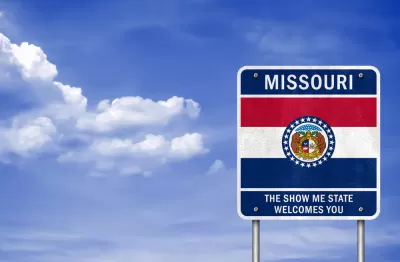
"For the first time in its history, MoDOT will not have enough money to expand roads or build new interchanges," writes Garrett Bergquist, reporter at KRCG in New Bloomfield, Missouri. "MoDOT Chief Engineer Ed Hassinger said Tuesday the agency's new five-year plan only envisions routine maintenance such as pavement repair or bridge deck replacements."
MoDOT's construction budget for Fiscal Year 2016, which began July 1, is $600 million. Three years ago, it was $1.3 billion.
Hassinger said if MoDOT doesn't get any more funding by the next budget year, it will be unable to match funding derived from the federal gas tax.
According to the July 2 MoDOT news release, "(t)he total number of projects in this Statewide Transportation Improvement Program's five-year highway and bridge construction schedule is 577. That's a decrease of 246 projects from last year's final STIP."
It's not for lack of trying by the legislature that transportation funding is at such a low point. Here are recent attempts and outcomes chronicled in Planetizen:
- May, 2014: Legislature votes to put transportation sales tax measure on ballot after overriding Gov. Jay Nixon's veto of a cut to the state income tax. Reducing the income tax while raising the sales tax may have influenced the election outcome
- August 5, 2014: Voters reject .75 percent transportation sales tax measure by 59 percent.
- April 2015: Legislation proposed to raise gas tax by six cents over three years.
- April 2015: Bill is changed to two cents for one year, then "Senate Majority Leader Ron Richard said that he doesn't want to waste more time on the bill."
What's next?
"Hassinger said a sales tax is likely a non-starter, so a gas tax is probably the most viable funding option," writes Bergquist, who adds that in neighboring Iowa, Republican Governor Terry Branstad signed a bill in February to increase the gas tax by 10-cents effective March 1, the largest increase since Republican Governor Matt Mead of Wyoming signed a 10-cent hike in February 2013.
The Iowa example provides fodder for highway expansion opponents who may argue against hiking the gas tax after the Iowa Transportation Commission in June funded significant roadways expansions as opposed to concentrating on "fix-it-first". However, the state DOT head "admits that the highway system is overbuilt."
Missouri's 17.30-cents state gas tax was the fifth lowest in the U.S. as of April 1 according to the American Petroleum Institute [PDF]. According to the Institute on Taxation and Economic Policy, the gas tax was last increased 19 years ago.
Hat tip to AASHTO Daily Transportation Update.
FULL STORY: MoDOT says not enough money for new construction projects

Post Peak Driving, America Needs a Road (Construction) Diet
Though it may be too soon to say for sure, it looks like the United States has reached peak driving. So shouldn’t we cut back on new road construction?
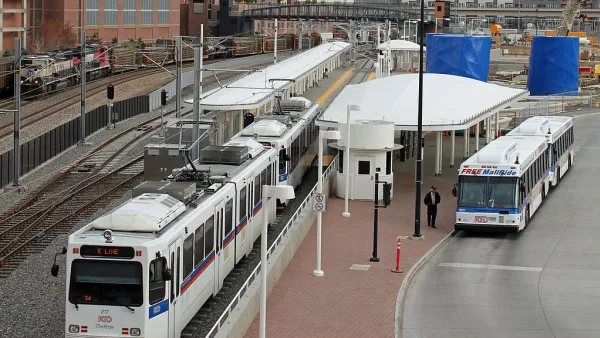
Denver Faces Light Rail vs. Bus Decision
The financial data is clear: BRT costs much less to go further and serve far more riders. Case closed, or is it? The Denver Post editors look at HNTB's cost and ridership estimates for the Northwest Rail Line and offer a recommendation, sort of.
Follow Planetizen’s analysis of surface transportation reauthorization
Follow along as we explore the upcoming surface transportation reauthorization bill and its potential impacts on US transportation infrastructure in the coming years.

The state-sanctioned urbicide of Austin
People don’t kill cities. Freeways do.

US to reduce Colorado River water deliveries to Mexico
A new Colorado Treaty amendment reduces Mexico’s Colorado River water allocation by 250,000 acre feet.

New Jersey’s second-largest city bans standalone data centers
Jersey City will continue to allow co-location facilities, such as those meant for research institutions that store their own data.

Amtrak not solely to blame for New Jersey commuter rail's unreliability, report finds
A new study from the Garden State Initiative found that NJ Transit’s budget grew 20% across a 4 year period, but reliability declined significantly over the same period.

EPA erases limits on planet-warming pollution from power plants
Under Monday’s plan, power plants would still have some limits on how much mercury, arsenic and other contaminants they can emit.

Phoenix announces new on-demand transit service, more frequent RAPID buses
Both new services will launch in October, and are part of Phoenix's Project Effective Access Solutions for Easing Congestion.

FREE Course: Walkable City 1: Why Walkability?
After describing his path towards focusing on walkability as the essence of good planning, Jeff Speck marches through his five principal reasons for making more walkable places.
Reinventing Malls: Planning Alchemy—Turning Gray Fields Into Gold
The course focuses on the opportunities and imperatives that shape reinvention of mall sites.

Eagle County Government
Harvard University Graduate School of Design
Nashville Planning Department
The Architects Foundation
University of Cincinnati Online
The Pocatello Development Authority
The Urban Renewal Agency of the City of Pocatello
Journal of the American Planning Association