Louisville's goals to plant and grow an urban forest to mitigate the city's heat island effect has run afoul of the Kentucky Transportation Cabinet's engineering standards for state owned roads.


"The city's tree advocates and the Kentucky Transportation Cabinet are colliding head-on over rules for safer and easier-to-maintain state roadways," reports James Bruggers.
"As Metro Louisville, neighborhood and nonprofit organizations plant thousands of trees to fight a documented problem of urban heat, the cabinet's highway department is working to prevent new shade trees along streets it maintains, such as Brownsboro Road."
The state highway department's regional office has argued that trees present a safety hazard to "motorists who may drive off the road." The cost of maintenance is also cited in opposition to the street trees. The city, however, has identified street trees as a solution for its heat island problem. A 2013 study found that Louisville has the worst heat island effect of any city in the country.
Read the full story: Ky. highway department blocks shade trees

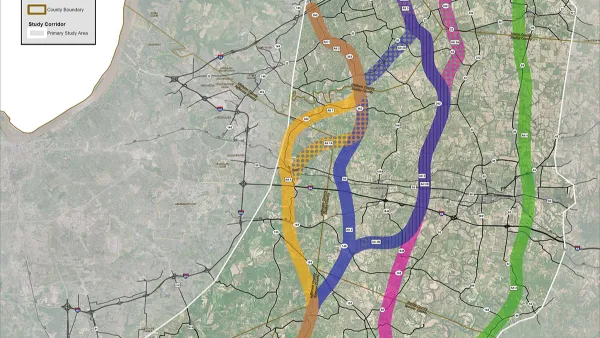
Kentucky Planning a New Freeway Around Louisville, Raising Alarms
Local news sources are shedding light on planning for a new highway route that could pass through sensitive habitat of endangered that has yet to undertake a formal environmental or public input process.
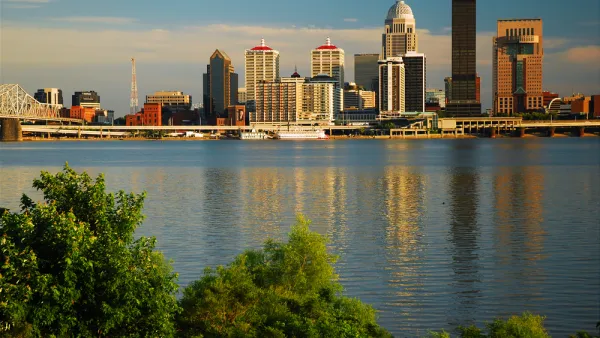
Louisville's Tree-Protection Plan in Final Revisions
Faced with a costly urban heat island effect, Louisville is working on a new tree-protection ordinance that could be headed for a vote this week.

Louisville's Infamous Spaghetti Junction to Get Safety Review
Three tractor trailers overturned in less than a month while navigating Spaghetti Junction in Louisville—the maze of twisting ramps and interchanges that sparked viral notoriety at the end of 2016.

Amtrak, CN end decades-long dispute with eight-year agreement
The new operating agreement establishes an updated framework for the companies to work together, including processes to resolve disputes.

Northwest rail fans eager for Sept. 30 debut of Amtrak’s Airo fleet
Get ready for that new train smell and more seats. But they won’t go faster or run more frequently on the Cascades route in Washington and Oregon.

Judges permit Denver to divert 77,000 acre feet from the Colorado River for reservoir expansion
Overuse and climate change have caused the Colorado River’s water levels to plummet.

NYC to turn city-owned property into thousands of homes
The city has scheduled a public hearing regarding the development for October.

Buses travel at 5mph along this route in NYC. The Bronx's first-ever busway looks to change that
Prior to the busway, buses on the Bx36 route traveled as slowly as 5 miles per hour.

Pittsburg launches 'EZ permits,' aims for one-day turnaround for low-risk permits
The pilot ‘fast lane’ for permits is part of a bundle of modernization efforts for Pittsburg’s permitting process.

FREE Course: Walkable City 1: Why Walkability?
After describing his path towards focusing on walkability as the essence of good planning, Jeff Speck marches through his five principal reasons for making more walkable places.
Reinventing Malls: Planning Alchemy—Turning Gray Fields Into Gold
The course focuses on the opportunities and imperatives that shape reinvention of mall sites.

City of Thousand Oaks
City of Wisconsin Rapids
Harvard University Graduate School of Design
The Architects Foundation
University of Cincinnati Online
The Pocatello Development Authority
The Urban Renewal Agency of the City of Pocatello