There is more than one way for a city to systematically reduce it carbon footprint.




Many eco-minded individuals are proactively working to reduce their carbon footprints, but what happens when entire cities try to minimize their carbon footprints, and are the efforts worthwhile?
Implement Incentives for Alternative Transportation
Statistics from the Environmental Protection Agency (EPA) indicate a typical passenger vehicle emits approximately 4.6 metric tons of carbon dioxide annually. That’s one of the reasons officials in Washington, D.C. want to give incentives to people who use alternative forms of transportation.
The goal is for the area’s residents to eventually take 75 percent of trips via more sustainable modes, like walking, biking, and transit. However, to work toward that goal, employers face the challenge of making alternative transportation attractive to employees while not ignoring cost-effectiveness for organizations.
They could provide information about car-sharing programs to new employees during the onboarding process, plus bring up the matter periodically at monthly team meetings. Adding areas like secure bike storage facilities could also entice employees to take part. Additionally, companies should explore whether there are tax breaks they could take advantage of by doing things like providing discounted public fare cards to the workforce.
Support Farmers’ Markets and Local Shops
Even the most diligent efforts to measure overall carbon emissions in a city sometimes overlook aspects of what contributes to them. A study published in March 2018 found that estimates are 60 higher than expected when estimates account for goods people consume produced outside the city limits.
With that in mind, city planners should investigate ways to encourage people to shop locally. For example, if a city doesn’t have a farmers’ market, a first step would be to establish one.
Plus, cities can reward and promote local merchants, particularly those that focus on setting goods produced inside the state or even closer to home.
In one case, Pennsylvania’s Greensburg Community Development Corporation recruited graphic design interns to create “Shop Local” decals that changed each month. They encouraged Greensburg residents to buy locally produced or sold goods instead of relying on options sourced from farther away.
A color-coded and shape-based system could tell a customer at a glance just how local the merchandise is that fills the shelves. For example, a sticker with a green circle might indicate that at least 75 percent of the items are produced within a 250-mile radius, whereas a blue triangle could mean that’s the case for 25 percent of the goods or more.
Working Beyond a Local Capacity
Sometimes it’s not possible for businesses to only work with local suppliers, but they can still shrink their carbon footprints. Specifically, they can reduce their carbon footprints by selecting companies that are also implementing emissions reduction measures. Walmart sought to reduce its carbon footprint 18 percent by 2025 and called on members of its supply chain for help.
Through an initiative called Project Gigaton, Walmart created an information toolkit for suppliers interested in eliminating one gigaton of emissions by 2030. It encourages them to make changes to their materials, manufacturing processes and more.
In its internal operations, Walmart is working toward the previously mentioned 2025 goal by adopting new energy efficiency measures, using lower carbon energy sources and powering 50 percent of its operations with renewable means.
Suppliers who choose to take part in Project Gigaton pick an area of focus from a list of six options and report to Walmart each fall. Those that do exceptionally good work have the opportunity to get publicly recognized by the brand, potentially boosting positive press coverage for the supplier.
A Focus on Density and Energy-Efficient Buildings
City planners have firmly held opinions about the effect of density on sprawl. Some of them conclude that maintaining an awareness of density and its potential consequences during the respective planning and execution phases of building construction could reduce a city’s carbon footprint.
A January 2017 study from a nine-member research team titled “Global scenarios of urban density and its impacts on building energy use through 2050,” and published in PNAS found that both density and energy-efficient heating and cooling work together to get positive results. This study is notable because it evaluates the topic on a global scale and recognizes the value of retrofitting projects or new energy-efficient buildings.
The researchers also realize that the overall impact of such measures varies depending on factors like future energy usage forecasts and whether cities already have incentives that make it attractive to retrofit buildings.
According to one projection, making urban growth more compact and depending on energy-efficient climate control systems could increase the energy used to maintain temperature by only seven percent by 2050. However, failure to take such measures could cause that percentage to be as high as 40 percent.
Leading Cities
It can be tempting for city planners to test innovative approaches to carbon emissions reductions, especially if they want to be seen as pioneers. However, significant payoffs are possible from following the leads of cities that are already succeeding in reducing emissions. Research indicates that cities can reduce their carbon footprints by 70 percent by pursuing the most effective strategies.
In Addis Ababa, the capital of Ethiopia, city planners replaced aging pipes to conquer a severe leakage issue. Also, residents of Denmark who live in Copenhagen are used to a system whereby 50 percent of garbage gets burned to generate heat.
Statistics indicate that Copenhagen's heating system resulted in the reduction of 203,000 tons of oil, equating to a 20 percent decrease in CO2 emissions.
Moreover, most of the city’s buildings have an underground piping system that heats them without requiring boilers. Residents have to pay for that setup even if they don’t use it.
Determine Where to Make the Most Impact
City planners that want to start measurably reducing their cities' carbon footprints should begin by identifying the most significant planet-polluting problems. Then, they should initially prioritize those issues while prioritizing measures that generate measurable outcomes. An impact-based approach allows professionals to exercise strategies and see results without getting overwhelmed.
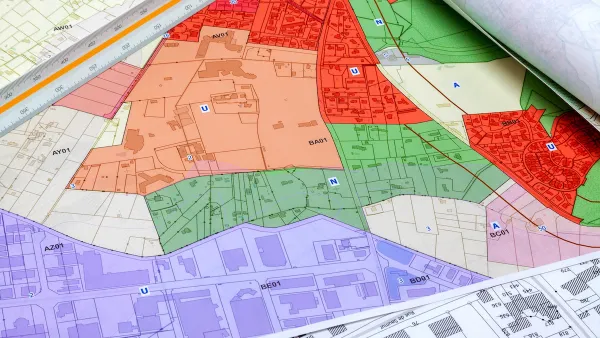
How Zoning Affects Greenhouse Gas Emissions
As the urgency of the climate crisis increases, a paper in the Notre Dame Law Review argues that increased density is not a universally effective strategy to reduce emissions and that different strategies are needed for low-carbon places versus high-carbon ones.

Mapping Climate Impact at the Neighborhood Level
A consumption-based analysis illustrates the differences in average household emissions across census tracts.

The Path to Hyperdensity
The federal government has an opportunity to make a generational investment in the country's infrastructure that could fundamentally shift the way we live and move around cities.

Planetizen Federal Action Tracker
A weekly monitor of how Trump’s orders and actions are impacting planners and planning in America.

California plans to bury El Niño’s downpour
If the state plays its cards right, it may be able to store a billion acre-feet of El Niño’s water in aquifers.

Desperate measures: Advocates weigh draining Lake Powell to fill Colorado River
Draining the reservoir could reduce evaporation losses by a couple hundred thousand acre-feet.

US buildings threatened, destroyed by fires set to triple by 2060
Researchers found a high fire risk for socioeconomically vulnerable neighborhoods in the American West.

LA residents may be allowed to paint their own crosswalks
Councilwoman Katy Yaroslavsky put out a motion instructing the Los Angeles Department of Public Transportation to study the feasibility of allowing volunteers to paint crosswalks.

Dallas moves to overhaul its zoning code
The city's zoning reform will allow more multi-family and mixed-use developments.

FREE Course: Walkable City 1: Why Walkability?
After describing his path towards focusing on walkability as the essence of good planning, Jeff Speck marches through his five principal reasons for making more walkable places.
Reinventing Malls: Planning Alchemy—Turning Gray Fields Into Gold
The course focuses on the opportunities and imperatives that shape reinvention of mall sites.

City of Rosemead
Rutgers University, Edward J. Bloustein School of Planning and Public Policy
One Hundred Miles
Hunter College, City University of New York (CUNY)
The Architects Foundation
University of Cincinnati Online
City of Cambridge
Montrose County
The Pocatello Development Authority

