When President Reagan slashed funding for low-income housing in the '80s, he set off a boom in manufactured housing. Now some think these homes might offer relief for those struggling to afford a home.


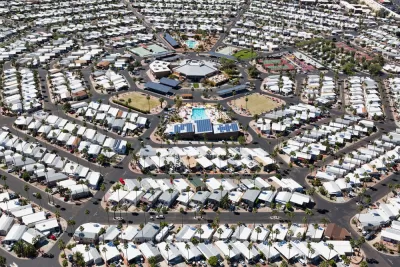
Manufactured housing has been an option for affordable homes for years, but it's not without its problems. "A new report from Apartment List calculates that one in 18 Americans, or 17.7 million people, live in a manufactured home nationwide; the average monthly housing cost is $564, versus $1,057 for a typical house or apartment," Adele Peters writes for Fast Company.
During the Reagan administration, manufactured home production boomed when cuts to low-income housing sent many looking for options. Since then, demand has faltered. Many see this as a problem with the perception of mobile homes, but there are other impediments as well. "One challenge is zoning–communities heavily restrict where the homes can be installed, whether on single-family lots or in traditional mobile home parks," Peters reports. Cities with big housing shortages, like San Francisco, have considered easing restrictions, to add supply to a tight housing market.
Some argue that because of their affordability and flexibility, mobile homes play an important role in the housing market. Still, owning a home on land you rent means manufactured home owners face risks from rising rents. What's worse, some models of homes lose value faster than their loans can be paid off, so home owners never earn equity. "And banks don’t offer regular home loans for manufactured homes, charging higher interest rates on chattel loans," Peters reports. Even with these challenges in expensive housing markets, some find manufactured housing their best option.
FULL STORY: Can manufactured homes help the housing crisis?

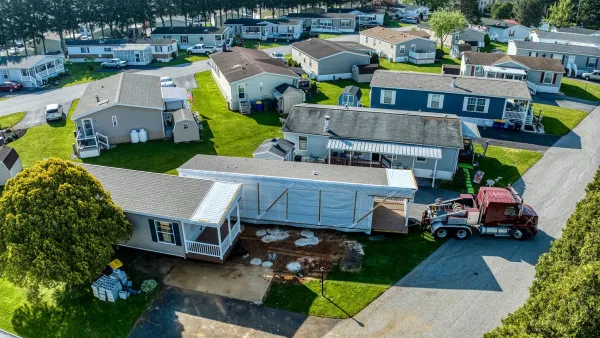
Federal Law Says Manufactured Homes Must be Movable. Changing That Could Unlock an Affordable Housing Boom.
A proposed rule change in the Road to Housing Act would make manufactured housing more flexible and affordable.
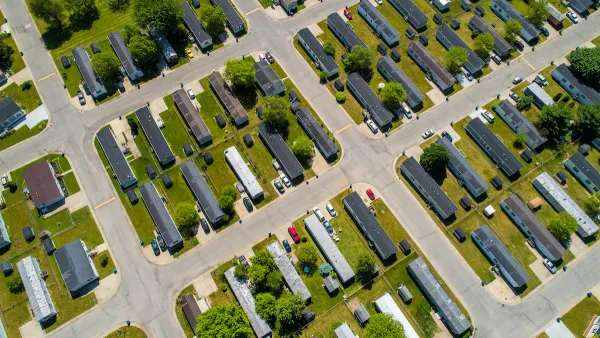
HUD Reforms to Manufactured Housing Policy Could Unlock More Affordable Homes
The agency took a series of steps to make manufactured homes, often excluded from neighborhoods and loan programs, more accessible and affordable.
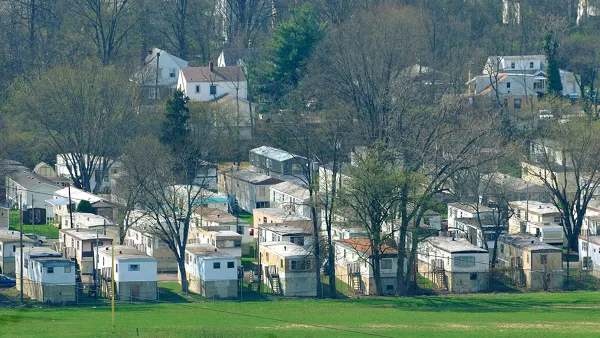
Mobile Home Residents Face Rising Displacement Threat
As investors continue to eye mobile home parks as a profitable opportunity, current residents, many elderly and low-income, face steep rent hikes and possible eviction.

The state-sanctioned urbicide of Austin
People don’t kill cities. Freeways do.

US to reduce Colorado River water deliveries to Mexico
A new Colorado Treaty amendment reduces Mexico’s Colorado River water allocation by 250,000 acre feet.

New Jersey’s second-largest city bans standalone data centers
Jersey City will continue to allow co-location facilities, such as those meant for research institutions that store their own data.

Amtrak not solely to blame for New Jersey commuter rail's unreliability, report finds
A new study from the Garden State Initiative found that NJ Transit’s budget grew 20% across a 4 year period, but reliability declined significantly over the same period.

EPA erases limits on planet-warming pollution from power plants
Under Monday’s plan, power plants would still have some limits on how much mercury, arsenic and other contaminants they can emit.

Phoenix announces new on-demand transit service, more frequent RAPID buses
Both new services will launch in October, and are part of Phoenix's Project Effective Access Solutions for Easing Congestion.

FREE Course: Walkable City 1: Why Walkability?
After describing his path towards focusing on walkability as the essence of good planning, Jeff Speck marches through his five principal reasons for making more walkable places.
Reinventing Malls: Planning Alchemy—Turning Gray Fields Into Gold
The course focuses on the opportunities and imperatives that shape reinvention of mall sites.

Eagle County Government
Harvard University Graduate School of Design
Nashville Planning Department
The Architects Foundation
University of Cincinnati Online
The Pocatello Development Authority
The Urban Renewal Agency of the City of Pocatello
Journal of the American Planning Association