Wendy's has been updating the look and design of their restaurants since last year, but now a new layout will shrink the footprint and add efficiency to the fast food spot.


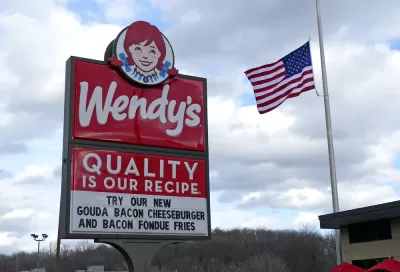
Wendy's new store layouts are smaller and orient the business toward its drive-thrus. "Having a smaller footprint is a fairly new trend in quick-service restaurants, considering about 70% of the segment’s traffic comes from the drive-thru, surprisingly so," Alicia Kelso writes for Forbes. This emphasis on drive-thrus is taking place even as some urbanists look to limit drive-thrus, which can be hazards to pedestrians, and discourage walking.
Besides the smaller format, the buildings are also more environmentally friendly. "The Smart design prototype features recycled materials and LED lighting, as well as Energy Star equipment, including high efficiency HVAC systems, which yield a 20% reduction in costs," Kelso reports.
Wendy's argues that their stores’ new designs are more attractive and take in more revenue than restaurants that have yet to update their layout.
FULL STORY: Wendy's Smart Design Restaurants Reflect Trend Toward Smaller Footprints

Dallas Extends Permit for Downtown Drive-Thru
The city has indicated this is the last time it will extend a permit for a drive-thru at a McDonald’s restaurant as it transitions to supporting a denser, more walkable downtown environment.
The Resurgence of Drive-Throughs
Dining areas in many fast food restaurants are being replaced with added drive-thru lanes, another post-pandemic impact on our lives benefiting those with four wheels (or more).
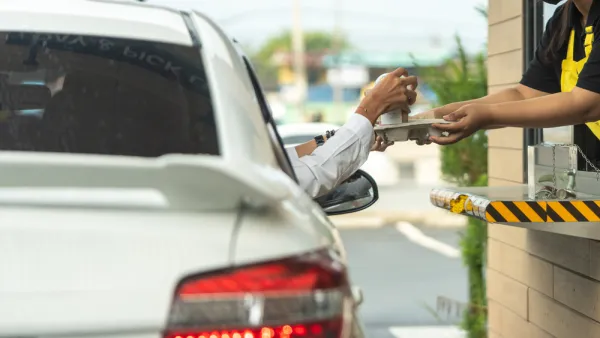
Faster Food
Responding to pandemic-era shifts in customer demand, fast food and fast-casual chains are stripping away dining rooms, restrooms, and human cashiers in favor of drive-through and automated pickup options.

Planetizen Federal Action Tracker
A weekly monitor of how Trump’s orders and actions are impacting planners and planning in America.

The state-sanctioned urbicide of Austin
People don’t kill cities. Freeways do.

US to reduce Colorado River water deliveries to Mexico
A new Colorado Treaty amendment reduces Mexico’s Colorado River water allocation by 250,000 acre feet.

Mamdani overhauls NYC's Vision Zero plan with 100 new policy goals
The overhaul aims to reduce traffic deaths and make streets safer for pedestrians, cyclists and drivers through lower speed limits, new safety infrastructure and more.

Amtrak not solely to blame for New Jersey commuter rail's unreliability, report finds
A new study from the Garden State Initiative found that NJ Transit’s budget grew 20% across a 4 year period, but reliability declined significantly over the same period.

EPA erases limits on planet-warming pollution from power plants
Under Monday’s plan, power plants would still have some limits on how much mercury, arsenic and other contaminants they can emit.

FREE Course: Walkable City 1: Why Walkability?
After describing his path towards focusing on walkability as the essence of good planning, Jeff Speck marches through his five principal reasons for making more walkable places.
Reinventing Malls: Planning Alchemy—Turning Gray Fields Into Gold
The course focuses on the opportunities and imperatives that shape reinvention of mall sites.

Eagle County Government
Harvard University Graduate School of Design
Nashville Planning Department
The Architects Foundation
University of Cincinnati Online
The Pocatello Development Authority
The Urban Renewal Agency of the City of Pocatello
Journal of the American Planning Association