Washington, D.C. approved a set of incentives for home composting at the end of March.



Brenda Platt writes a post for the Institute for Self-Reliance, one of the organizations that supported the District of Columbia 's recently approved "Home Composting Incentives Act of 2018."
"We prioritize home composting over residential curbside collection precisely because it does avoid the curb, which in turn saves hauling expenses and tip fees at processing facilities while enhancing residential soils," according to Platt. "One-third of a ton can conservatively be composted at home per household per year. That can add up to a lot of savings for the City."
Included in the bill are several tools for spurring adoption of home composting, including a rebate or voucher for the purchase of home composting system and educational materials and a training program offered by the Department of Public Works.
Cathy Plume picked up the news of the District's new home composting program, which achieved final approval by the Washington D.C. Council after Platt's article was published. According to Plume, the composting program will help D.C. meet the 80 percent waste diversion goal it set for 2032. Plume also adds that D.C. can look to the Austin, Texas rebate program for a model.
Read the full story: Washington, DC approves bill to incentivize residential composting

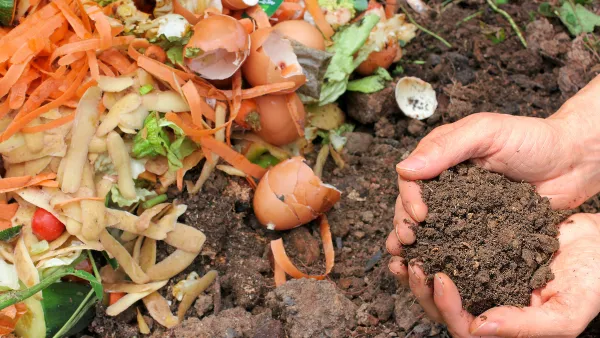
EPA Awards $4 Million for Baltimore Composting Facility
The city wants to build the nation’s largest composting facility as part of its ‘zero waste’ efforts.
D.C. Turns Poop to Power
No, the title does not refer to Congress, it is meant to be taken literally: It is about the District of Columbia's sewage treatment plant that produces renewable energy by treating its biosolids with a new hydrolysis technology imported from Norway.
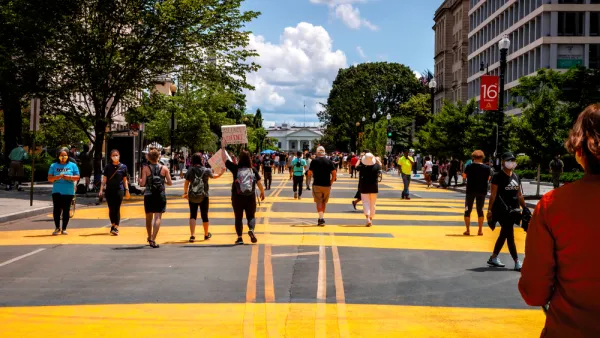
D.C. Revamps its Vision Zero Plan to Eliminate Traffic Fatalities
Washington, D.C. was an early adopter of Vision Zero in the United States, but eventually it became emblematic of the country's lack of progress in reducing traffic collisions.

Planetizen Federal Action Tracker
A weekly monitor of how Trump’s orders and actions are impacting planners and planning in America.

The state-sanctioned urbicide of Austin
People don’t kill cities. Freeways do.

US to reduce Colorado River water deliveries to Mexico
A new Colorado Treaty amendment reduces Mexico’s Colorado River water allocation by 250,000 acre feet.

Nation's most wind-powered state turns to coal as data centers increase energy demand
For the first time in decades, Iowa has increased its generation of coal power.

NYC cools commuters with city's first rain garden above a bus stop
New York City officials say the plants in the rain garden can absorb 16 gallons of rainwater during heavy storms.

Brightline West’s future may rely on $6 billion federal loan
The company has until Nov. 2 to make a $400 million equity investment into its proposed high-speed rail line.

FREE Course: Walkable City 1: Why Walkability?
After describing his path towards focusing on walkability as the essence of good planning, Jeff Speck marches through his five principal reasons for making more walkable places.
Reinventing Malls: Planning Alchemy—Turning Gray Fields Into Gold
The course focuses on the opportunities and imperatives that shape reinvention of mall sites.

Greater Baltimore Committee
Eagle County Government
Harvard University Graduate School of Design
The Architects Foundation
University of Cincinnati Online
The Pocatello Development Authority
The Urban Renewal Agency of the City of Pocatello
Journal of the American Planning Association