$2.5 billion in stimulus money to build a San Joaquin Valley high speed train has been spent, yet the train is still almost a decade from being ready to carry passengers across its entire run.


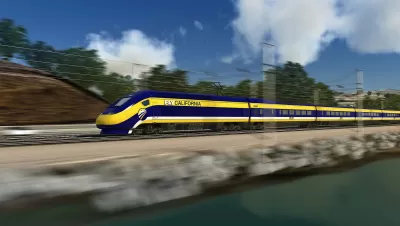
Trouble acquiring land, environmental analysis, and other snags have slowed progress on high-speed rail meant to pass through the San Joaquin Valley. "All of the stimulus money from the American Recovery and Reinvestment Act has indeed been spent and construction is happening in earnest in Fresno and Madera counties, much of the Valley route in Kings, Tulare and Kern counties – considered the 'backbone' of a system to eventually link San Francisco and Los Angeles – remains on the drawing board," Tim Sheehan reports for the Fresno Bee.
This slowdown has translated into what officials predict will be a three-year delay. "A starting date for passenger service that was once forecast for 2022 with trains running between Merced and Los Angeles has now been bumped to 2025," Sheehan writes.
Read the full story: High-speed rail in the Valley was once supposed to be done by Saturday. Not even close
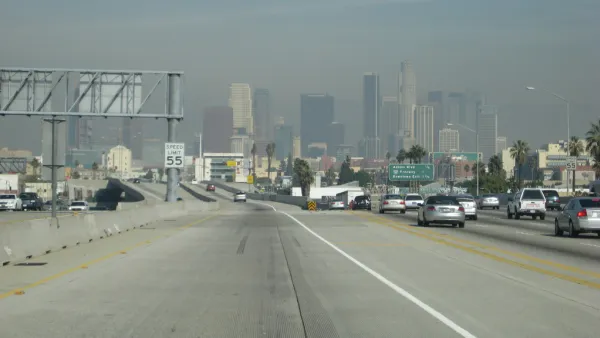
California Has 8 of the 10 Most Polluted Cities in the U.S.
Despite ever-stricter air-quality regulations and dropping emissions, the American Lung Association once again finds the state to have some of the worst air in the nation.
Under Pressure, EPA Tightens Soot Standard
In what could be viewed as a classic environmentalist vs. business showdown, the EPA tightened by 20% the annual standard for soot over the objection of industry and some in Congress who fear it will dampen economic growth.
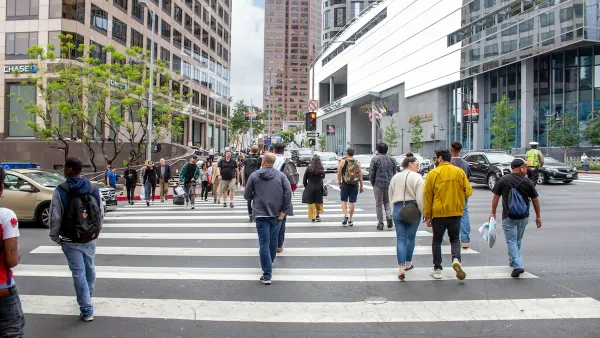
LA residents may be allowed to paint their own crosswalks
Councilwoman Katy Yaroslavsky put out a motion instructing the Los Angeles Department of Public Transportation to study the feasibility of allowing volunteers to paint crosswalks.

Planetizen Federal Action Tracker
A weekly monitor of how Trump’s orders and actions are impacting planners and planning in America.

California plans to bury El Niño’s downpour
If the state plays its cards right, it may be able to store a billion acre-feet of El Niño’s water in aquifers.

Desperate measures: Advocates weigh draining Lake Powell to fill Colorado River
Draining the reservoir could reduce evaporation losses by a couple hundred thousand acre-feet.

Chicago voters approve permanent festival grounds, penalty for vacant property owners
Currently, major summer and fall festivals take over public parks for weeks at a time, drawing criticism from nearby residents

NYC votes to cut outdoor dining red tape, speed up permitting
New York City also voted to allow the Department of Transportation to begin work on urgent projects before notifying elected officials.

California appears to reject Prop. 45
The proposition would have expanded the projects that qualify for a streamlined environmental review, effectively paring down the California Environmental Quality Act.

FREE Course: Walkable City 1: Why Walkability?
After describing his path towards focusing on walkability as the essence of good planning, Jeff Speck marches through his five principal reasons for making more walkable places.
Reinventing Malls: Planning Alchemy—Turning Gray Fields Into Gold
The course focuses on the opportunities and imperatives that shape reinvention of mall sites.


City of Rosemead
Rutgers University, Edward J. Bloustein School of Planning and Public Policy
One Hundred Miles
Hunter College, City University of New York (CUNY)
The Architects Foundation
University of Cincinnati Online
City of Cambridge
Montrose County
The Pocatello Development Authority