Vietnam's capitol city Hanoi, following other South East Asian country restrictions on mopeds and two-wheeled vehicles, approves a controversial ban.


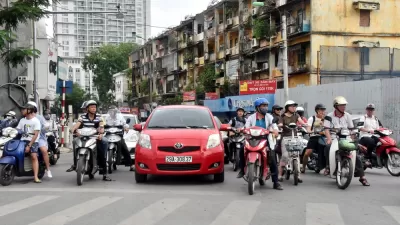
Hanoi's proposed 2030 ban on motorbike usage to curb congestion in the city center is no longer a proposition. The capital city already has begun creating walking streets. As Saigoneer reported on August 28, Hanoi’s municipal officials green lit the city council's recommendation, which passed by 91% in July. The proposed ban will become a reality in 2030.
However many residents and experts caution that the impending ban will not achieve the intended reduction in congestion, especially if public transportation infrastructure is not yet built out to sufficient levels of service. Moreover many think the ban is unrealistic in the timeframe, especially given that Vietnam leads the world in per-capita motorbike ownership.
In a short video, residents around Hanoi’s Horn Kiem lake, which become pedestrian only streets Friday evening through Monday morning, opine about the ban.
Read the full story: Hanoi's Impending Motorbike Ban

Hanoi to Ban Gas-Powered Two-Wheelers, Later Cars
City officials hope that electrifying motorcycles, a ‘lifeblood’ of Vietnamese transportation, will have a positive impact on air quality and noise in the city’s downtown.
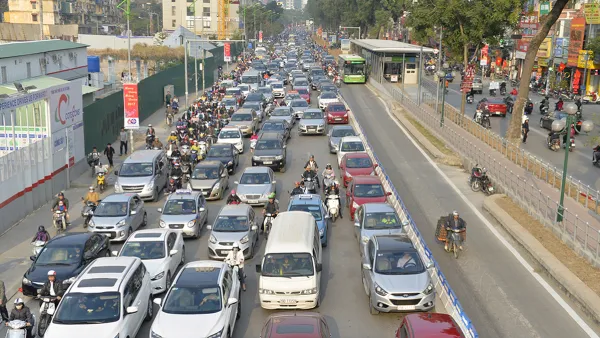
High Hopes and Stiff Resistance for Hanoi's New Bus Rapid Transit
Vietnam's capital is internationally known for pollution and traffic, the government is trying to take on both with a rapid transit bus system, but many remain skeptical.
Vietnam Tries to Head Off Rising Car Culture by Building Transit
Lien Hoang looks at efforts by Vietnam's government to get ahead of rising living standards, and the auto congestion that often accompanies, by building modern transit systems in Hanoi and Ho Chi Minh City.

Planetizen Federal Action Tracker
A weekly monitor of how Trump’s orders and actions are impacting planners and planning in America.

California plans to bury El Niño’s downpour
If the state plays its cards right, it may be able to store a billion acre-feet of El Niño’s water in aquifers.

Desperate measures: Advocates weigh draining Lake Powell to fill Colorado River
Draining the reservoir could reduce evaporation losses by a couple hundred thousand acre-feet.

Mamdani’s pied-à-terre tax survives legal challenge
A panel of judges found that the plaintiffs failed to demonstrate injury as a result of New York City's implementation of the tax.

Eastern Nebraska is running out of electricity
Data centers and electrification are straining eastern Nebraska’s grid, throttling economic development.

Seattle passes record-breaking transit services expansion
Proposition 1 will double the city’s transit tax to add 95,000 more bus trips and preserve 180,000 bus trips annually.

FREE Course: Walkable City 1: Why Walkability?
After describing his path towards focusing on walkability as the essence of good planning, Jeff Speck marches through his five principal reasons for making more walkable places.
Reinventing Malls: Planning Alchemy—Turning Gray Fields Into Gold
The course focuses on the opportunities and imperatives that shape reinvention of mall sites.

City of Rosemead
Rutgers University, Edward J. Bloustein School of Planning and Public Policy
One Hundred Miles
University of Michigan School for Environment and Sustainability (SEAS)
Hunter College, City University of New York (CUNY)
The Architects Foundation
City of Cambridge
Montrose County
The Pocatello Development Authority