A master plan for the redevelopment of Ford's former Twin Cities Assembly Plant, set on 122 acres along the Mississippi River in St. Paul, is challenged by controversy.


"The St. Paul City Council decided Wednesday to limit the maximum height of some buildings that could be erected on the Ford site, but the move failed to satisfy residents worried by the prospect of 7,000 people being added to a compact neighborhood," reports James Walsh.
"The changes, proposed by Council Member Chris Tolbert, scale down the heights of the tallest buildings that can go on the site from 110 feet to 75 feet — from 10 stories to six — unless the developer agrees to set aside even more green space in exchange," adds Walsh.
Opponents to the project, however, say Tolbert's plan doesn't achieve their goals of reducing the project's density.
Ford is expected to sell the property by the end of the year or early next year. Meanwhile the current master plan process moves forward, with a public hearing for the Ford Site Zoning and Public Realm Master Plan [pdf] scheduled for September 20.
FULL STORY: St. Paul shrinks building heights in proposed Ford site development plan

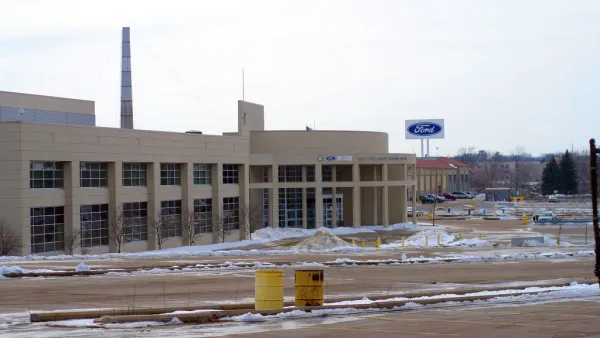
Controversial Green Neighborhood to Rise on Former Auto Plant Site
Plans for a sizable eco-friendly development on the site of St. Paul's Twin Cities Assembly Plant have drawn support from many, including the city's young mayor. But density opponents remain unconvinced.
When Controversy Erupts Between the Master Plan and the Zoning Changes
Most planners have been there before: it's time to implement the goals of a newly approved Master Plan by rewriting the zoning code, and suddenly the public becomes outraged.

Growth Battles Heating up in Seattle
The growth of Seattle growth is inflaming passions on either side of the issue—some claim that the city wants everyone to "live in cubicles"; others say the city isn't doing enough to prepare for 120,000 expected new residents.

Planetizen Federal Action Tracker
A weekly monitor of how Trump’s orders and actions are impacting planners and planning in America.

The state-sanctioned urbicide of Austin
People don’t kill cities. Freeways do.

US to reduce Colorado River water deliveries to Mexico
A new Colorado Treaty amendment reduces Mexico’s Colorado River water allocation by 250,000 acre feet.

Mamdani overhauls NYC's Vision Zero plan with 100 new policy goals
The overhaul aims to reduce traffic deaths and make streets safer for pedestrians, cyclists and drivers through lower speed limits, new safety infrastructure and more.

Amtrak not solely to blame for New Jersey commuter rail's unreliability, report finds
A new study from the Garden State Initiative found that NJ Transit’s budget grew 20% across a 4 year period, but reliability declined significantly over the same period.

EPA erases limits on planet-warming pollution from power plants
Under Monday’s plan, power plants would still have some limits on how much mercury, arsenic and other contaminants they can emit.

FREE Course: Walkable City 1: Why Walkability?
After describing his path towards focusing on walkability as the essence of good planning, Jeff Speck marches through his five principal reasons for making more walkable places.
Reinventing Malls: Planning Alchemy—Turning Gray Fields Into Gold
The course focuses on the opportunities and imperatives that shape reinvention of mall sites.

Eagle County Government
Harvard University Graduate School of Design
Nashville Planning Department
The Architects Foundation
University of Cincinnati Online
The Pocatello Development Authority
The Urban Renewal Agency of the City of Pocatello
Journal of the American Planning Association