The Adaptive Biketown system hit the streets in Portland on July 21, 2017.



"Portland now operates the nation’s first partnership between a private bike shop, a bike share system and a city government to provide access to adaptive bicycles," reports Jonathan Maus.
Adaptive Biketown is the latest evolution of the Portland Biketown bikeshare system. Planetizen covered the announcement of the adaptive bike rollout back in March 2017.
Maus, however, sums up the importance of Adaptive Biketown after attending the program's launch on July 21:
What I realized being at the launch today is that this isn’t about access for people with disabilities. Yes, simply having these adaptive bikes available is the key. But this is really about acceptance. When a city has an official program for something it sends a signal that transcends the nuts-and-bolts details. In this case, Portland has just said: 'Everyone with a disability who hasn’t been able to ride a bike for whatever reason, come on out and give it a try. We welcome you!'
Hat tip to Angie Schmitt for sharing the news about Adaptive Biketown.
Read the full story: ‘Adaptive Biketown’ program brings new riders to the fore
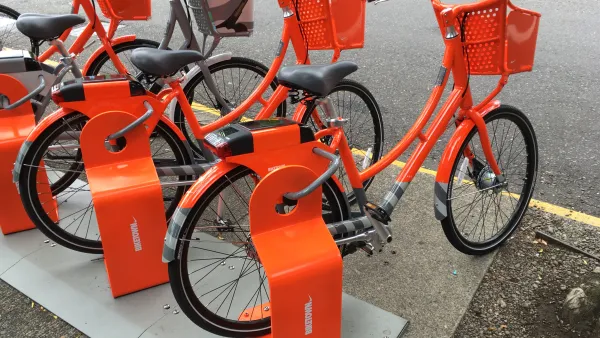
Portland's Biketown to Include 'Adaptive Bikes' to Ensure Universal Access
The city of Portland is wearing the Yellow Jersey on equity issues connected to the Biketown bikeshare system.

Overcoming Misconceptions About Disabled Cyclists
Not everyone can ride a traditional two-wheeled bicycle, and it's ableist to assume they can, according to this op-ed. It's time to consider adaptive cycling as a crucial tool for providing access to mobility.
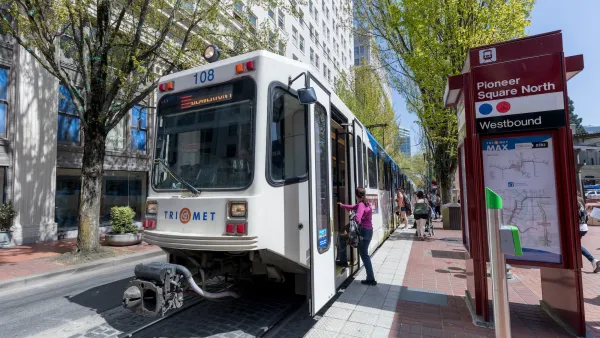
TriMet will eliminate 'Hand-to-Hand' paratransit service for half of its users
Roughly 300 Portland-area paratransit riders will lose access to a program that lets drivers escort them into their destination.

Planetizen Federal Action Tracker
A weekly monitor of how Trump’s orders and actions are impacting planners and planning in America.

California plans to bury El Niño’s downpour
If the state plays its cards right, it may be able to store a billion acre-feet of El Niño’s water in aquifers.

Desperate measures: Advocates weigh draining Lake Powell to fill Colorado River
Draining the reservoir could reduce evaporation losses by a couple hundred thousand acre-feet.

Los Angeles just elected an urban planner as its mayor
Transportation analysts are optimistic that Raman will be more aggressive in addressing transit issues than Bass.

Mamdani’s pied-à-terre tax survives legal challenge
A panel of judges found that the plaintiffs failed to demonstrate injury as a result of New York City's implementation of the tax.

Eastern Nebraska is running out of electricity
Data centers and electrification are straining eastern Nebraska’s grid, throttling economic development.

FREE Course: Walkable City 1: Why Walkability?
After describing his path towards focusing on walkability as the essence of good planning, Jeff Speck marches through his five principal reasons for making more walkable places.
Reinventing Malls: Planning Alchemy—Turning Gray Fields Into Gold
The course focuses on the opportunities and imperatives that shape reinvention of mall sites.

City of Rosemead
Rutgers University, Edward J. Bloustein School of Planning and Public Policy
One Hundred Miles
University of Michigan School for Environment and Sustainability (SEAS)
Hunter College, City University of New York (CUNY)
The Architects Foundation
City of Cambridge
Montrose County
The Pocatello Development Authority