Small square-footages might be in vogue, but would the occupants of tiny homes really pass up American-Dream spaciousness, given the chance?


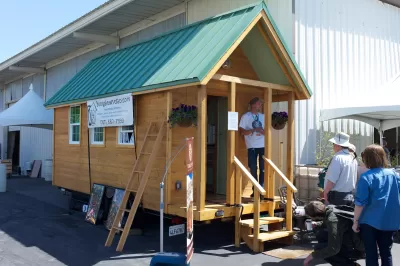
The tiny home craze has spawned a whole cottage industry of Murphy beds, custom closets, and Danish "hygge." At the risk of simply repeating what common sense would dictate, Gene Tempest discusses some of the downsides.
"Embarrassing, ordinary objects like the hamper are empowered in small spaces; they become tyrants. In a larger home, this perfectly functional item might recede quietly into a closet or laundry room. No one warns you that everything is more concentrated in a tiny house, that the natural life cycle of objects accelerates."
Tempest goes on: "Our things are aging faster than they did in their previous homes. We sit on our lone couch more hours a day than in any previous dwelling. The cushions are fading, the springs sagging, the corners fraying [...] So we daydream big. Dreams of unfashionable, politically incorrect, old American aspirations that our generation isn't supposed to believe in anymore. Dreams of design features so vast that they sound like foreign countries."
Read the full story: What No One Ever Tells You About Tiny Homes

Big Winner of Tiny Apartment Competition Unveiled
Today, Mayor Michael Bloomberg announced the winner of a competition to build a micro-apartment pilot project in Manhattan. Consisting of 55 micro-units measuring between 250 and 375 square feet, the project will utilize modular construction.
Seattle mayor pledges to build 500 shelter units by June
The Seattle Times editorial board expresses cautious optimism about the mayor's ambitious supportive housing plan.

These Las Vegas tiny homes can be assembled in an hour
The city approved a project using modular microhousing units that will rent for roughly $1,000 per month.

Planetizen Federal Action Tracker
A weekly monitor of how Trump’s orders and actions are impacting planners and planning in America.

Northwest rail fans eager for Sept. 30 debut of Amtrak’s Airo fleet
Get ready for that new train smell and more seats. But they won’t go faster or run more frequently on the Cascades route in Washington and Oregon.
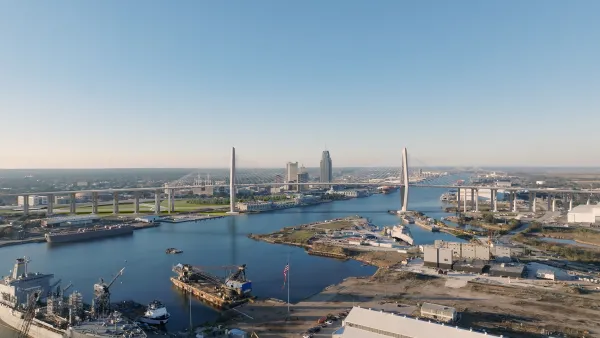
Alabama scores up to $2.5 billion federal loan for largest infrastructure project in state’s history
The Mobile River Bridge and Bayway Project aims to ease congestion at Alabama’s worst bottleneck.

Novel study finds extreme state-by-state disparity in housing construction timelines
The first comprehensive working paper on U.S. construction timelines also found that the permitting process for multi-family projects has slowed nationwide.

California may destroy its beaches trying to save homes from El Niño
Boulders and seawalls can protect homes from waves, but ultimately destroy sandy beaches.

California high-speed rail accomplishes only one legislative goal in 2026
The majority of the agency's failed pitches were never developed into written proposals.

FREE Course: Walkable City 1: Why Walkability?
After describing his path towards focusing on walkability as the essence of good planning, Jeff Speck marches through his five principal reasons for making more walkable places.
Reinventing Malls: Planning Alchemy—Turning Gray Fields Into Gold
The course focuses on the opportunities and imperatives that shape reinvention of mall sites.

City of Thousand Oaks
City of Wisconsin Rapids
Harvard University Graduate School of Design
The Architects Foundation
University of Cincinnati Online
Northern Illinois Transit Authority (NITA)
The Pocatello Development Authority
The Urban Renewal Agency of the City of Pocatello