The Seattle Times editorial board expresses cautious optimism about the mayor's ambitious supportive housing plan.


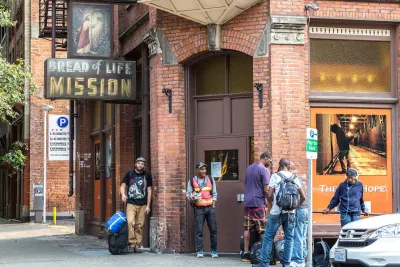
The Seattle Times editorial board outlined Mayor Katie Wilson's homelessness plan, expressing some concerns about the feasibility of the mayor's proposals.
According to the editorial, "How these issues play out in the next few months will determine the price Seattle taxpayers pay for expanded shelter services, and whether these efforts noticeably move the needle on a host of urban ills after decades of disappointment."
The mayor has pledged to build 500 shelter units by mid-June, but acknowledged that the goal may be more aspirational than achievable. The board also has questions about new regulations related to tiny home villages, mandatory resident participation in supportive services and tensions with neighbors. And while the mayor expressed concern about "the way that the King County Regional Homelessness Authority has been operating," the agency will be overseeing contracts for the first 500 supportive housing units.
According to the board, "Wilson appears to be addressing these issues thoughtfully and strategically, but Seattleites have every right to be tired of plans and proclamations."
FULL STORY: Mayor Wilson unveils a homelessness plan but big questions remain


Seattle Safe Parking Site to Close, Relocate
A nonprofit leases lots during permitting stages to erect tiny homes and RV safe parking sites for unhoused residents. But the model means constant uncertainty and displacement.
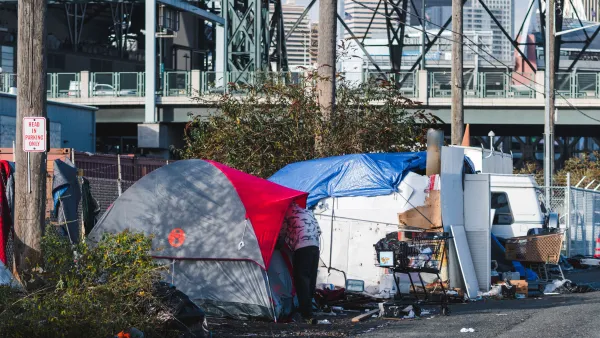
Seattle Sweep of Unhoused Encampments Draws Criticism
The city denies that the timing of clearing a camp populated by unhoused residents was related to the upcoming MLB All-Star Game.
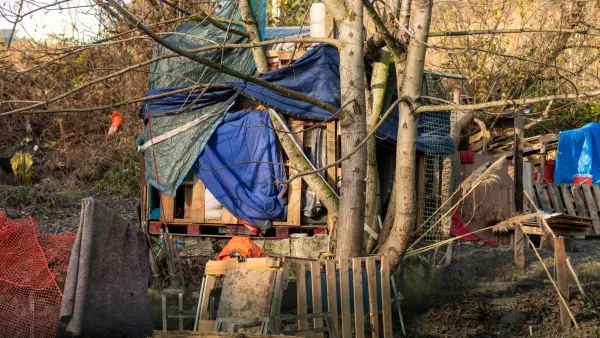
New Federal Program To Support Services for Unhoused Residents
The ‘ALL INside’ initiative selected five cities and one state—California—for its inaugural efforts to offer assistance to homelessness services and help local agencies access federal funding and resources.

The state-sanctioned urbicide of Austin
People don’t kill cities. Freeways do.

US to reduce Colorado River water deliveries to Mexico
A new Colorado Treaty amendment reduces Mexico’s Colorado River water allocation by 250,000 acre feet.

New Jersey’s second-largest city bans standalone data centers
Jersey City will continue to allow co-location facilities, such as those meant for research institutions that store their own data.

Amtrak not solely to blame for New Jersey commuter rail's unreliability, report finds
A new study from the Garden State Initiative found that NJ Transit’s budget grew 20% across a 4 year period, but reliability declined significantly over the same period.

EPA erases limits on planet-warming pollution from power plants
Under Monday’s plan, power plants would still have some limits on how much mercury, arsenic and other contaminants they can emit.

Phoenix announces new on-demand transit service, more frequent RAPID buses
Both new services will launch in October, and are part of Phoenix's Project Effective Access Solutions for Easing Congestion.

FREE Course: Walkable City 1: Why Walkability?
After describing his path towards focusing on walkability as the essence of good planning, Jeff Speck marches through his five principal reasons for making more walkable places.
Reinventing Malls: Planning Alchemy—Turning Gray Fields Into Gold
The course focuses on the opportunities and imperatives that shape reinvention of mall sites.

Eagle County Government
Harvard University Graduate School of Design
Nashville Planning Department
The Architects Foundation
University of Cincinnati Online
The Pocatello Development Authority
The Urban Renewal Agency of the City of Pocatello
Journal of the American Planning Association