Fancy renderings of fanciful ideas might make for "internet catnip," but they don't push the built environment toward healthier and more prosperous outcomes. Where have all the good ideas gone?


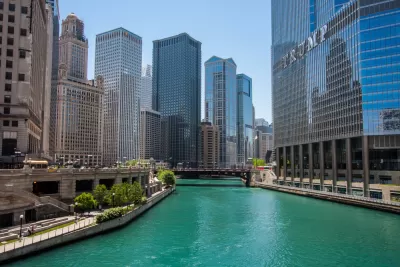
"Like everything, architectural history and theory have been radically realigned by the internet and digital culture," writes Matt Shaw in a provocative editorial for The Architect's Newspaper. "The result is that bad ideas can come to be front and center in the architectural discussion very easily due to metrics and algorithms."
"What passes for 'radical,' 'idea,' 'theory,' and 'concept' today is becoming eroded as quickly as our political discourse," Shaw adds.
Shaw isn't afraid to call out specific examples—taking not only the designers to task, but the journalists who gave prominent coverage to ideas like a skyscraper hanging upside down from an asteroid. Each one is a "pointless exercise in mediocre conceptual architecture that looks good on the internet and keeps content producers busy," writes Shaw.
Read the full story: Does architecture have a crisis of ideas?

Friday Eye Candy: AI Envisions Solutions to the Challenges Facing Cities
Phoenix reimagined for shade. Los Angeles as a place where everybody walks. San Francisco with affordable housing. AI makes a vision of the future possible.

Friday Eye Candy: 20 AI-Generated Cityscapes
AI-generated images are creating new landscapes and cityscapes, capable of inspiring awe or fear.
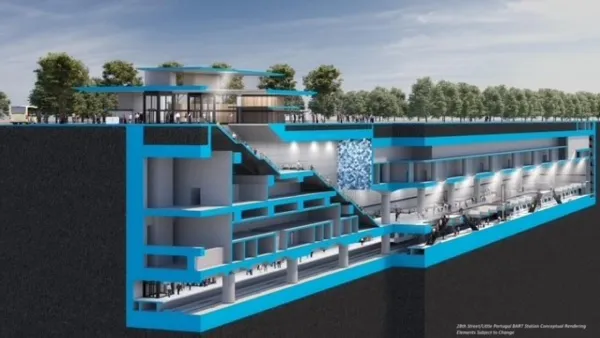
Social Media Critics Roast Plans for Downtown San Jose BART Station
Critics panned new renderings for the 28th Street/Little Portugal station on the planned BART extension into San Jose.

Planetizen Federal Action Tracker
A weekly monitor of how Trump’s orders and actions are impacting planners and planning in America.

California plans to bury El Niño’s downpour
If the state plays its cards right, it may be able to store a billion acre-feet of El Niño’s water in aquifers.

Desperate measures: Advocates weigh draining Lake Powell to fill Colorado River
Draining the reservoir could reduce evaporation losses by a couple hundred thousand acre-feet.

Seattle passes record-breaking transit services expansion
Proposition 1 will double the city’s transit tax to add 95,000 more bus trips and preserve 180,000 bus trips annually.

Post election, Texas is no longer Musk’s 'AI oasis'
Elon Musk dolled out $446 million on the 2026 midterms, the most ever spent by a non-canidate.

Chicago voters approve permanent festival grounds, penalty for vacant property owners
Currently, major summer and fall festivals take over public parks for weeks at a time, drawing criticism from nearby residents

FREE Course: Walkable City 1: Why Walkability?
After describing his path towards focusing on walkability as the essence of good planning, Jeff Speck marches through his five principal reasons for making more walkable places.
Reinventing Malls: Planning Alchemy—Turning Gray Fields Into Gold
The course focuses on the opportunities and imperatives that shape reinvention of mall sites.

City of Rosemead
Rutgers University, Edward J. Bloustein School of Planning and Public Policy
One Hundred Miles
Hunter College, City University of New York (CUNY)
The Architects Foundation
University of Cincinnati Online
City of Cambridge
Montrose County
The Pocatello Development Authority