Age is only a number, they say. But that number is growing for the nation's housing stock, just like for the rest of us.



"The nation’s housing stock is quickly aging," according to a recently published Daily News item on the Realtor Mag website.
"The median age of an owner-occupied home rose to 37 years in 2015, up from 31 years a decade ago, according to the latest data from the 2015 American Community Survey," according to the post.
In another way of looking at the trend, the article adds: "As of 2015, more than half of the housing stock in the U.S. was built prior to 1980. Thirty-eight percent of the homes were built prior to 1970. Meanwhile, homes constructed after 2000 comprise 19 percent of the housing stock." The article includes a map showing a state-by-state breakdown of media home ages.
The Realtor Mag article pulls its conclusions from an article by Na Zhao on the National Association of Home Builders' Eye on Housing blog. Zhao offers additional infographics to parse out findings about the age of the nation's housing stock and commentary about the causes of the aging trend. According to Zhao, the modest pace of residential construction since the Great Recession has exacerbated the aging of the nation's housing stock.
Read the full story: How Old Is Your State's Housing Stock?
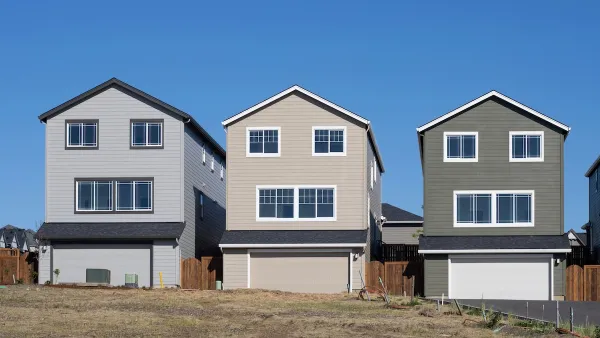
What’s in a Name? Investors vs. Speculators
We don’t often make a clear distinction between investors and speculators, which makes it harder to identify harmful behavior — and to find solutions for it.
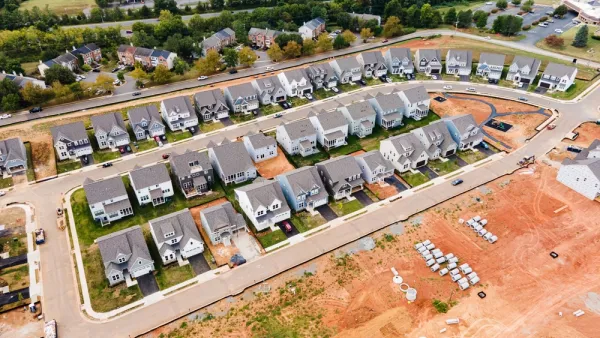
A Big Picture of the US Housing Market
A new report highlights the factors driving up housing costs around the country.
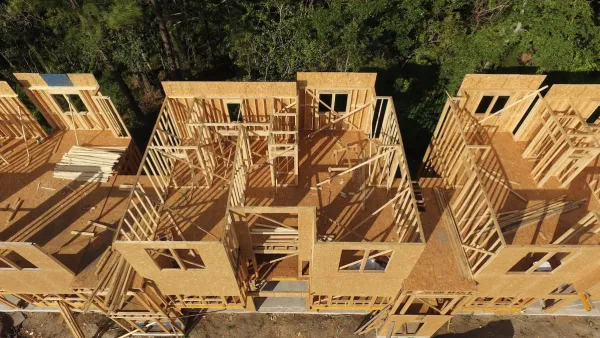
Biggest US Housing Gains in Southern and Western States
Nationwide increases in housing stock since 2020 mirror post-pandemic moving patterns, with six states in the West and South accounting for half of new units.

Planetizen Federal Action Tracker
A weekly monitor of how Trump’s orders and actions are impacting planners and planning in America.

Eastern Nebraska is running out of electricity
Data centers and electrification are straining eastern Nebraska’s grid, throttling economic development.

Move over, LA: St. Louis gears up for Olympics, invests millions in downtown redevelopment
The Missouri city will host the 2028 Olympic soccer group stage and knockout matches.

Dallas releases zoning code overhaul to officials
The drafted overhaul is over 400 pages long.

NYC renovations for dangerous, ‘mercilessly crammed’ street delayed until 2027
Construction was supposed to begin this fall.

San Diego’s Midway Rising project gets greenlight from city council
The project looks to become the largest affordable housing development in California's history.

FREE Course: Walkable City 1: Why Walkability?
After describing his path towards focusing on walkability as the essence of good planning, Jeff Speck marches through his five principal reasons for making more walkable places.
Reinventing Malls: Planning Alchemy—Turning Gray Fields Into Gold
The course focuses on the opportunities and imperatives that shape reinvention of mall sites.

City of Rosemead
Rutgers University, Edward J. Bloustein School of Planning and Public Policy
One Hundred Miles
University of Michigan School for Environment and Sustainability (SEAS)
Hunter College, City University of New York (CUNY)
The Architects Foundation
City of Cambridge
The Pocatello Development Authority
The Urban Renewal Agency of the City of Pocatello