A columnist attributes the success of President-elect Trump's anti-Muslim rhetoric with a rise in potentially illegal land use decisions around the state of Virginia.



Petula Dvorak writes a column for The Washington Post calling out the bigotry inherent to recent regulatory and legal frameworks of the planning profession.
"Sewage lines, traffic patterns and zoning ordinances. Meet the instruments of bigotry in America today," writes Dvorak.
Dvorak cites three recent examples of racism on display in recent planning and land use controversies in the state of Virginia—"cases where development regulations and mundane municipal laws have been used to smokescreen surging Islamophobia."
According to Dvorak, the episodes of racist opposition to Muslims are new to these communities, places like Spotsylvania County, Culpeper, and Nokesville.
Read the full story: A smokescreen for bigotry: Disguising anti-Muslim bias with land-use objections

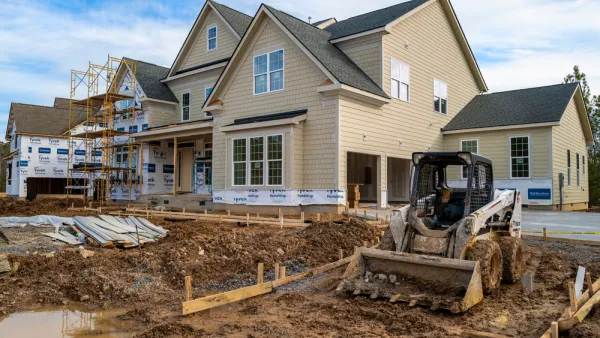
Not Just Use: More Zoning Regulations to Unlock Housing Equity
Prohibiting single-family zoning alone won’t accomplish the needed transformation of the built environment in the United States.

After Waiting Two Days, Justice Department Appeals Transit Mask Ruling
Mystery surrounds the decision by the Biden administration to not ask for an immediate stay of an unanticipated district court ruling to vacate the CDC's masks-on-transit rule. Two days later they appealed as coronavirus cases increase nationwide.

Update: Coronavirus Vaccination Litigation against Biden Administration
The U.S. Justice Department filed its appeal on Nov. 23 before the 6th Circuit Court to reinstate the large private employer vaccination status requirement that the 5th Circuit had stayed after Republican governors and state attorneys general sued.

Planetizen Federal Action Tracker
A weekly monitor of how Trump’s orders and actions are impacting planners and planning in America.

Amtrak, CN end decades-long dispute with eight-year agreement
The new operating agreement establishes an updated framework for the companies to work together, including processes to resolve disputes.

Northwest rail fans eager for Sept. 30 debut of Amtrak’s Airo fleet
Get ready for that new train smell and more seats. But they won’t go faster or run more frequently on the Cascades route in Washington and Oregon.

Trump administration unlawfully slashed $7 billion in clean energy grants, judge rules
The Environmental Protection Agency ended the Solar For All program, which provided the grants, after President Donald Trump’s inauguration.

Record-breaking wildlife overpass in Colorado brings 91% reduction in animal collisions
Prior to the overpass, vehicles were hitting one deer per day on Colorado’s Interstate 25.

California lawmakers approve just 5% of much-needed LA28 transportation funding
State legislators appear just as unwilling as Trump to pay for Olympics-related transportation projects.

FREE Course: Walkable City 1: Why Walkability?
After describing his path towards focusing on walkability as the essence of good planning, Jeff Speck marches through his five principal reasons for making more walkable places.
Reinventing Malls: Planning Alchemy—Turning Gray Fields Into Gold
The course focuses on the opportunities and imperatives that shape reinvention of mall sites.

City of Thousand Oaks
City of Wisconsin Rapids
Harvard University Graduate School of Design
The Architects Foundation
University of Cincinnati Online
The Pocatello Development Authority
The Urban Renewal Agency of the City of Pocatello