For a few tantalizing months it seemed like the state of Pennsylvania might have the funding to spare an expansion of the Keystone Opportunity Zones program.


"Over the summer, as the dust began to settle on another Pennsylvania budget negotiation, officials in Philadelphia’s Commerce Department realized that the state had opened the door for an expansion of Keystone Opportunity Zones, a program that’s meant to encourage investment in vacant and blighted areas by waiving certain state and local taxes," reports Jared Brey.
In an attempt to take advantage of the opportunity, the city of Philadelphia's Commerce Department "identified 85 properties covering 322 acres of land, lobbied City Council members to approve the selections, secured agreements from participating property owners that payments in lieu of taxes (PILOTs) would keep the School District from losing any funding, and submitted the application."
Philadelphia wasn't alone: The state also received applications from Elk County, Chester County, and Clearfield County.
None of the applications will be accepted, however, and they were never really going to be, according to Brey's analysis, which also surveys some of the sites on Philadelphia's list to determine whether the lost KOZ opportunity will make or break development proposals.
Read the full story: State Rejects Philly’s Bid to Expand Tax-Free Zones to Logan Triangle, West Philly Read more at http://www.phillymag.com/busine

How Effective are Philadelphia’s Keystone Opportunity Zones?
The impacts of a tax break designed to create jobs, stimulate development, and reduce blight are proving hard to track.
Learning loss and urban schools, part 2
Did test scores in progressive cities drop more post-COVID than test scores in moderate ones?
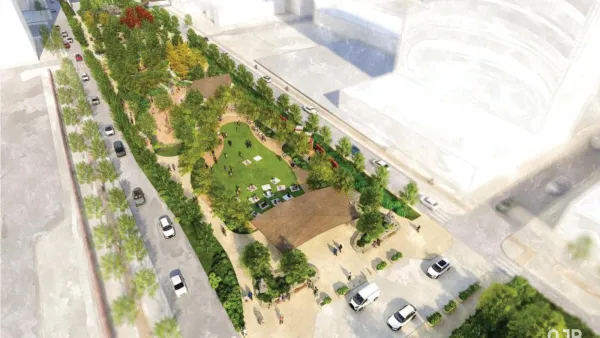
Philadelphia lawmakers fight to save 'Chinatown Stitch' from Trump cuts
The freeway cap project, approved and funded under the Biden administration, is now in jeopardy after the federal government rescinded all but $8 million in funding.

Planetizen Federal Action Tracker
A weekly monitor of how Trump’s orders and actions are impacting planners and planning in America.

Washington state to charge fee to drivers with fuel-efficient cars
Revenue from the fee will go towards supporting the state’s highways.

Illinois considers spending $1 billion in taxpayer money on data center
A quantum computing campus and data center are currently under construction in Chicago.

Did data centers change how voters cast their ballots?
Texas, Ohio, and Georgia all flipped party control. But in rural counties, the effect of local data centers was mixed.

Amtrak invests in eight new Airo trainsets
The new trainsets will begin serving passengers in 2031.

HUD to end aid for mixed-immigration-status households
The new rule is projected to impact 80,000 people, nearly half of whom are children.

FREE Course: Walkable City 1: Why Walkability?
After describing his path towards focusing on walkability as the essence of good planning, Jeff Speck marches through his five principal reasons for making more walkable places.
Reinventing Malls: Planning Alchemy—Turning Gray Fields Into Gold
The course focuses on the opportunities and imperatives that shape reinvention of mall sites.

City of Charlotte
City of Rosemead
Rutgers University, Edward J. Bloustein School of Planning and Public Policy
University of Michigan School for Environment and Sustainability (SEAS)
Hunter College, City University of New York (CUNY)
The Architects Foundation
University District Partnership