Miami’s city government hopes to get some financial compensation from banks for the hardship the city endured during the foreclosure crisis.


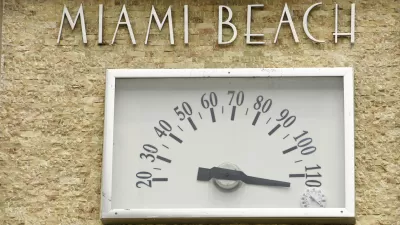
During the great recession, Miami was hit hard by declining property values. "It was the epicenter of the foreclosure problem," Robert Barnes says in an article for the Washington Post. In an effort to recoup some of the losses (they argue) they suffered at the hands of financial institutions that used predatory and discriminatory lending practices to extract value from Miami communities, "Miami sued Bank of America, Wells Fargo and Citigroup under the 1968 Fair Housing Act, which bars discrimination in the sale, rental and financing of housing," Barnes reports.
This strategy has not previously been attempted. "Banks have been sued by individuals and taken to task by the federal government for lending practices, but these new cases are the first in which cities are the plaintiffs and are demanding that banks be held accountable for harming their communities," Barnes tells us. Bank representatives say opening the door to let communities sue banks would expand liability beyond the intentions of the Fair Housing Act. But city officials are confident that if their case is allowed to go to trial they will win.
Read the full story: To recoup losses from the housing collapse, Miami pursues a novel suit
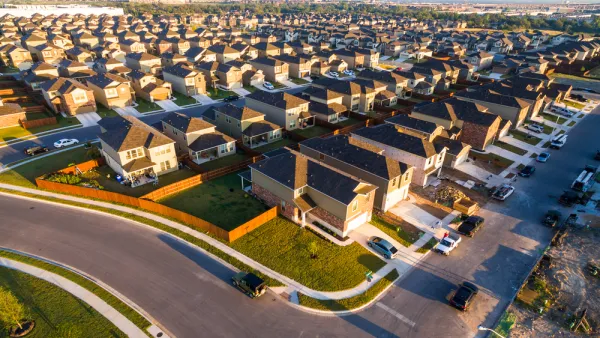
'Corporate Landlords and Market Power': Study Surveys the Single-Family Rental Boom
New research documents the growing footprint of large institutional investors in the housing market during the pandemic, converting more and more of the nation's single-family detached housing units into rental properties.
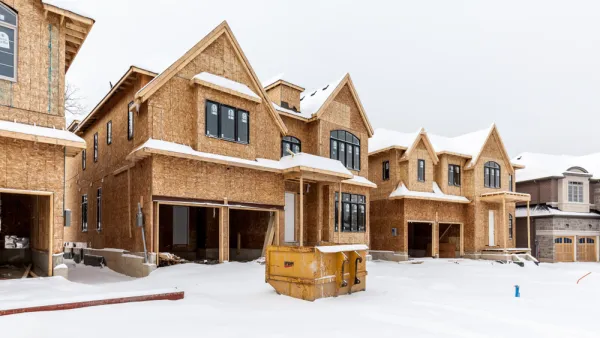
U.S. Faces Historic Housing Shortages, With Roots in the Recession and Local Zoning Restrictions
The long-term effects of the Great Recession were timed very poorly for millions of Millennials aging into homebuying years. The pandemic and the traditional zoning preferences of communities aren't doing first-time homebuyers any favors.
When Wall Street Controls the Housing Market
A debate about the effect of the increasing footprint of large, institutional investors in the housing market is further fragmenting the politics of development in the United States.

Planetizen Federal Action Tracker
A weekly monitor of how Trump’s orders and actions are impacting planners and planning in America.

Washington state to charge fee to drivers with fuel-efficient cars
Revenue from the fee will go towards supporting the state’s highways.

Illinois considers spending $1 billion in taxpayer money on data center
A quantum computing campus and data center are currently under construction in Chicago.

Senate passes bill overhauling permitting
The bill still needs to pass the House.

Did data centers change how voters cast their ballots?
Texas, Ohio, and Georgia all flipped party control. But in rural counties, the effect of local data centers was mixed.

Amtrak invests in eight new Airo trainsets
The new trainsets will begin serving passengers in 2031.

FREE Course: Walkable City 1: Why Walkability?
After describing his path towards focusing on walkability as the essence of good planning, Jeff Speck marches through his five principal reasons for making more walkable places.
Reinventing Malls: Planning Alchemy—Turning Gray Fields Into Gold
The course focuses on the opportunities and imperatives that shape reinvention of mall sites.

City of Charlotte
City of Rosemead
Rutgers University, Edward J. Bloustein School of Planning and Public Policy
University of Michigan School for Environment and Sustainability (SEAS)
Hunter College, City University of New York (CUNY)
The Architects Foundation
University District Partnership