The state capital of California is starting to see rents that would fit in around San Francisco or Los Angeles. Although explanations are scant, some are blaming the stagnant multi-family development industry.


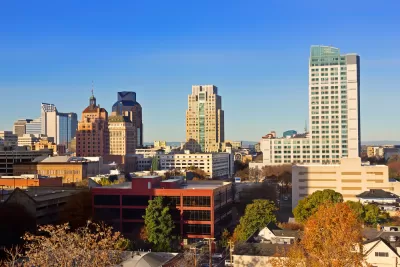
Richard Chang tells one of the dominant stories of Sacramento's recovery from the Great Recession: "A healthy job market and population growth are fueling demand, while the supply of rentals remained stagnant as developers shied away from building during the past decade."
Now, reports Chang, "Sacramento’s rents are so high that the capital region is now the fastest-growing rent market in the nation with year-over-year increases of 11 percent, according to Yardi Matrix, the real estate research arm of Santa Barbara software company Yardi Systems. Occupancy rates have hit 96.8 percent."
Sacramento's surging rents are concentrated in the midtown and downtown neighborhoods, according to Change, who also takes a tour of examples of apartment complexes that have been recently renovated and adjusted to the market.
As for why Sacramento has had a hard time developing rental units since the Great Recession, Chang cites Sacramento City Councilmember Steve Hansen, who says that the city's stagnant development market is a result of the end of redevelopment funding from the state.
FULL STORY: They stopped building apartments; now Sacramento-area rents have spiked


Tight For-Sale Market Leads to Record Price Spikes in the Rental Market
A supply-demand imbalance in the for-sale housing market will eventually spill into the rental market.
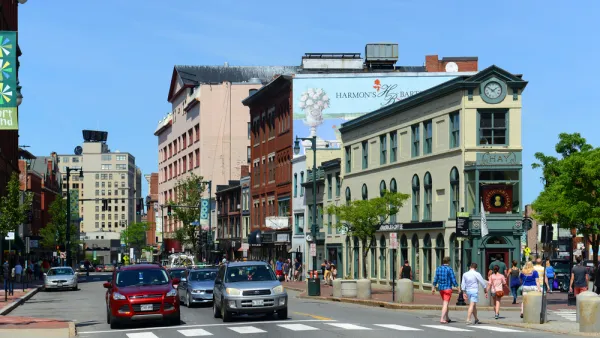
Maine Legislators, in Search of a Fix for Rising Housing Costs, Consider Zoning Reforms
The housing affordability crisis is a legislative priority in the Pine Tree State.
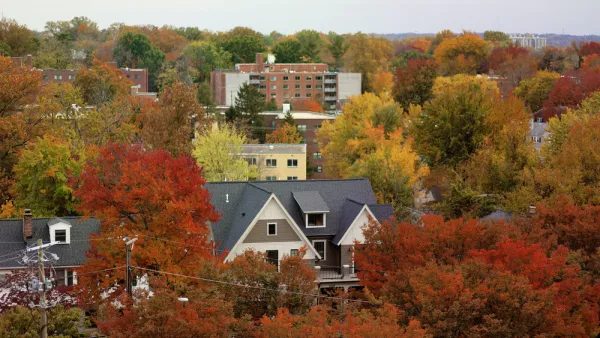
Land Costs and Housing Costs
One common argument against upzoning is that it increases land costs—but land costs rose in the most restrictive markets as well as the least restrictive ones.

Planetizen Federal Action Tracker
A weekly monitor of how Trump’s orders and actions are impacting planners and planning in America.

The state-sanctioned urbicide of Austin
People don’t kill cities. Freeways do.

US to reduce Colorado River water deliveries to Mexico
A new Colorado Treaty amendment reduces Mexico’s Colorado River water allocation by 250,000 acre feet.

5 New England states march closer to 800 megawatt wind energy project
Securing federal approval for the project may be complicated under the Trump administration, which has historically been hostile towards domestic wind power.

Baltimore to break ground on $50 million Transit Priority Project
The project will bring faster bus trips, safer streets and better bike connections to Baltimore.

Airbnb launches $250 million 'last-dollar financing' housing accelerator, makes first investment in Austin
The company will put $6.4 million towards affordable housing development in Texas’ capital.

FREE Course: Walkable City 1: Why Walkability?
After describing his path towards focusing on walkability as the essence of good planning, Jeff Speck marches through his five principal reasons for making more walkable places.
Reinventing Malls: Planning Alchemy—Turning Gray Fields Into Gold
The course focuses on the opportunities and imperatives that shape reinvention of mall sites.

Eagle County Government
Harvard University Graduate School of Design
Nashville Planning Department
The Architects Foundation
University of Cincinnati Online
The Pocatello Development Authority
The Urban Renewal Agency of the City of Pocatello
Journal of the American Planning Association