Portland is expecting 123,000 new households in the city by 2035, so it's proposed a new residential infill policy to accommodate all those people. A new report argues, however, that the policy could have a chilling effect on infill development.



"The city of Portland is considering whether to change zoning rules to create more room to build affordable housing and accommodate future growth, according to an article by Kieran Hanrahan.
"Portland’s Residential Infill Project would change residential zones that only allow single-family homes to allow duplexes and triplexes," explains Hanrahan, who also describes such housing types as the "'missing middle' between houses and large apartment buildings."
An October post by Portland for Everyone described the Residential Infill Project as a solution for the proliferation of McMansions around Portland—a very different angle than the growth concerns examined by Hanrahan's article. Along those lines, Hanrahan examines a new economic study completed by Jerry Johnson, principal of Johnson Economics. According to the study, by reducing the allowed maximum size of homes the Residential Infill Project "would make redeveloping homes less appealing to developers."
Read the full story: Portland’s Residential Infill Project May Have Caveats

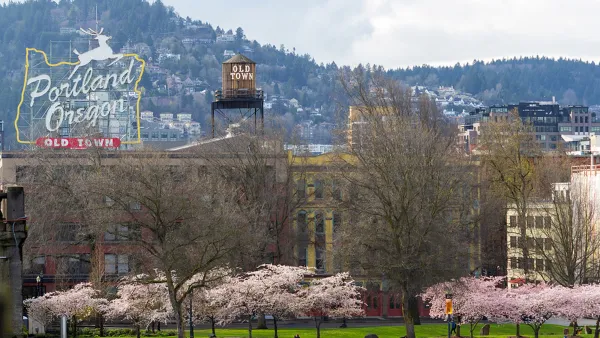
Portland to Consider New Residential Infill Regulations
The city of Portland's new residential infill ordinance would reduce the number of 1:1 demolitions—which often convert older, affordable homes into expensive McMansions.
Residential Infill Regulations Designed to Slow the Advance of McMansions
The city of Portland, Oregon is considering new regulations to limit the kinds of homes that can be built in existing neighborhoods.
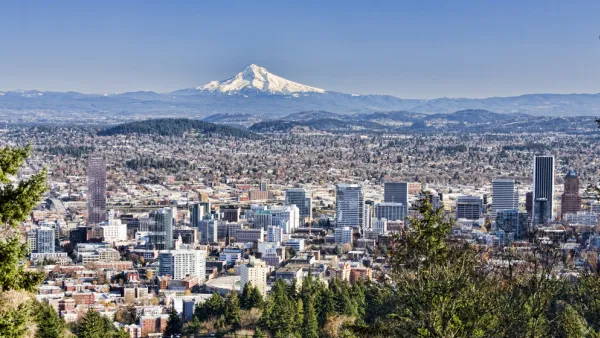
Portland's Inclusionary Zoning Effect Measured, Criticized
It's been over four years since the city of Portland implemented an inclusionary zoning policy that required all new apartment developments to set aside a portion of units for low- and moderate-income housing.

Planetizen Federal Action Tracker
A weekly monitor of how Trump’s orders and actions are impacting planners and planning in America.

California plans to bury El Niño’s downpour
If the state plays its cards right, it may be able to store a billion acre-feet of El Niño’s water in aquifers.

Chicago breaks ground on $3 billion megadevelopment
The new neighborhood, titled Foundry Park, will one day host 3,700 residences.

Satanic Place Names
From streams and lakes to valleys and canyons, I mapped more than 1,000 places named after the Devil.

California High-Speed Rail Authority CEO resigns after $600,000 scandal
Under Ian Choudri, the authority used taxpayer dollars to fund first class flights and trips to nightclubs.

Want to study the Missouri River? Soon, you may need unanimous approval from 10 states
Legislation would require 10 governors’ permission to study or build projects moving water outside the basin.

FREE Course: Walkable City 1: Why Walkability?
After describing his path towards focusing on walkability as the essence of good planning, Jeff Speck marches through his five principal reasons for making more walkable places.
Reinventing Malls: Planning Alchemy—Turning Gray Fields Into Gold
The course focuses on the opportunities and imperatives that shape reinvention of mall sites.

City of Rosemead
Rutgers University, Edward J. Bloustein School of Planning and Public Policy
One Hundred Miles
Hunter College, City University of New York (CUNY)
The Architects Foundation
University of Cincinnati Online
City of Cambridge
Montrose County
The Pocatello Development Authority