It took six years and two returns from the dead, but Baltimore now has its own bike share system.


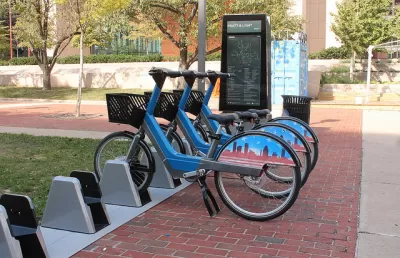
Fern Shen reports on the launch of Baltimore Bike Share last week.
"Already, more than 350 people have plunked down $100 to be “founding members,” locking that annual rate in for life for membership that would otherwise cost $15 per month," according to Shen.
Shen quotes Liz Cornish, executive director of the private non-profit advocacy group Bikemore, in the article, talking about the new bike share program represents several victories for the city. "It took a while for Bike Share to be seen as public transportation – that’s such a huge win," she says in the article. "For years, the city saw it as some kind of flowery amenity."
The program has been in the works for six year, according to the history Shen lays out. Phase I of the program will launch with 20 stations, but the first 50 planned stations are all mapped for your viewing pleasure.
Read the full story: Baltimore Bike Share rolling out this week

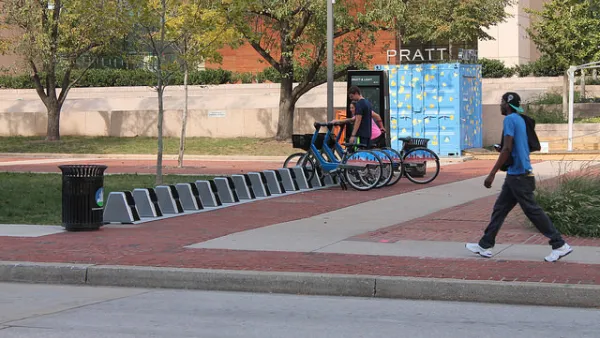
The Secret to Baltimore's Bikeshare Success: E-Bikes
Baltimore's still-new bike share system is off to a strong start, running 40 percent of its fleet on small electric motors.
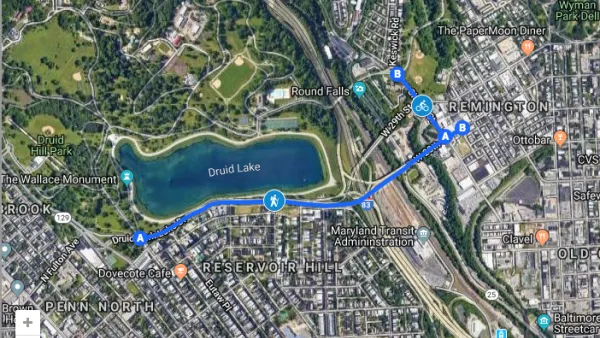
Baltimore's 'Big Jump'
A temporary bike and pedestrian path is changing the street design game in Baltimore.
Baltimore Approves Bikeshare System (E-Bikes Included)
The newly approved Charm City bikeshare system has a leg up on the competition: 200 of the system's 500 bikes will come with electric pedaling assistance.

Planetizen Federal Action Tracker
A weekly monitor of how Trump’s orders and actions are impacting planners and planning in America.

Amtrak, CN end decades-long dispute with eight-year agreement
The new operating agreement establishes an updated framework for the companies to work together, including processes to resolve disputes.

Judges permit Denver to divert 77,000 acre feet from the Colorado River for reservoir expansion
Overuse and climate change have caused the Colorado River’s water levels to plummet.

NYC DOT wants faster, more permanent street upgrades
The city is examining ways to build more concrete infrastructure without getting entangled in 'decades-long' projects.

'Something we’ve never seen before:' rising utility rates could strain city finances nationwide
Data centers, climate change and other factors have caused utility rates in the United States to increase by 38% since 2020.

Trump to overrule local leaders, lease millions of acres of America’s Pacific Island territories’ seafloors to mining companies
International law says that the Indigenous people of America’s territories have a right to prior and informed consent regarding projects that impact their countries.

FREE Course: Walkable City 1: Why Walkability?
After describing his path towards focusing on walkability as the essence of good planning, Jeff Speck marches through his five principal reasons for making more walkable places.
Reinventing Malls: Planning Alchemy—Turning Gray Fields Into Gold
The course focuses on the opportunities and imperatives that shape reinvention of mall sites.

Harvard University Graduate School of Design
KFH Group Inc.
Greater Baltimore Committee
The Architects Foundation
University of Cincinnati Online
The Pocatello Development Authority
The Urban Renewal Agency of the City of Pocatello