A survey of the long history of poetry connected of the urban experience—from the 18th century to the Beat poets of the 20th century and the Hip Hop artists of today.


"In a modern world where hyper-connectivity often results in disconnection from our immediate surroundings, creating the space to explore poetry can make us more reflective and engaged citizens," writes Rosie Spinks. "With poetry, the city becomes a place where we meander, both physically and mentally."
Spinks provides a loving survey of urban poetry, spanning cultures and eras, drawing connections to the urban experiences and opportunities that unite them all.
All of this despite the fact that "over time, poetry has been less associated with train tracks, smog, and bridges and more with brooks, brambles, and fields," admits Spinks. Yet with examples like Alexander Pope, Charles Baudelaire, Allen Ginsberg, and Eminem to draw from, Spinks begins to build a history of poetry as a uniquely urban form. And with examples of prominent urbanist poets and fans of urban poetry working in cities today, Spinks shows all of us how to actively connect with poetry to the cities we love.
Read the full story: 'Cities are built with language': how poetry feeds on urban life

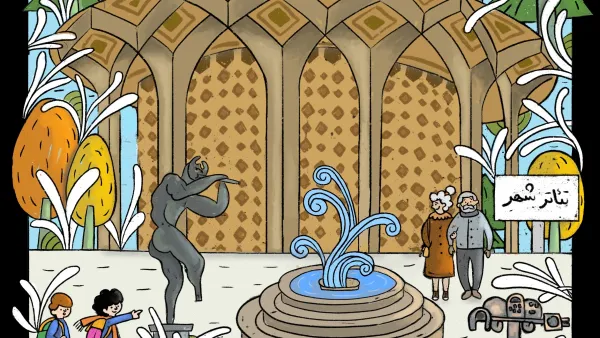
War and Place: The Iran you Don't see in the News
The world is watching Iran right now through the narrow lens of conflict. When governments see the world through a target reticle, smoke fills the frame — and the places people actually live get ignored.
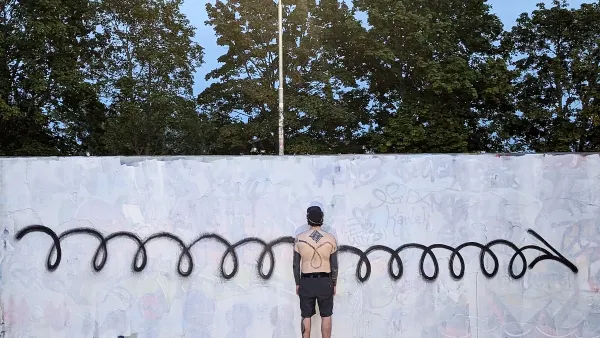
“Skin, Like a City, Will Tell You if You’ve Ignored its History”
Once an urban planner, Sean Colgrave traded in infrastructure for ink when he became a tattoo artist. Now he says: one profession has a lot to learn from the other.
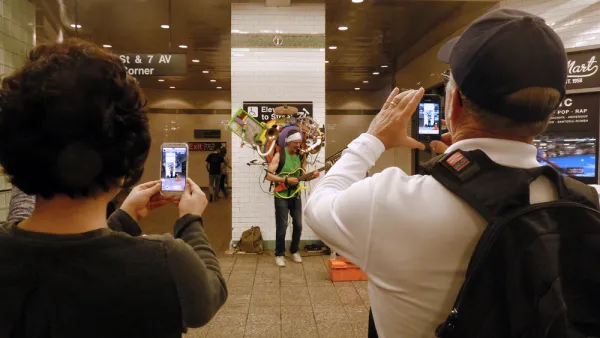
Friday Eye Candy: The Theatricality of the Subway
A new book of photography amplifies what was already there.

Planetizen Federal Action Tracker
A weekly monitor of how Trump’s orders and actions are impacting planners and planning in America.

California plans to bury El Niño’s downpour
If the state plays its cards right, it may be able to store a billion acre-feet of El Niño’s water in aquifers.

Chicago breaks ground on $3 billion megadevelopment
The new neighborhood, titled Foundry Park, will one day host 3,700 residences.

One of Denver’s busiest corridors to gain BRT
The project will span 18 miles and contain 74 bus rapid transit stations.

275,000 bus trips are at stake on Seattle's ballot
If passed, the Seattle Transit Measure would trigger a 0.3% sales tax and raise an average of $138 million per year to maintain and expand Seattle’s bus services.

Texas may pay Israeli company billions to ease water woes
Texas awarded IDE Technologies the contract for its Harbor Island project, which is slated to become the Western Hemisphere's largest desalination plant.

FREE Course: Walkable City 1: Why Walkability?
After describing his path towards focusing on walkability as the essence of good planning, Jeff Speck marches through his five principal reasons for making more walkable places.
Reinventing Malls: Planning Alchemy—Turning Gray Fields Into Gold
The course focuses on the opportunities and imperatives that shape reinvention of mall sites.

City of Rosemead
Rutgers University, Edward J. Bloustein School of Planning and Public Policy
One Hundred Miles
Hunter College, City University of New York (CUNY)
The Architects Foundation
University of Cincinnati Online
City of Cambridge
Montrose County
The Pocatello Development Authority