Houston doesn't compare well with other cities when it comes to locating polluting industrial uses near residential neighborhoods. Blame the city's lack of zoning, according to new research.



"If you read [the Houston Chronicle's] Chemical Breakdown series on the poor oversight of Houston's repositories of toxic material, you already know that potentially dangerous stuff could be lurking in your backyard," according to an article by Lydia DePillis.
But the poor regulation of polluters in only half of a uniquely Houstonian threat: "That might be more common than it is in other Texas cities, according to a new analysis, because of Houston's longstanding resistance to zoning."
The new analysis DePillis mentions is contained in a working paper by economists at the University of Pittsburgh and the University of Washington, which examines the influence of zoning in the city of Chicago and several Texas cities.
Judging by the distribution of toxics-emitting facilities on a list maintained by the Environmental Protection Agency — which you can see for Houston here — the economists did find that polluters tend to be more densely clustered in other large Texas cities with fairly traditional zoning codes. In Houston, 65 percent of the city is within one mile of a facility in the toxic release inventory. That number is 30 percent, 44 percent, and 43 percent for Austin, San Antonio, and Dallas respectfully.
As for why economists were compelled to chime in on matters of land use regulation, DePillis notes that homes near sources of pollution tend to have lower property values. Therefore, huge swaths of Houston are less valuable than they might have been if zoning had separated polluting industrial uses out from residential areas.
FULL STORY: How zoning impacts your proximity to pollution

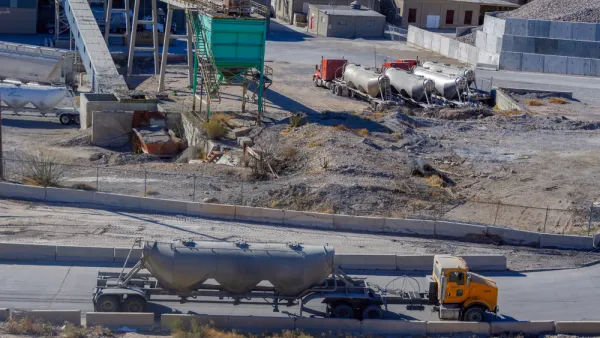
Challenging the Permitting Record of the Texas Commission on Environmental Quality
Zoning in the U.S. was originally intended to keep noxious uses out of residential areas. Around Houston, which famously lacks a traditional zoning system, polluting uses are still granted broad permission to operate in residential areas.

How Houston Can Be a Model for Housing Reform
The city builds more new housing than almost any other and has dramatically reduced homelessness, yet low-income families struggle to find affordable housing.
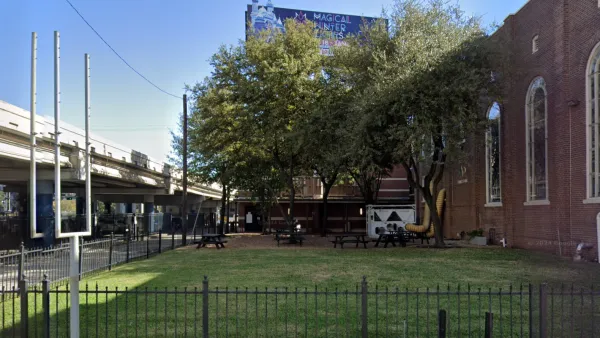
Houston Supportive Housing Development Sparks Debate
Critics say a proposed apartment building would negatively impact the neighborhood’s walkability.

Planetizen Federal Action Tracker
A weekly monitor of how Trump’s orders and actions are impacting planners and planning in America.

The state-sanctioned urbicide of Austin
People don’t kill cities. Freeways do.

US to reduce Colorado River water deliveries to Mexico
A new Colorado Treaty amendment reduces Mexico’s Colorado River water allocation by 250,000 acre feet.

5 New England states march closer to 800 megawatt wind energy project
Securing federal approval for the project may be complicated under the Trump administration, which has historically been hostile towards domestic wind power.

Baltimore to break ground on $50 million Transit Priority Project
The project will bring faster bus trips, safer streets and better bike connections to Baltimore.

Airbnb launches $250 million 'last-dollar financing' housing accelerator, makes first investment in Austin
The company will put $6.4 million towards affordable housing development in Texas’ capital.

FREE Course: Walkable City 1: Why Walkability?
After describing his path towards focusing on walkability as the essence of good planning, Jeff Speck marches through his five principal reasons for making more walkable places.
Reinventing Malls: Planning Alchemy—Turning Gray Fields Into Gold
The course focuses on the opportunities and imperatives that shape reinvention of mall sites.

Eagle County Government
Harvard University Graduate School of Design
Nashville Planning Department
The Architects Foundation
University of Cincinnati Online
The Pocatello Development Authority
The Urban Renewal Agency of the City of Pocatello
Journal of the American Planning Association