The New York Times mines historic footage and current research for perspective on the effects of housing segregation.


A New York Times “Retro Report” examines segregation and public housing in 1960s United States in a piece titled “Where Does the American Dream Live?”
For the uninitiated, the Retro Report format mixes historic video footage with interviews from contemporary leaders and thinkers. In this case, Walter Cronkite introduces footage racial conflict while Henry Cisneros offer perspective.
Also, the report includes historic footage of Alex Polikoff, an ACLU lawyer who filed one of the first housing discrimination lawsuits, and contemporary footage of Polikoff looking back from the present day.
“Where Does the American Dream Live?” begins with the civil rights movement of the 1960s, explaining how events like the death of Martin Luther King, Jr. paved the way for the Gautreaux Project and the later Moving to Opportunity initiative. The recent unrest in cities like Ferguson, Baltimore, and Milwaukee is then tied to ongoing challenge of desegregating residential neighborhoods and the persistent difficulty of finding the answer posed by the question posed in the title of the report.
FULL STORY: Where Does the American Dream Live?

Changes to Tax Credit Criteria Are Breaking Up Concentrated Poverty in New Jersey
Recent news reports have highlighted the low number of federally-funded affordable housing projects that are built in high-opportunity areas, but an examination has found that strategic allocation changes are having a beneficial effect in New Jersey.
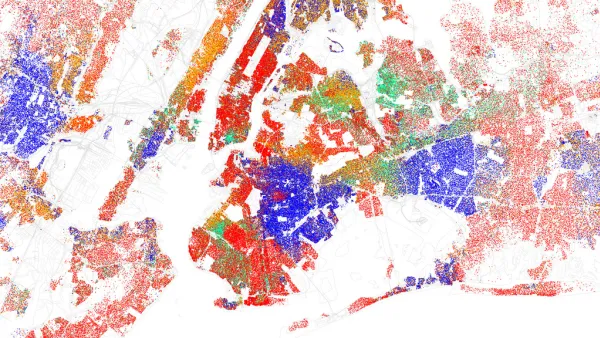
Study: More Than Income, Race Influences Neighborhood Standards
Although income inequality receives plenty of coverage these days, research suggests that neighborhoods of color have less access to resources than white neighborhoods despite similar median incomes.

Planetizen Federal Action Tracker
A weekly monitor of how Trump’s orders and actions are impacting planners and planning in America.

The state-sanctioned urbicide of Austin
People don’t kill cities. Freeways do.

US to reduce Colorado River water deliveries to Mexico
A new Colorado Treaty amendment reduces Mexico’s Colorado River water allocation by 250,000 acre feet.

Mamdani overhauls NYC's Vision Zero plan with 100 new policy goals
The overhaul aims to reduce traffic deaths and make streets safer for pedestrians, cyclists and drivers through lower speed limits, new safety infrastructure and more.

Amtrak not solely to blame for New Jersey commuter rail's unreliability, report finds
A new study from the Garden State Initiative found that NJ Transit’s budget grew 20% across a 4 year period, but reliability declined significantly over the same period.

EPA erases limits on planet-warming pollution from power plants
Under Monday’s plan, power plants would still have some limits on how much mercury, arsenic and other contaminants they can emit.

FREE Course: Walkable City 1: Why Walkability?
After describing his path towards focusing on walkability as the essence of good planning, Jeff Speck marches through his five principal reasons for making more walkable places.
Reinventing Malls: Planning Alchemy—Turning Gray Fields Into Gold
The course focuses on the opportunities and imperatives that shape reinvention of mall sites.

Eagle County Government
Harvard University Graduate School of Design
Nashville Planning Department
The Architects Foundation
University of Cincinnati Online
The Pocatello Development Authority
The Urban Renewal Agency of the City of Pocatello
Journal of the American Planning Association