The Rockefeller Foundation and the Unreasonable Institute want to help small organizations implement big ideas around the US.


At the Millennial Tech & Change Summit in San Francisco, the Rockefeller Foundation and Boulder-based accelerator Unreasonable Institute announced the launch of a $1-million competition aimed at spurring the "next generation" of urban innovation.
The goal of the program is to "develop revolutionary solutions to complex urban problems facing poor or vulnerable people in cities across the country."
Ten proposals will be selected to participate in the Future Cities Accelerator, which is designed to help early-stage organizations scale their programs up to reach at least 1 million people.
Each will receive $100,000 in grants, as well as nine months of intensive training and support, and access to global investors.
The application deadline is September 25, 2016. Winners will be announced January 4, 2017.
Read the full story: http://www.curbed.com/2016/8/12/12437348/rockefeller-foundation-urban-problems-future-cities

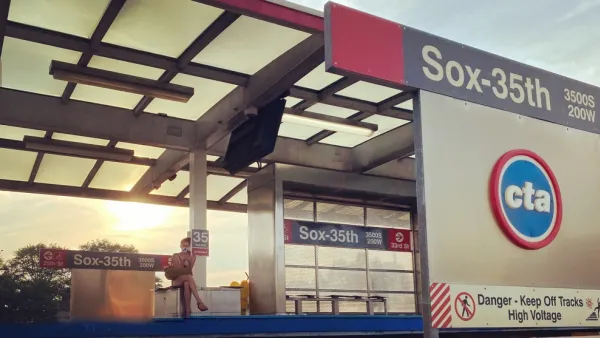
$2 Billion Federal Grant for Red Line Extension Project to Chicago’s South Side
A plan to extend the Chicago Transit Authority (CTA) Red Line 5.6 miles to the south won a $2 billion grant from the federal government.
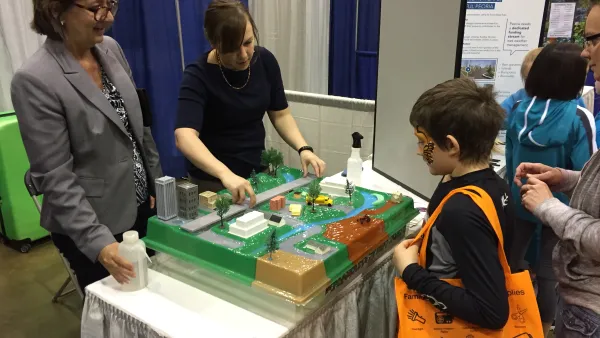
An Urban Planner Dedicated to Winning the Funding Necessary to Do the Work
An interview with Katy Shackelford, AICP, PTP, an urban planner and a funding specialist, to discuss the unique paths a planning career can take, and how unexpected career choices can deliver big benefits.
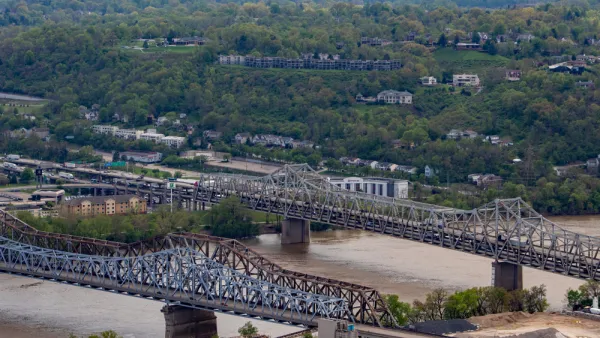
$1.6 Billion for Ohio River Bridge Included in Latest Federal Grant Announcements
The Biden administration this week spanned the country to announce over $2 billion in grant funding for bridge projects.

Planetizen Federal Action Tracker
A weekly monitor of how Trump’s orders and actions are impacting planners and planning in America.

Amtrak, CN end decades-long dispute with eight-year agreement
The new operating agreement establishes an updated framework for the companies to work together, including processes to resolve disputes.

Judges permit Denver to divert 77,000 acre feet from the Colorado River for reservoir expansion
Overuse and climate change have caused the Colorado River’s water levels to plummet.

NYC DOT wants faster, more permanent street upgrades
The city is examining ways to build more concrete infrastructure without getting entangled in 'decades-long' projects.

'Something we’ve never seen before:' rising utility rates could strain city finances nationwide
Data centers, climate change and other factors have caused utility rates in the United States to increase by 38% since 2020.

Trump to overrule local leaders, lease millions of acres of America’s Pacific Island territories’ seafloors to mining companies
International law says that the Indigenous people of America’s territories have a right to prior and informed consent regarding projects that impact their countries.

FREE Course: Walkable City 1: Why Walkability?
After describing his path towards focusing on walkability as the essence of good planning, Jeff Speck marches through his five principal reasons for making more walkable places.
Reinventing Malls: Planning Alchemy—Turning Gray Fields Into Gold
The course focuses on the opportunities and imperatives that shape reinvention of mall sites.

Harvard University Graduate School of Design
KFH Group Inc.
Greater Baltimore Committee
The Architects Foundation
University of Cincinnati Online
The Pocatello Development Authority
The Urban Renewal Agency of the City of Pocatello