Detroit is looking for ideas to make it easier to revitalize neighborhood main streets.



Christine Ferretti reports: "Detroit this week is putting out a call to urban planners, architects, preservationists and designers for “Pink Zoning Detroit,” an initiative that sets out to transform the city’s complex land use rules and speed new development in its commercial corridors by reducing red tape."
The project, funded by a $75,000 grant through the John S. and James L. Knight Foundation, will have three multidisciplinary teams put together visions for walkable, mixed-use activity in three commercial sites in Detroit. Later, the concepts will be tested against the city’s zoning ordinance and building code to identify roadblocks and work with city departments and others to identify strategies for reforms.
Maurice Cox, director of the city’s Planning and Development Department, is quoted in the article describing how traditional regulatory mechanisms, like zoning, can inhibit the kind of urban life sought by many residents. Pink Zoning Detroit joins the 20-minute neighborhood concept recently pitched by Mayor Mike Duggan as an organizing concept for revitalization.
Read the full story: Detroit seeks ‘pink zones’ to revive neighborhoods
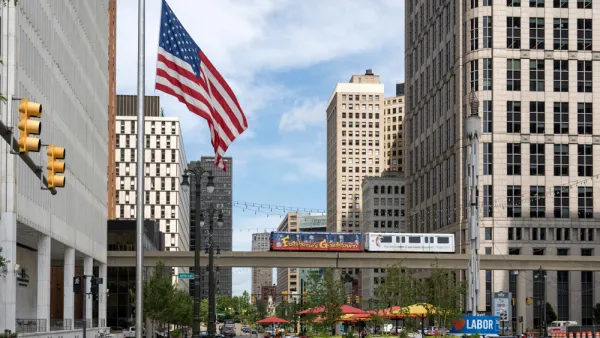
Work Underway to Update Detroit's Zoning Code
The first deliverable in the process of updating the city of Detroit's zoning ordinance is publically available.
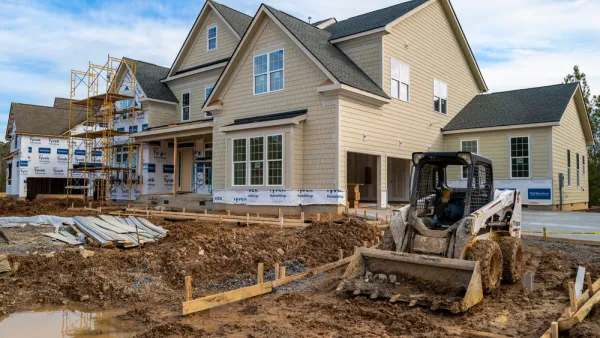
Not Just Use: More Zoning Regulations to Unlock Housing Equity
Prohibiting single-family zoning alone won’t accomplish the needed transformation of the built environment in the United States.

Watch: Debunking Myths About Houston's Lack of Zoning
A video published last week by City Beautiful reveals the myths and misconceptions of Houston's land use regulation system.

Planetizen Federal Action Tracker
A weekly monitor of how Trump’s orders and actions are impacting planners and planning in America.

Eastern Nebraska is running out of electricity
Data centers and electrification are straining eastern Nebraska’s grid, throttling economic development.

Study reveals best places in the U.S. for cycling, walking
New research from Streetlight Data examines bicycle and pedestrian miles per capita in the 100 largest U.S. cities by population.

DSA members accuse Mamdani of 'abandoning values' over housing redevelopment
New York City's mayor plans to replace about 2,000 units of public housing with private, mixed-income housing.

All sides of BRT debate unhappy with CDOT’s most recent move
The Colorado Department of Transportation is no longer considering center-running bus lanes for Colorado Boulevard.

Massachusetts bogs generate both power, and cranberries
Putting solar panels above farmland is one way Massachusetts is advancing toward its goal of net-zero carbon emissions by 2050.

FREE Course: Walkable City 1: Why Walkability?
After describing his path towards focusing on walkability as the essence of good planning, Jeff Speck marches through his five principal reasons for making more walkable places.
Reinventing Malls: Planning Alchemy—Turning Gray Fields Into Gold
The course focuses on the opportunities and imperatives that shape reinvention of mall sites.

City of Rosemead
Rutgers University, Edward J. Bloustein School of Planning and Public Policy
One Hundred Miles
University of Michigan School for Environment and Sustainability (SEAS)
Hunter College, City University of New York (CUNY)
The Architects Foundation
City of Cambridge
The Pocatello Development Authority
The Urban Renewal Agency of the City of Pocatello