The first deliverable in the process of updating the city of Detroit's zoning ordinance is publically available.


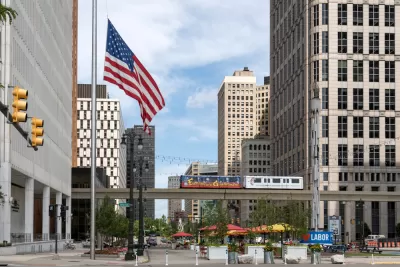
The Legislative Policy Division of the Detroit Planning Commission has taken the first steps toward overhauling the city's zoning ordinance, by releasing a "Zone Analytic"—i.e., an overview of the upcoming process and key recommendations that will guide the process.
Aaron Mondry breaks the news about the new Zone Analytic, describing the document as a "starting point for discussion' prior to drafting the new ordinance."
As noted by Mondry, the Zone Analytic calls for a new zoning ordinance that achieves four major goals:
- Making zoning simpler for everyone
- Neighborhood revival
- Corridor growth
- Job creation
According to Mondry, Detroit's new zoning ordinance is expected to adopt form-based regulations, while discarding some of the use-based regulations that have dominated zoning in Detroit in the past. "Underused, obsolete, and unnecessary overlay codes will be removed or reviewed," according to Mondry.
"Now that the first set of recommendations has been released, the Planning Commission will continue to take feedback from residents and stakeholders, who can do so through Zone Detroit’s website or at public meetings held before public comments close on November 1."
The city is working with consultant Code Studio to complete the project. Disclosure: the author of this post has worked with Code Studio professionally in the past.
Read the full story: Detroit outlines key recommendations for updating city’s zoning ordinance


Boston to Begin Zoning Code Update, Mayor Announces
It’s been nearly 60 years, but the city of Boston is finally ready to do a comprehensive rewrite of its zoning code.
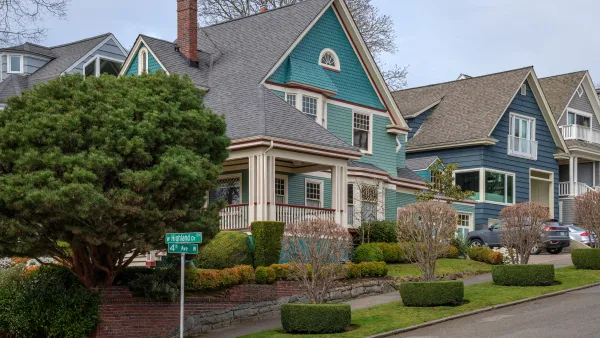
Opinion: Form-Based Codes Could Harm Seattle’s Housing Affordability
Form-based zoning codes can encourage mixed-use development and walkable neighborhoods, but focusing too much on aesthetic elements can drive up the cost of housing.

Maryland City Reveals Draft Form-Based Code
With the new zoning code, Frederick aims to shift away from use-based zoning regulations.

Planetizen Federal Action Tracker
A weekly monitor of how Trump’s orders and actions are impacting planners and planning in America.

Amtrak, CN end decades-long dispute with eight-year agreement
The new operating agreement establishes an updated framework for the companies to work together, including processes to resolve disputes.

Judges permit Denver to divert 77,000 acre feet from the Colorado River for reservoir expansion
Overuse and climate change have caused the Colorado River’s water levels to plummet.

Boston has spent millions making the Green Line more accessible — and there’s no end in sight
While the city has invested millions into expanding and adding platforms to the Green Line to make it more accessible, new train cars set to arrive next year will be too tall for disabled passengers to board without raising the current platforms.

Idaho may see an 18% drop in federal surface transit funding — the largest estimated cut in the US
Transit systems in rural communities are much more reliant on federal funding to provide their services.

How ‘post-disaster gentrification’ alters neighborhoods after natural calamities
After hurricanes, fires or other calamities, the original residents of a community are often replaced by younger, wealthier residents.

FREE Course: Walkable City 1: Why Walkability?
After describing his path towards focusing on walkability as the essence of good planning, Jeff Speck marches through his five principal reasons for making more walkable places.
Reinventing Malls: Planning Alchemy—Turning Gray Fields Into Gold
The course focuses on the opportunities and imperatives that shape reinvention of mall sites.

City of Wisconsin Rapids
Harvard University Graduate School of Design
KFH Group Inc.
The Architects Foundation
University of Cincinnati Online
The Pocatello Development Authority
The Urban Renewal Agency of the City of Pocatello