An op-ed by Daniel Freedman explains how a legal spat over an 850-square-foot "granny flat" affected hundreds of units around Los Angeles. The city's attempt to rectify the problems with its second unit ordinance has encountered more resistance.



Hopefully, in the next week or two the Los Angeles City Council will take action to correct a technical defect in its current policy for permitting second dwelling units. This action is both critical and necessary for the city to comply with state housing laws, and to give relief to hundreds of homeowners whose permits have become vulnerable due to a court's ruling against the city. The City Council's action on this issue is the right thing to do for a city dealing with one of the worst housing situations in the nation, a situation that makes it nearly impossible for kids to live near their parents, or elderly parents near their children. While this action will not solve the housing crisis by any means, it is an important step forward toward giving people options to use their current homes to accommodate growing families in a difficult housing market.
For some background, the story of how the Los Angeles's second unit policy became newsworthy in 2016 is not significantly different from many other hot-button urban planning and housing related issues: a NIMBY lawsuit originating in a wealthy neighborhood. Since 2010, after working for a better part of a decade to catch up to state mandated standards, the city has been permitting second units without controversy. The permitting scheme applied, as guided by state standards, were extremely conservative in that they only allowed for second units that comply with all "height, setback, lot coverage, architectural review, site plan review, fees, charges and other zoning requirements generally applicable to… the zone." They were also restricted in size to be less than 1,200 square feet. Given these restrictions, and the array of other complications involved in constructing anything sizable on a single family lot, only a modest 50 to 60 second units have been permitted annually over the last five years in a city of almost four million people. The city's second unit policy was working, and it was helping to keep families together while providing new housing opportunities in otherwise fully built-out single-family residential zones.
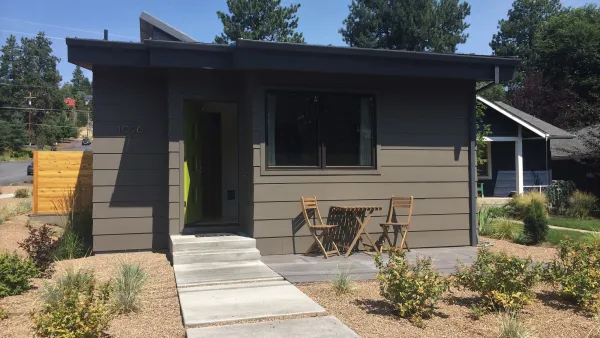
Last year however, after a Cheviot Hills family attempted to build an 850-square-foot "granny flat" for their elderly grandfather, a litigious neighbor objected and made it clear that he would stop at nothing to kill this relatively small addition to their home. The neighbor, an experienced attorney himself, went ahead and hired additional lawyers and began to lay siege against the city and the family to stop the second unit. In doing so, the neighbor was able to get a court to find that the city's latest second unit permitting policy, which has been in flux for more than three decades in response to state legislation, had a technical deficiency that made it invalid.
That court decision meant that not only was the Cheviot Hills family's second unit potentially permitted improperly, but so to were hundreds of others permitted before it and dozens since. Now, with an invalid second unit ordinance and a team of NIMBY lawyers demanding a quarter of a million dollars in attorney's fees, the city is doing the right thing to clear up the technical defect and re-adopt the second unit policy. Doing so will not only fix hundreds of permits that are currently hanging in the balance, but it will help quell the costly litigation on this issue once and for all.
To stop the city from fixing the situation, however, the same team of NIMBY lawyers has been spreading misinformation to community groups and homeowners in an attempt create controversy and debate. In order to strike fear in homeowners groups, they continue to make baseless and unsupported claims that the city's second unit policy provides for unrestricted and "weak" regulations of second units, and that the city has an "existing ordinance" that should be preserved. These claims however, are completely detached from reality. Firstly, as noted above, any second unit addition must comply with the basic requirements of the underlying zone. There is no unfettered right to build a second unit as opponents contend. Second, the opposition's call to preserve the existing restrictions in the municipal code is both absurd and dangerous. There is no question that the municipal code provisions on second units are not only antiquated, but also unquestionably in violation of state law as written.
If the city seeks to preserve or "reinterpret" these antiquated standards, as certain groups have called for, not only will the city be subjected to more and more litigation by all those homeowners that have relied on city permits, but it will leave hundreds stranded with potentially unpermitted second units. It will also mean the continuation of the city's costly and never-ending struggle to comply with the state's second unit mandates. This is not a reasonable pathway forward for a city in a housing crisis, and the City should not attempt to avoid taking necessary legislative actions because of NIMBY pressure. Accordingly, the city cannot kick this can down the road any longer, and must act now to correct its second unit policy. Not only will this action assure that the city's standards comply with state law, but it will help avoid future litigation expenses, while also protecting those people that have relied on the city's second unit permitting programs for the past decade.
Daniel Freedman is a land use attorney and environmental advocate focused on regional planning issues and sustainable development.


L.A. City Council Chooses Legal Limbo for Accessory Dwelling Units
Faced with the task of conforming its "granny flats" ordinance with state law, the Los Angeles City Council yielded.
Court Ruling Deals Blows to Granny Flat Permits in Los Angeles
Granny flats, also known as mother-in-law units or accessory dwelling units, are a hot button item in most cities. A county court recently took the city of Los Angeles' finger off the button, so to speak.
San Diego Residents Challenge the City's ADU Regulations
Residents in some of the city's single-family neighborhoods worry about the potential impacts of ADU construction on local character and parking.

Planetizen Federal Action Tracker
A weekly monitor of how Trump’s orders and actions are impacting planners and planning in America.

Data reveals that NYC’s bet on congestion pricing has paid off
After almost two years of the program, reports show positive impacts on traffic and air quality and no disruptions to parking.

Denver is solving homelessness. Why aren't the rest of us?
Since 2023, Denver's street homeless population has decreased by 64%, proving that effective tools exist to support those in need of housing.

Will sprawl save California?
California residents will vote on Proposition 45 in November, which would make it easier to build large housing developments on the outskirts of the state’s cities.

Texas suburbs are popping up around old oil wells. Some are starting to leak
Several plugged wells in Texas have failed in recent years, endangering those who unknowingly settled nearby.

This Chicago neighborhood is using planning to increase life expectancy
The Garfield Park Quality-Of-Life Plan aims to bring residents everything from easier access to fresh food to revitalized commercial corridors.

FREE Course: Walkable City 1: Why Walkability?
After describing his path towards focusing on walkability as the essence of good planning, Jeff Speck marches through his five principal reasons for making more walkable places.
Reinventing Malls: Planning Alchemy—Turning Gray Fields Into Gold
The course focuses on the opportunities and imperatives that shape reinvention of mall sites.

Rutgers University, Edward J. Bloustein School of Planning and Public Policy
One Hundred Miles
County of Mendocino
The Architects Foundation
University of Cincinnati Online
Montrose County
Northern Illinois Transit Authority (NITA)
The Pocatello Development Authority

