Vox publishes an article debunking tiny houses as the housing silver bullet some hope they will become.


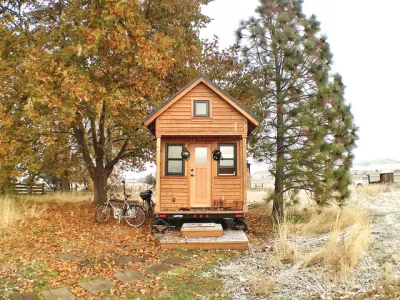
Dylan Matthews argues the case against tiny houses by debunking their primary appeal: that tiny houses are affordable. That "premise is a fantasy," according to Matthews, who himself lives in a 300-square-foot apartment.
The premise is a fantasy, according to Matthews, because
It ignores the real reason that housing is unaffordable — at least in the coastal urban centers where fantasies of tiny housing are most potent. The problem, simply put, is that 1) land in cities where you'd want to live is expensive and 2) many cities don't let developers use that land efficiently.
Given those two constraints, tiny houses have yet to become a viable presence in the housing market, argues Matthews. The flip side of Matthew's argument also has implications for the rest of the existing housing market in desirable cities like San Francisco, New York, and Washington, D.C.:
You're not paying for your overlarge apartments. No one in these cities is overwhelmed by how gigantic all their housing options are.
Construction is the cheap part. Land is the expensive part.
The article includes a detailed survey of articles from additional sources to inform the article.
Read the full story: The case against tiny houses
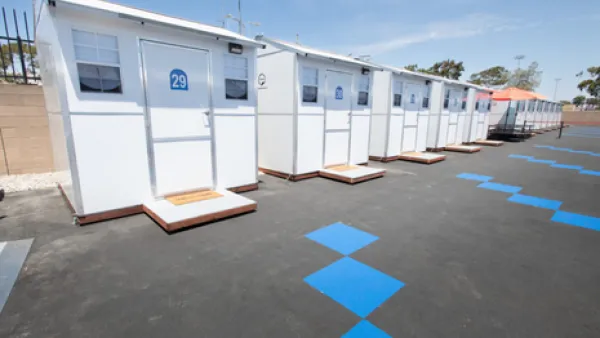
Tiny House Villages for Addressing Homelessness: An Interview with Yetimoni Kpeebi
One researcher's perspective on the potential of tiny homes and owner-built housing as one tool to fight the housing crisis.
What’s in a Name? Investors vs. Speculators
We don’t often make a clear distinction between investors and speculators, which makes it harder to identify harmful behavior — and to find solutions for it.
How ‘Filtering’ Opens Up Affordable Housing
An analysis of 12 U.S. cities found that new market-rate construction often leads to more affordable units becoming available, but the effect varies across housing markets.

Planetizen Federal Action Tracker
A weekly monitor of how Trump’s orders and actions are impacting planners and planning in America.

Washington state to charge fee to drivers with fuel-efficient cars
Revenue from the fee will go towards supporting the state’s highways.

Illinois considers spending $1 billion in taxpayer money on data center
A quantum computing campus and data center are currently under construction in Chicago.

Senate passes bill overhauling permitting
The bill still needs to pass the House.

Did data centers change how voters cast their ballots?
Texas, Ohio, and Georgia all flipped party control. But in rural counties, the effect of local data centers was mixed.

Amtrak invests in eight new Airo trainsets
The new trainsets will begin serving passengers in 2031.

FREE Course: Walkable City 1: Why Walkability?
After describing his path towards focusing on walkability as the essence of good planning, Jeff Speck marches through his five principal reasons for making more walkable places.
Reinventing Malls: Planning Alchemy—Turning Gray Fields Into Gold
The course focuses on the opportunities and imperatives that shape reinvention of mall sites.

City of Charlotte
City of Rosemead
Rutgers University, Edward J. Bloustein School of Planning and Public Policy
University of Michigan School for Environment and Sustainability (SEAS)
Hunter College, City University of New York (CUNY)
The Architects Foundation
University District Partnership