A proposal to restore Mexico City's 45 rivers envisions a whole new model for the city.


The Miguel Alemán Viaduct, a major highway through the middle of Mexico City, runs on either side of a river encased in concrete.
A coalition of academics, designers, planners, environmentalists, and artists is proposing to uncover more than 9 miles of the river—as well as the city's 44 other rivers currently serving as a drainage network.
Alejandra Sánchez Inzunza explains the proposal in CityLab. It would include public transit, bike lanes, walking paths, and green space. It would create an integrated water management system. And it would cost 15 billion Mexican pesos—or $863 million.
It's still entirely conceptual, and its main purpose is to help citizens reimagine what's possible in the built environment:
"This project shatters paradigms. It proposes to tear down a private road, which you cannot use unless you have a car. What we propose is that we remove the cars, open the pipes, and treat the water. We need to transform the model of our city," says urban biologist Delfín Montañana.
Read the full story: Mexico City's Invisible Rivers

Envisioning a Lush Mexico City
Two architects submit a plan to Mexico City planners that includes bringing the Río Piedad back to life and revitalizing the city with green public spaces along its waters.
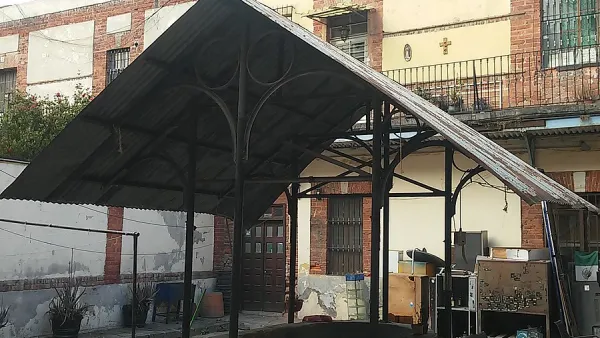
Vecindades: Mexico City's Answer to 'Missing Middle Housing'
An iconic multifamily housing form repurposes the former homes of Mexico's elite into communal housing for urban workers.
Mexico City Airport Project Ends; Causes Economic Rumblings
Mexican voters do not want the airport project to continue, and serious economic consequences could follow.

Planetizen Federal Action Tracker
A weekly monitor of how Trump’s orders and actions are impacting planners and planning in America.

Amtrak, CN end decades-long dispute with eight-year agreement
The new operating agreement establishes an updated framework for the companies to work together, including processes to resolve disputes.

Judges permit Denver to divert 77,000 acre feet from the Colorado River for reservoir expansion
Overuse and climate change have caused the Colorado River’s water levels to plummet.

Philadelphia to invest $2 billion into upgrading city airports as PHL places last in customer satisfaction
Modernizations to Philadelphia's airports will include baggage system upgrades and a new automated parking garage guidance system.

The LA housing policies making developers turn away from the city
Despite LA’s housing shortage, developers say the city’s "mansion-tax" and pandemic-era policies make it an unappealing place to build housing.

New density bill would require 7 California cities to establish regional transit hubs
The bill would also require major cities in California to permit high-rise residential buildings.

FREE Course: Walkable City 1: Why Walkability?
After describing his path towards focusing on walkability as the essence of good planning, Jeff Speck marches through his five principal reasons for making more walkable places.
Reinventing Malls: Planning Alchemy—Turning Gray Fields Into Gold
The course focuses on the opportunities and imperatives that shape reinvention of mall sites.

City of Wisconsin Rapids
Harvard University Graduate School of Design
KFH Group Inc.
The Architects Foundation
University of Cincinnati Online
The Pocatello Development Authority
The Urban Renewal Agency of the City of Pocatello