Repairing civil infrastructure might require rethinking the traditional approach to building infrastructure.



"If I were President I would claim the 'Era of big (civil) Infrastructure is over' in the US," writes David Levinson at The Transportationist. "Not that we don’t have big infrastructure, we do, and it isn’t going anywhere soon."
To elaborate the point, Levinson debunks the potential of large infrastructure projects (i.e., high speed rail, urban transit, renewable energy, smart grid, water supply, and sewer systems) that some might be crossing their fingers for:
I think the transport investments are unlikely, the water investments are mostly piecemeal replacements, and the energy investments will be a set of many small, decentralized power generators rather than large facilities. In short change is likely to incremental rather than comprehensive.
Levinson doesn't exactly express regret over this state of affairs, rather he argues that "there is no point in spending resources for that given the increasingly high costs and diminishing returns that civil infrastructure faces."
Hat tip to Angie Schmitt for sharing the article.
Read the full story: The Era of Big Infrastructure Is Over

Planetizen Federal Action Tracker
A weekly monitor of how Trump’s orders and actions are impacting planners and planning in America.

Washington state to charge fee to drivers with fuel-efficient cars
Revenue from the fee will go towards supporting the state’s highways.
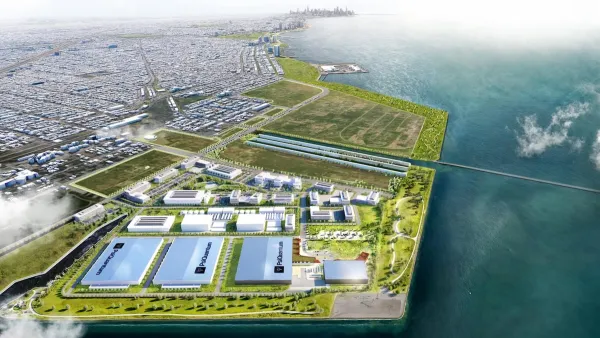
Illinois considers spending $1 billion in taxpayer money on data center
A quantum computing campus and data center are currently under construction in Chicago.

Senate passes bill overhauling permitting
The bill still needs to pass the House.

Did data centers change how voters cast their ballots?
Texas, Ohio, and Georgia all flipped party control. But in rural counties, the effect of local data centers was mixed.

Amtrak invests in eight new Airo trainsets
The new trainsets will begin serving passengers in 2031.

FREE Course: Walkable City 1: Why Walkability?
After describing his path towards focusing on walkability as the essence of good planning, Jeff Speck marches through his five principal reasons for making more walkable places.
Reinventing Malls: Planning Alchemy—Turning Gray Fields Into Gold
The course focuses on the opportunities and imperatives that shape reinvention of mall sites.

City of Charlotte
City of Rosemead
Rutgers University, Edward J. Bloustein School of Planning and Public Policy
University of Michigan School for Environment and Sustainability (SEAS)
Hunter College, City University of New York (CUNY)
The Architects Foundation
University District Partnership