The owner of the MLS's Orlando City soccer team has found an innovative way to finance his team's new $156 million stadium, funded by foreign buyers of American green cards.



Orlando City S.C. of Major League Soccer has taken a new and somewhat controversial approach to funding its new stadium. Ken Belson reports in the New York Times that Orlando City owner Flávio Augusto da Silva is using a Federal program, known as EB-5, that allows developers to raise capital by selling green cards to foreign buyers. As Belson notes, the program was "intended to help pay for infrastructure projects in rural areas and poor urban neighborhoods." However, during the last recession the program was adopted by private developers to fund the construction of hotels and condos.
The Orlando project features a 25,000-seat stadium, scheduled to open for the 2017 seasons of both Orlando City S.C. and the Orlando Pride, the women’s team that Mr. da Silva owns with his partner Phil Rawlins. Originally, the city and county agreed to subsidize the project. But when state lawmakers balked at approving a sales tax rebate, Mr. da Silva turned to the EB-5 program, something Orlando’s mayor, Buddy Dyer, cheered.
The soccer club has raised $15 million to date from 30 investors who have purchased the green card for $500,000 each. In addition to a green card, which allows the investor and their family to live and work in the United States, the investor also receives two club seats in the stadium for ten years.
FULL STORY: Price for a Green Card: $500,000 Stadium Stake

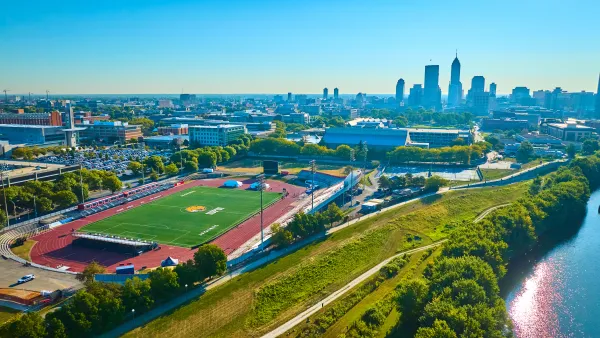
Indianapolis’s Proposed MLS Stadium Gets New Site, Funding Mechanism
The Indianapolis city-county council approved Mayor Hogsett’s alternate plan for a hoped-for professional soccer stadium.

Chicago Amtrak funding makes way for new White Sox stadium
The new funding is the first step in Amtrak vacating its 14th Street rail yard, the future development site of a new baseball stadium.
Universal Orlando sells lot for $100, paving way for 1,000 new homes
The new development will offer below-market rate housing for Universal employees and other residents.

Planetizen Federal Action Tracker
A weekly monitor of how Trump’s orders and actions are impacting planners and planning in America.

The state-sanctioned urbicide of Austin
People don’t kill cities. Freeways do.

US to reduce Colorado River water deliveries to Mexico
A new Colorado Treaty amendment reduces Mexico’s Colorado River water allocation by 250,000 acre feet.

5 New England states march closer to 800 megawatt wind energy project
Securing federal approval for the project may be complicated under the Trump administration, which has historically been hostile towards domestic wind power.

Baltimore to break ground on $50 million Transit Priority Project
The project will bring faster bus trips, safer streets and better bike connections to Baltimore.

Airbnb launches $250 million 'last-dollar financing' housing accelerator, makes first investment in Austin
The company will put $6.4 million towards affordable housing development in Texas’ capital.

FREE Course: Walkable City 1: Why Walkability?
After describing his path towards focusing on walkability as the essence of good planning, Jeff Speck marches through his five principal reasons for making more walkable places.
Reinventing Malls: Planning Alchemy—Turning Gray Fields Into Gold
The course focuses on the opportunities and imperatives that shape reinvention of mall sites.

Eagle County Government
Harvard University Graduate School of Design
Nashville Planning Department
The Architects Foundation
University of Cincinnati Online
The Pocatello Development Authority
The Urban Renewal Agency of the City of Pocatello
Journal of the American Planning Association