Some experts think the language used to describe a redevelopment project in Detroit might be overly ambitious.


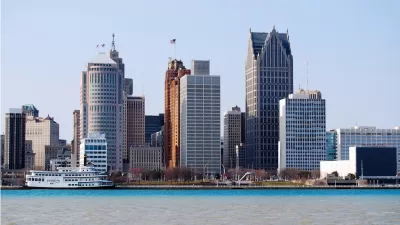
A proposal to redevelop the former Brewster-Douglass public housing site in Detroit raises a big question in a recent article by John Gallagher: "Is it really possible today to undo the damage that urban renewal policies of 50 years ago did to Detroit’s African-American community?"
According to Gallagher, the request for proposals released by the city for the Budweiser-Douglass project "boldly stated that a goal of the project was to 'repair the tear in the urban fabric' that the demolition of the historic Black Bottom and Paradise Valley neighborhoods created in the 1950s."
Gallagher speaks to a sample of academic researchers in the area of urban renewal, who all express skepticism that the project could achieve such lofty goals. "For one thing," explains Gallagher, "the new developments in the Brewster-Douglass site would house only about 1,500 new residents, compared with the 150,000 or so former black residents who once lived on Detroit's near lower east side but were forced to move due to the building of I-75 and other projects."
Gallagher also describes the project, which has since been awarded to Dan Gilbert's Bedrock Real Estate Services (along with two sites in Eastern market), as an example of upscale development investments coming to the downtown Detroit area. Gallagher surveyed the downtown development scene in a separate article from April.
Read the full story: Can Paradise be regained in Detroit today?

Potential Height of Dan Gilbert's Detroit Skyscraper Rises Again
The final height of the tower that will become Detroit's tallest building may exceed 900 feet. The tower and its complex are expected to include retail, office, residential, exhibit, and event space.
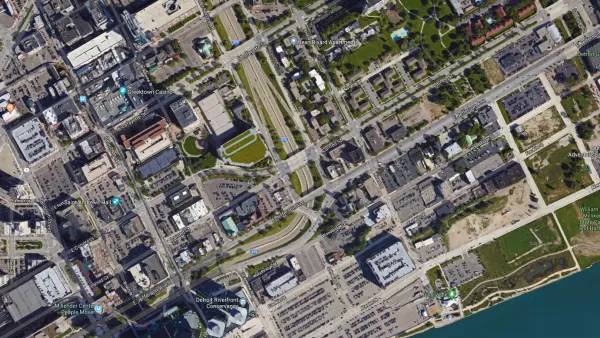
Downtown Expressway's Days Are Numbered in Detroit
Detroit will soon join the ranks of cities that have ripped out high-speed freeways from their urban core.
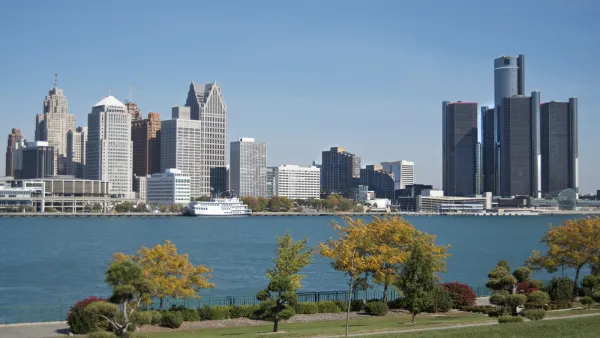
Detroit to Break Ground on a New Tallest Building
A new 800-foot tower is rising from the ashes of the demolished Hudson's store site. Noted Detroit patron Dan Gilbert is developing the new building.

Planetizen Federal Action Tracker
A weekly monitor of how Trump’s orders and actions are impacting planners and planning in America.

California plans to bury El Niño’s downpour
If the state plays its cards right, it may be able to store a billion acre-feet of El Niño’s water in aquifers.

Desperate measures: Advocates weigh draining Lake Powell to fill Colorado River
Draining the reservoir could reduce evaporation losses by a couple hundred thousand acre-feet.

Housing is the top priority of Seattle’s sole new councilmember
Jenks campaigned on building 1,000 new units of affordable housing.

New tax cuts may slash $1.5 billion in funding for Miami transit, public parks
Amendment 3 will save Miami-Dade homeowners $2,700 in 2028.

Arizona, Wisconsin, Pennsylvania hope to finally advance climate goals post-midterms
The three states have spent years under Republican or divided control.

FREE Course: Walkable City 1: Why Walkability?
After describing his path towards focusing on walkability as the essence of good planning, Jeff Speck marches through his five principal reasons for making more walkable places.
Reinventing Malls: Planning Alchemy—Turning Gray Fields Into Gold
The course focuses on the opportunities and imperatives that shape reinvention of mall sites.

City of Rosemead
Rutgers University, Edward J. Bloustein School of Planning and Public Policy
One Hundred Miles
University of Michigan School for Environment and Sustainability (SEAS)
Hunter College, City University of New York (CUNY)
The Architects Foundation
City of Cambridge
Montrose County
The Pocatello Development Authority