The Boston-area's supply of urban housing is failing people starting their careers, writes an architect and fan of Ayn Rand's The Fountainhead.


Boston and nearby cities' very rich citizens have no problem finding housing and the region's cities make laudable efforts to house the poor. However, housing is increasingly difficult to find for the area's enviable supply of talent who are just entering the work force upon graduating from its many top academic institutions, writes architect and fan of Ayn Rand's The Fountainhead, Francesca Gordini.
While careful to disclaim Ayn Rand's more controversial statements on the respective value of people, Gordini quotes The Fountainhead's Howard Roark:
Nobody can afford a modern apartment – except the very rich and the paupers.
. . .
I’d have no desire to penalize a man because he’s worth only fifteen dollars a week. But I’ll be damned if I can see why a man worth forty must be penalized – and penalized in favor of the one who’s less competent.
She notes that area cities' only answer seems to be to approve ever-smaller micro-units. Cambridge recently approved basement units with ceilings as low as 6'11". However, she observes that these smaller units invariably are rented at exorbitant rates. She opines that area cities need to find a way to provide reasonably priced and sized housing to keep its young talent.
FULL STORY: House Dreaming – is Boston becoming Ayn Rand’s NYC?

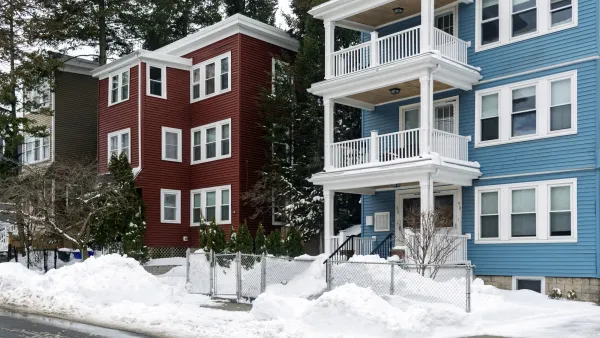
Boston's 'sliver lots' could yield over 1,500 affordable homes
The city has identified over 500 vacant parcels suitable for infill housing.
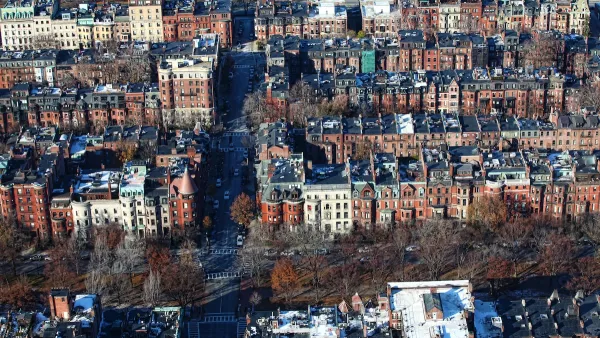
Boston Affordable Housing Program Meets 1,000-Unit Goal
The program offers zero-interest loans to developers that keep rental units affordable for at least 50 years.
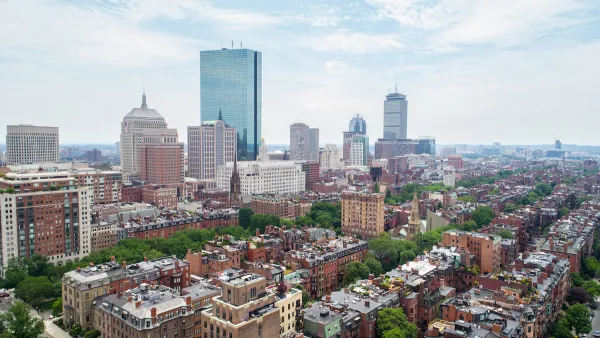
Boston Zoning Commission to Consider ‘Squares and Streets’ Plan
The proposal would reduce barriers to the development of denser housing.

Planetizen Federal Action Tracker
A weekly monitor of how Trump’s orders and actions are impacting planners and planning in America.

The state-sanctioned urbicide of Austin
People don’t kill cities. Freeways do.

US to reduce Colorado River water deliveries to Mexico
A new Colorado Treaty amendment reduces Mexico’s Colorado River water allocation by 250,000 acre feet.

5 New England states march closer to 800 megawatt wind energy project
Securing federal approval for the project may be complicated under the Trump administration, which has historically been hostile towards domestic wind power.

Baltimore to break ground on $50 million Transit Priority Project
The project will bring faster bus trips, safer streets and better bike connections to Baltimore.

Airbnb launches $250 million 'last-dollar financing' housing accelerator, makes first investment in Austin
The company will put $6.4 million towards affordable housing development in Texas’ capital.

FREE Course: Walkable City 1: Why Walkability?
After describing his path towards focusing on walkability as the essence of good planning, Jeff Speck marches through his five principal reasons for making more walkable places.
Reinventing Malls: Planning Alchemy—Turning Gray Fields Into Gold
The course focuses on the opportunities and imperatives that shape reinvention of mall sites.

Eagle County Government
Harvard University Graduate School of Design
Nashville Planning Department
The Architects Foundation
University of Cincinnati Online
The Pocatello Development Authority
The Urban Renewal Agency of the City of Pocatello
Journal of the American Planning Association