Similar to a recent Nobel Prize-winning study that showed increased deaths in middle-aged whites from heroin, opiates, and alcohol, a New York Times analysis shows that deaths for whites aged 25 to 34 from drug overdoses has reached historic levels.


The rising death rates for younger non-Hispanic whites, among both men and women, stands in sharp contrast to blacks and Hispanics, according to Sarah Cohen and Gina Kolata, science and medicine writer for The New York Times.
The analysis shows that the rise in white mortality extends well beyond the 45- to 54-year-old age group documented by a pair of Princeton economists in a research paper that startled policy makers and politicians two months ago. [Also posted here].
In fact, the rate in whites in the 25-34 year-old group is so high that Cohen and Kolata compare it to the "AIDS epidemic more than two decades ago." Put another way, the death rate in this group "make them the first generation since the Vietnam War years to experience higher death rates in early adulthood than their previous generation."
It found death rates for non-Hispanic whites either rising or flattening for all the adult age groups under 65 — a trend that was particularly pronounced in women — even as medical advances sharply reduce deaths from traditional killers like heart disease.
Graphs accompany the article showing the mortality rates among Blacks, Hispanics, and Whites, with only the latter group separated for men and women, from 1999 to 2014 for four age groups:
- 25-34
- 35-44
- 45-54
- 45-64
There are three graphs for:
- Total mortality
- Deaths from HIV/AIDS
- Deaths from drug overdoses, which the Times attributes mainly to "(p)rescription painkillers and heroin."
The analysis also shows an increase in the mortality rate from suicides (30%) and accidental poisonings (four-fold), which are described mostly as drug overdoses.
"No one has a clear answer, but researchers repeatedly speculate that the nation is seeing a cohort of whites who are isolated and left out of the economy and society and who have gotten ready access to cheap heroin and to prescription narcotic drug," add Cohen and Kolata.
As with the Nobel Prize-awarded study among middle-aged whites, the death rates "rose faster by any measure for the less educated, by 23 percent for those without a high school education, compared with only 4 percent for those with a college degree or more."
FULL STORY: Drug Overdoses Propel Rise in Mortality Rates of Young Whites


New Study Reveals Causes of Lower American Life Expectancy
A study published February 9 in the Journal of the American Medical Association points to three reasons for the life expectancy being lower for Americans than in other developed nations. Care to guess what they are?
Middle-Aged White Americans Take a Significant Turn for the Worse
Why are mortality rates increasing for this group in the United States and not others? The usual suspects—obesity, heart disease, diabetes, smoking are not the killers, The findings resulted in the 2015 Nobel Memorial Prize in Economic Science.
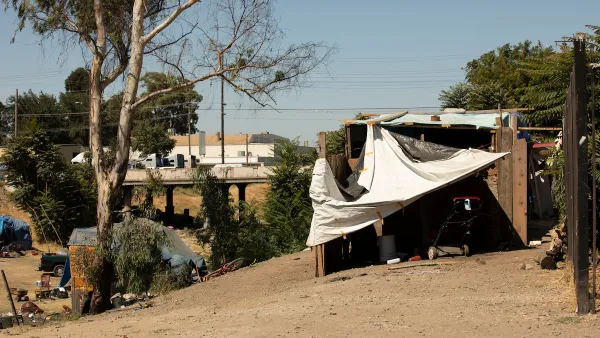
Study: Homeless People Face Higher Mortality Risk
Unhoused adults are more than three times as likely to die in any given year as their housed counterparts, research shows.

Planetizen Federal Action Tracker
A weekly monitor of how Trump’s orders and actions are impacting planners and planning in America.

The state-sanctioned urbicide of Austin
People don’t kill cities. Freeways do.

US to reduce Colorado River water deliveries to Mexico
A new Colorado Treaty amendment reduces Mexico’s Colorado River water allocation by 250,000 acre feet.

Colorado’s Largest Data Center Could Rise Next to Homes — Without a Public Hearing
The proposed campus would consume 11 times the power of Denver International Airport; as it has across the country, opposition mounts.

5 New England states march closer to 800 megawatt wind energy project
Securing federal approval for the project may be complicated under the Trump administration, which has historically been hostile towards domestic wind power.

Baltimore to break ground on $50 million Transit Priority Project
The project will bring faster bus trips, safer streets and better bike connections to Baltimore.

FREE Course: Walkable City 1: Why Walkability?
After describing his path towards focusing on walkability as the essence of good planning, Jeff Speck marches through his five principal reasons for making more walkable places.
Reinventing Malls: Planning Alchemy—Turning Gray Fields Into Gold
The course focuses on the opportunities and imperatives that shape reinvention of mall sites.

Eagle County Government
Harvard University Graduate School of Design
Nashville Planning Department
The Architects Foundation
University of Cincinnati Online
The Pocatello Development Authority
The Urban Renewal Agency of the City of Pocatello
Journal of the American Planning Association