For the center of the hipster universe, the Brooklyn Chamber's recommendations may come as a surprise.



According to Erik Engquist of Crain's New York, the Brooklyn Chamber of Commerce has just released a new study claiming that the borough is missing out on $6 billion of retail opportunities.
"Business leaders in Brooklyn have long suspected that local shoppers were spending lots of their dollars elsewhere. Now they have numbers that not only prove it, but reveal the most gaping holes in the borough's retail landscape," writes Engquist.
Despite the fact that only 44 percent of Brooklynites own a car, the Chamber apparently laments the dearth of auto parts and repair shops, dealerships, and gas stations, claiming that the missed retail opportunities amount to $2.6 billion for dealerships and $1.3 billion for gas stations.
Chamber President and CEO Carlo Scissura also points to the food deserts that exist in some of the borough's neighborhoods as well as the lack of general merchandise stores. He wants the city to do more to encourage big-box retailers to move in by rezoning for larger establishments. Referring to Target, he said, "I'd love to see another five of them open up across Brooklyn."
Although the Chamber has capitalized on the appeal of Brooklyn's independent spirit with it's "Made in Brooklyn" certification program, Engquist's report on the study indicates that the Chamber believes there is an unmet demand for the conveniences of suburban-style chain retailers. "Some of Brooklyn's lost sales stem not from a dearth of retail but from more pleasant and lower-priced stores and supermarkets in the suburbs," writes Engquist.
Read the full story: Brooklyn retailers are missing out on $6 billion worth of sales

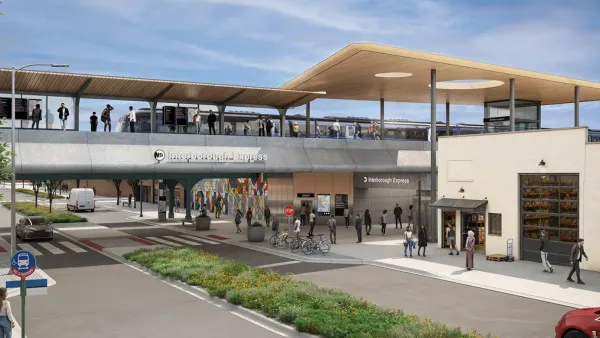
NYC releases new renderings for $5.5 billion Interborough Express
The slated stations will have a modern look, enhanced lighting and improved audio announcements.
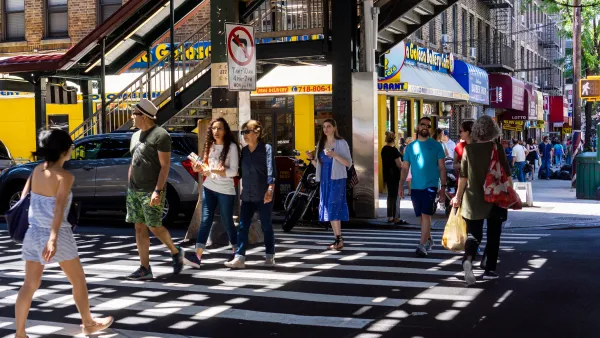
NYC needs 700,000 new homes to resolve housing crisis, report states
The report gave every neighborhood a non-binding development target.
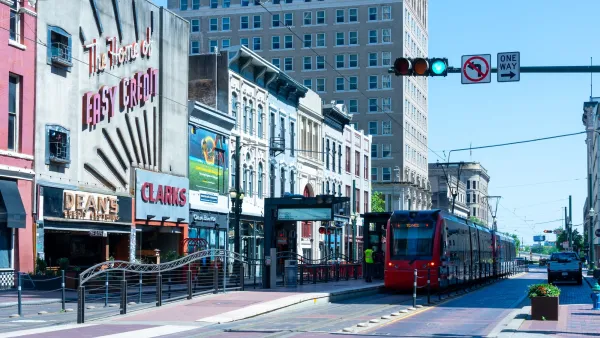
Houston's pedestrian promenade on track to be ready for World Cup crowds
The city is transforming seven downtown blocks along a light rail line into a car-free zone focused on outdoor dining and entertainment.

Planetizen Federal Action Tracker
A weekly monitor of how Trump’s orders and actions are impacting planners and planning in America.

Amtrak, CN end decades-long dispute with eight-year agreement
The new operating agreement establishes an updated framework for the companies to work together, including processes to resolve disputes.

Judges permit Denver to divert 77,000 acre feet from the Colorado River for reservoir expansion
Overuse and climate change have caused the Colorado River’s water levels to plummet.

NYC DOT wants faster, more permanent street upgrades
The city is examining ways to build more concrete infrastructure without getting entangled in 'decades-long' projects.

'Something we’ve never seen before:' rising utility rates could strain city finances nationwide
Data centers, climate change and other factors have caused utility rates in the United States to increase by 38% since 2020.

Trump to overrule local leaders, lease millions of acres of America’s Pacific Island territories’ seafloors to mining companies
International law says that the Indigenous people of America’s territories have a right to prior and informed consent regarding projects that impact their countries.

FREE Course: Walkable City 1: Why Walkability?
After describing his path towards focusing on walkability as the essence of good planning, Jeff Speck marches through his five principal reasons for making more walkable places.
Reinventing Malls: Planning Alchemy—Turning Gray Fields Into Gold
The course focuses on the opportunities and imperatives that shape reinvention of mall sites.


Harvard University Graduate School of Design
KFH Group Inc.
Greater Baltimore Committee
The Architects Foundation
University of Cincinnati Online
The Pocatello Development Authority
The Urban Renewal Agency of the City of Pocatello