Jersey City Mayor Steven Fulop is pushing for an ambitious program to overhaul the city's development subsidies, even as building permits are flying off the shelves.


"Jersey City, which is undergoing one of the biggest building booms in the nation, will retool its development subsidy program to create more affordable housing and spur creation of market-rate apartments in poorer neighborhoods," reports Ryan Hutchins.
"Pledging to 'reverse decades of development' concentrated almost solely near the Hudson River waterfront, [Mayor Steven] Fulop issued an executive order expanding incentives to many still-gritty parts of the 15-square-mile city. He is also moving to toughen the affordability requirements placed on developers who will use the subsides to build in the hip, higher-cost downtown neighborhoods."
Mayor Fulop also explained that the policy change is intended as a response to much of the city's affordable housing stock being built in low income neighborhoods. The article includes more details on the proposal, which would split the city into four zones, each falling into different tiers of incentives and requirements for affordability.
Tanvi Misra also reported on the proposal, noting that it extends the Payment In Lieu of Taxes (PILOT) policy the city instituted in 2013 [pdf].
FULL STORY: Amid building boom, Jersey City retools development subsidy program

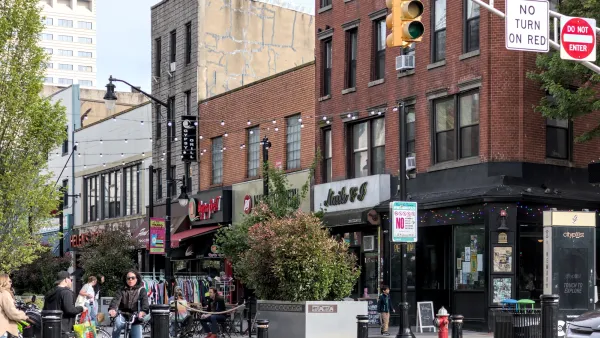
Jersey City could build 700 homes on city-owned parking lots
If approved, a redevelopment proposal would build hundreds of new homes on a pair of city parking lots.
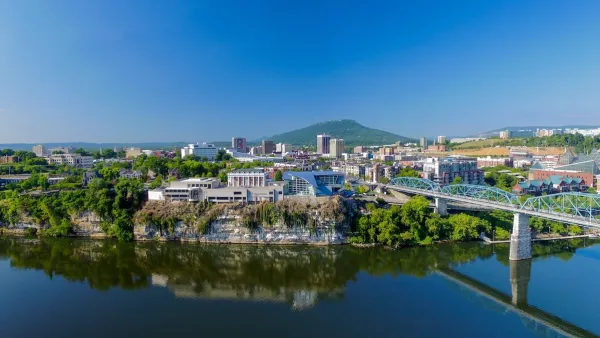
Chattanooga Offers Free Land for Affordable Housing
The city plans to distribute 11 properties to affordable housing builders.

Ten Trends Shaping Affordable Housing
From Passive House design to a broader range of amenities, affordable housing developers are finding new ways to make housing more efficient, comfortable, and flexible for residents.

Planetizen Federal Action Tracker
A weekly monitor of how Trump’s orders and actions are impacting planners and planning in America.

The state-sanctioned urbicide of Austin
People don’t kill cities. Freeways do.

US to reduce Colorado River water deliveries to Mexico
A new Colorado Treaty amendment reduces Mexico’s Colorado River water allocation by 250,000 acre feet.

5 New England states march closer to 800 megawatt wind energy project
Securing federal approval for the project may be complicated under the Trump administration, which has historically been hostile towards domestic wind power.

Baltimore to break ground on $50 million Transit Priority Project
The project will bring faster bus trips, safer streets and better bike connections to Baltimore.

Airbnb launches $250 million 'last-dollar financing' housing accelerator, makes first investment in Austin
The company will put $6.4 million towards affordable housing development in Texas’ capital.

FREE Course: Walkable City 1: Why Walkability?
After describing his path towards focusing on walkability as the essence of good planning, Jeff Speck marches through his five principal reasons for making more walkable places.
Reinventing Malls: Planning Alchemy—Turning Gray Fields Into Gold
The course focuses on the opportunities and imperatives that shape reinvention of mall sites.

Eagle County Government
Harvard University Graduate School of Design
Nashville Planning Department
The Architects Foundation
University of Cincinnati Online
The Pocatello Development Authority
The Urban Renewal Agency of the City of Pocatello
Journal of the American Planning Association