Danish Architect Jan Gehl talks about the intersections of architecture and social science.


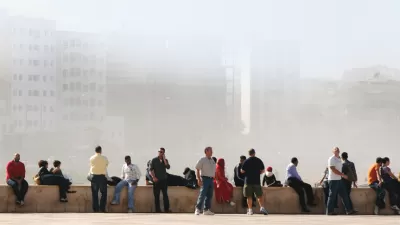
Architect, consultant, author of the groundbreaking book, Cities for People, and subject of the documentary THE HUMAN SCALE, Jan Gehl of Gehl Architects answers questions for Mikki Brammer of Metropolis.
Gehl talks about his early influences, as an observer of Danish society. "Every time we build something, we manipulate the conditions of people’s lives, but most planners don’t know enough about this manipulation."
He discusses the strategy his firm employed as a consultant to the Copenhagen city council. Copenhagen is now recognized as the most walkable city on Earth. "It’s no secret that we have always built cities for people until cars started to invade our lives...Part of that strategy was focusing on having good public spaces that invite people to be outside as much as possible, because it’s important for the safety of the city and social inclusion and democracy."
He focuses on the universalities of design rather than cultural context. "We are homo sapiens and we are made as a walking animal and have the same biological history...Whether we live in Greenland or in a very hot climate somewhere, we adapt and discover, but we all have the same aspirations."
Gehl is passionate about the need for architects to understand the way people live and interact in the built environment. "Because if you just do form, then you are doing sculpture, but if you look after the interaction between life and form, you are doing architecture."
Read the full story: Q&A: Jan Gehl on Making Cities Healthier and the Real Meaning of Architecture
Jan Gehl on 60 Years of Designing Cities for People
The 10th anniversary of "Cities for People" offers the occasion for this interview with Jan Gehl, who has devoted a 60-year career to ideas about humanistic city planning—ideas of increasing relevance in 2020.
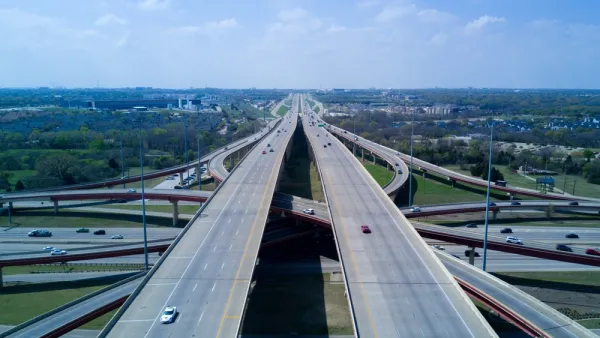
When Cities Are Designed for Driving, Car Bans Are Not the Solution
Banning cars will not be effective as long as U.S. cities continue to prioritize transportation systems where mobility is dependent on driving.
Jan Gehl's Ten Principals For Liveability
Kaid Benfield introduces Jan Gehl and Walter Hook's principals to promote "environmentally sustainable and socially equitable transportation worldwide."

Planetizen Federal Action Tracker
A weekly monitor of how Trump’s orders and actions are impacting planners and planning in America.

California plans to bury El Niño’s downpour
If the state plays its cards right, it may be able to store a billion acre-feet of El Niño’s water in aquifers.

Desperate measures: Advocates weigh draining Lake Powell to fill Colorado River
Draining the reservoir could reduce evaporation losses by a couple hundred thousand acre-feet.

US buildings threatened, destroyed by fires set to triple by 2060
Researchers found a high fire risk for socioeconomically vulnerable neighborhoods in the American West.

LA residents may be allowed to paint their own crosswalks
Councilwoman Katy Yaroslavsky put out a motion instructing the Los Angeles Department of Public Transportation to study the feasibility of allowing volunteers to paint crosswalks.

Dallas moves to overhaul its zoning code
The city's zoning reform will allow more multi-family and mixed-use developments.

FREE Course: Walkable City 1: Why Walkability?
After describing his path towards focusing on walkability as the essence of good planning, Jeff Speck marches through his five principal reasons for making more walkable places.
Reinventing Malls: Planning Alchemy—Turning Gray Fields Into Gold
The course focuses on the opportunities and imperatives that shape reinvention of mall sites.

City of Rosemead
Rutgers University, Edward J. Bloustein School of Planning and Public Policy
One Hundred Miles
Hunter College, City University of New York (CUNY)
The Architects Foundation
University of Cincinnati Online
City of Cambridge
Montrose County
The Pocatello Development Authority