The politics of parking aren't expected to change in the upcoming Houston mayoral election. But an op-ed in the Houston Chronicle is willing to mess with the third rail.


"Perhaps some Houstonians feel that free, easy parking adjacent to every building that we're trying to access is an inherently essential feature of Houston's quality of life. The mandatory on-site parking requirements, one of the city's most intrusive land-use regulations, would seem to reflect this viewpoint," begins an op-ed by Steve Spillette.
Spillette speculates that a perceived lack of parking will figure heavily in the city's upcoming mayoral election, as citizens push for "the ideal of easy-and-free parking anywhere we want to go, while no one else can park on our own street except me and my neighbors."
The argument that's neglected by such conversations, according to Spillette, are prices paid for the city's vast supply of parking, including excessive and polluted stormwater runoff, heat islands, reduced walkability, and financial burden.
The op-ed goes on to focus in more specific detail on the negative impacts of parking on walking as a means of mobility and the financial burden of excessive and poorly located parking.
Read the full story: Spillette: City parking policies have negative health, fiscal impact

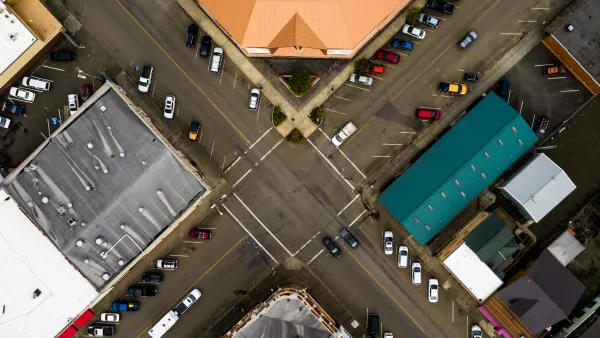
Oregon’s Under-the-Radar Parking Revolution
Thanks to parking reforms at the state level, Oregon cities are rapidly eliminating parking requirements, paving the way for more affordable housing construction and higher density.
Toronto City Council Removes Most Minimum Parking Requirements
The parking reform movement has a major new feather in its cap: the Toronto City Council has this week adopted sweeping changes to the parking requirements of the city's zoning bylaws.

Parking Minimums on the Chopping Block in Richmond, Virginia
Richmond, Virginia has decided to study the idea of removing parking minimums to lower the cost of housing and make more efficient use of land in the city.

Planetizen Federal Action Tracker
A weekly monitor of how Trump’s orders and actions are impacting planners and planning in America.

California plans to bury El Niño’s downpour
If the state plays its cards right, it may be able to store a billion acre-feet of El Niño’s water in aquifers.

Desperate measures: Advocates weigh draining Lake Powell to fill Colorado River
Draining the reservoir could reduce evaporation losses by a couple hundred thousand acre-feet.

California city breaks ground on transit connector
The project includes three mobility hubs and a pedestrian bridge.

After public outcry, Massachusetts city releases housing development tracker
Cambridge’s tracker currently shows 250 housing projects in various stages of development.

40 years after approval, Chicago breaks ground on new park
The park honors Jean Baptiste Point du Sable, the city’s first permanent non-native settler.

FREE Course: Walkable City 1: Why Walkability?
After describing his path towards focusing on walkability as the essence of good planning, Jeff Speck marches through his five principal reasons for making more walkable places.
Reinventing Malls: Planning Alchemy—Turning Gray Fields Into Gold
The course focuses on the opportunities and imperatives that shape reinvention of mall sites.

City of Rosemead
Rutgers University, Edward J. Bloustein School of Planning and Public Policy
One Hundred Miles
Hunter College, City University of New York (CUNY)
The Architects Foundation
University of Cincinnati Online
City of Cambridge
Montrose County
The Pocatello Development Authority