Peter Apps, a quadriplegic for the past nine years, shares insight into how he evaluates the mobility and access of cities.


"If I've learned one thing in the nine years since I broke my neck, it's that the world is not particularly well designed for disabled people," writes Peter Apps for CityMetric. "Sometimes the things that stop you doing stuff and getting places (or, indeed, the things that enable you to do them) are very small. Sometimes they are massive."
In fact, says Apps, he has completely redrawn the map of the cities he visits based on what, and where, he can do given his special needs. He applies this concept to analysis of various urban resources in cities around the world, like taxis in London, minibuses in Egypt, and the wheelchair accessible portion of the Paris Metro.
Read the full story: The most, and least, wheelchair accessible cities: a quadriplegic's guide

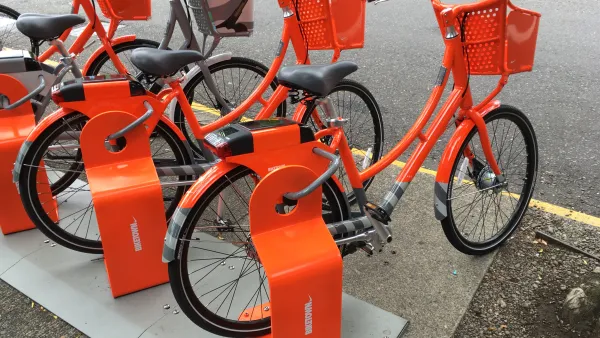
Portland's Biketown to Include 'Adaptive Bikes' to Ensure Universal Access
The city of Portland is wearing the Yellow Jersey on equity issues connected to the Biketown bikeshare system.
Better Design and a 'Level of Service' for the Blind
Scott Schafer pens a column inspired by watching a visually impaired woman navigate a busy corner of Minneapolis. The question raised by the column: How can we improve level of service for the blind?
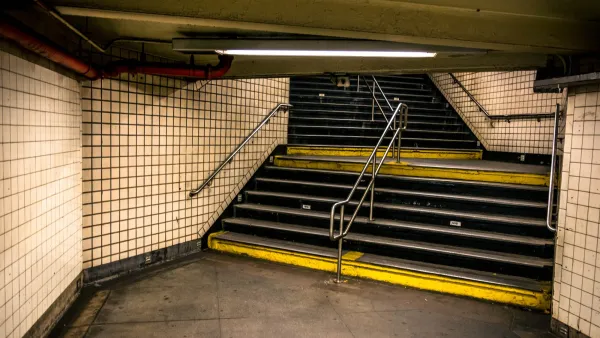
Saturday Satire: The Accessibility Meeting Is Located Down Three Flights of Stairs
A satirical piece published by McSweeney's calls attention to the remaining work to done in building a truly accessible built environment.

Planetizen Federal Action Tracker
A weekly monitor of how Trump’s orders and actions are impacting planners and planning in America.

Amtrak, CN end decades-long dispute with eight-year agreement
The new operating agreement establishes an updated framework for the companies to work together, including processes to resolve disputes.

Judges permit Denver to divert 77,000 acre feet from the Colorado River for reservoir expansion
Overuse and climate change have caused the Colorado River’s water levels to plummet.

NYC DOT wants faster, more permanent street upgrades
The city is examining ways to build more concrete infrastructure without getting entangled in 'decades-long' projects.

'Something we’ve never seen before:' rising utility rates could strain city finances nationwide
Data centers, climate change and other factors have caused utility rates in the United States to increase by 38% since 2020.

Trump to overrule local leaders, lease millions of acres of America’s Pacific Island territories’ seafloors to mining companies
International law says that the Indigenous people of America’s territories have a right to prior and informed consent regarding projects that impact their countries.

FREE Course: Walkable City 1: Why Walkability?
After describing his path towards focusing on walkability as the essence of good planning, Jeff Speck marches through his five principal reasons for making more walkable places.
Reinventing Malls: Planning Alchemy—Turning Gray Fields Into Gold
The course focuses on the opportunities and imperatives that shape reinvention of mall sites.

Harvard University Graduate School of Design
KFH Group Inc.
Greater Baltimore Committee
The Architects Foundation
University of Cincinnati Online
The Pocatello Development Authority
The Urban Renewal Agency of the City of Pocatello