Urban planners need to go beyond environment and stakeholder input, taking a stronger role in the development of new technologies to design new urban futures rather than relying on software engineers.


Urban planning has long concerned itself with the nuances of multi-stakeholder input and assessments, physical form, and environmental context. But what of the technologies used? Rampant discussion on the value of big data analysis, social media, and emerging technologies such as drones and new LIDAR systems dominate the internet. Yet amid these discussions, how many planners have some degree of expertise in computer sciences or engineering to better inform the design of new technologies? In the present tense, the bulk of these technologies are designed by engineers with an interest in urbanism and not by urban professionals. Perhaps it is time to expand the urban planning foci beyond environment, economics, and physical planning but to also include technology creation. By embracing these new technologies as critical infrastructure and infusing them with the insight of urban professionals, new possible futures can emerge.
FULL STORY: Technology Determined Cities or Strategic Design for Tomorrow?

In Memoriam: William Mitchell
I learned with great sadness about the loss of William Mitchell, 65, this past friday after a long battle with cancer. Bill was the chair of my Ph.D. committee, a mentor and a friend.
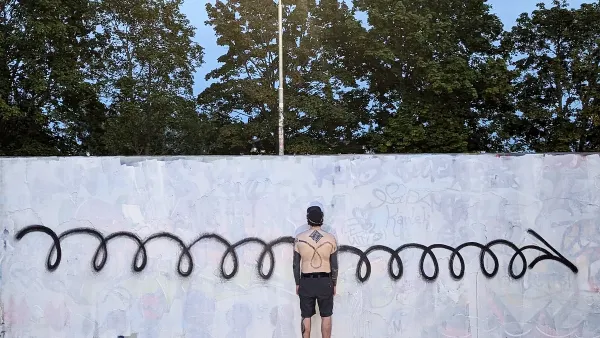
“Skin, Like a City, Will Tell You if You’ve Ignored its History”
Once an urban planner, Sean Colgrave traded in infrastructure for ink when he became a tattoo artist. Now he says: one profession has a lot to learn from the other.

These Bear Safety Signs Illustrate the Impact of Good Design
What makes a sign effective?

The state-sanctioned urbicide of Austin
People don’t kill cities. Freeways do.

US to reduce Colorado River water deliveries to Mexico
A new Colorado Treaty amendment reduces Mexico’s Colorado River water allocation by 250,000 acre feet.

New Jersey’s second-largest city bans standalone data centers
Jersey City will continue to allow co-location facilities, such as those meant for research institutions that store their own data.

Amtrak not solely to blame for New Jersey commuter rail's unreliability, report finds
A new study from the Garden State Initiative found that NJ Transit’s budget grew 20% across a 4 year period, but reliability declined significantly over the same period.

EPA erases limits on planet-warming pollution from power plants
Under Monday’s plan, power plants would still have some limits on how much mercury, arsenic and other contaminants they can emit.

Phoenix announces new on-demand transit service, more frequent RAPID buses
Both new services will launch in October, and are part of Phoenix's Project Effective Access Solutions for Easing Congestion.

FREE Course: Walkable City 1: Why Walkability?
After describing his path towards focusing on walkability as the essence of good planning, Jeff Speck marches through his five principal reasons for making more walkable places.
Reinventing Malls: Planning Alchemy—Turning Gray Fields Into Gold
The course focuses on the opportunities and imperatives that shape reinvention of mall sites.

Eagle County Government
Harvard University Graduate School of Design
Nashville Planning Department
The Architects Foundation
University of Cincinnati Online
The Pocatello Development Authority
The Urban Renewal Agency of the City of Pocatello
Journal of the American Planning Association