Denver has a reputation for building new residential units to accommodate its rapid growth. But the incoming class of new city councilmembers brings strong anti-development politics.


"The Denver City Council's next class will take office in mid-July with the most new members in more than a decade and will have up to three new voices questioning development policies," reports Jon Murray.
"In a runoff Tuesday for central Denver's open District 10 seat, Wayne New, who made aggressive development in Cherry Creek North a motivating factor in his campaign, defeated Anna Jones, a community development consultant," according to Murray. Moreover, "New joins councilman-elect Rafael Espinoza, from northwest District 1, and Paul Kashmann, from southeast District 6, as more skeptical voices on the issue."
Despite the unprecedented turnover on the Denver City Council, local political analysts quoted by Murray expect some policies changes regarding development as a result of the new councilmembers, but the city's strong mayoral system should limit the possibility of any drastic institutional change.
Denver's development climate is of particular interest due to the city's strong growth trends. Much of the public narrative about Denver's development in recent years has been devoted to transit oriented development in the urban core, yet development controversies in suburban cities and explosive growth on the city's fringes might be the more impactful trends to watch in the region.
Read the full story: Denver elections add three new skeptical development voices to City Council

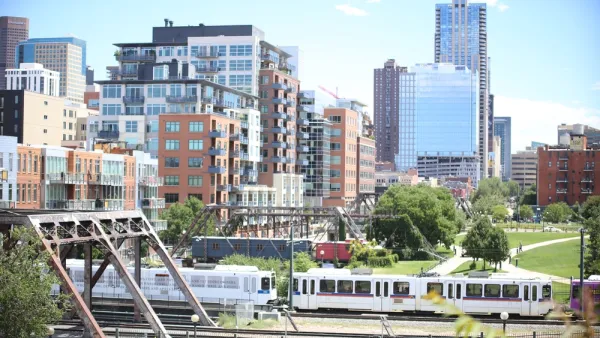
Co-Living Redefined by Denver City Council
Over the strong opposition from neighborhood groups, the Denver City Council has approved new regulations that allow up to five unrelated individuals to live in the same household.
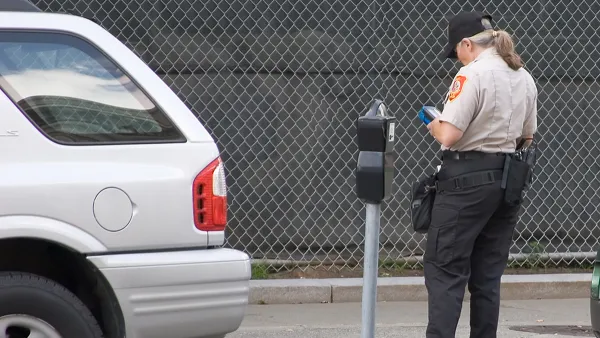
Neighborhood Group Kills Affordable Housing Proposal on Parking Concerns in Denver
An affordable housing project requested a waiver of parking requirements to build 36 deeply affordable housing units in Denver. A local neighborhood organization's opposition to the waiver won the day.

Controversy Over View Plane Grows in Denver
While view planes are protected for public places in Denver, a group of private property owners are agitating as a new apartment building rises on the edge of the city.

Amtrak, CN end decades-long dispute with eight-year agreement
The new operating agreement establishes an updated framework for the companies to work together, including processes to resolve disputes.

Judges permit Denver to divert 77,000 acre feet from the Colorado River for reservoir expansion
Overuse and climate change have caused the Colorado River’s water levels to plummet.
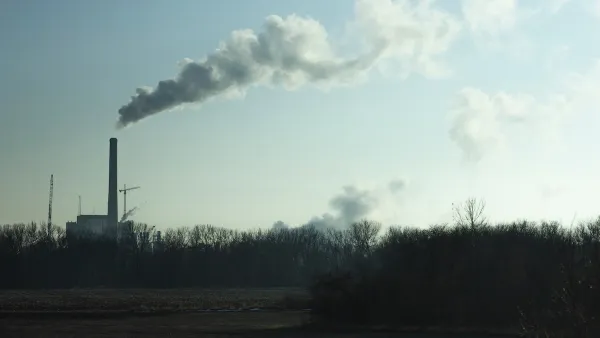
Nation's most wind-powered state turns to coal as data centers increase energy demand
For the first time in decades, Iowa has increased its generation of coal power.

Boston has spent millions making the Green Line more accessible — and there’s no end in sight
While the city has invested millions into expanding and adding platforms to the Green Line to make it more accessible, new train cars set to arrive next year will be too tall for disabled passengers to board without raising the current platforms.

Idaho may see an 18% drop in federal surface transit funding — the largest estimated cut in the US
Transit systems in rural communities are much more reliant on federal funding to provide their services.

How ‘post-disaster gentrification’ alters neighborhoods after natural calamities
After hurricanes, fires or other calamities, the original residents of a community are often replaced by younger, wealthier residents.

FREE Course: Walkable City 1: Why Walkability?
After describing his path towards focusing on walkability as the essence of good planning, Jeff Speck marches through his five principal reasons for making more walkable places.
Reinventing Malls: Planning Alchemy—Turning Gray Fields Into Gold
The course focuses on the opportunities and imperatives that shape reinvention of mall sites.

City of Wisconsin Rapids
Harvard University Graduate School of Design
KFH Group Inc.
The Architects Foundation
University of Cincinnati Online
The Pocatello Development Authority
The Urban Renewal Agency of the City of Pocatello