In some cities the idea of adding a high rise is always dead on arrival, even if the city desperately needs to add density. For those communities facing similar challenges, a post on Blooming Rock offers five ways to think outside the high-rise box.


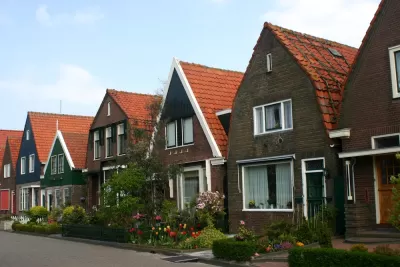
Taz Loomans introduces the idea of density by citing the example of Portland, which is pressured by high housing costs, a steady stream of newcomers, and an urban growth boundary. Unfortunately, notes Loomans, "[cities] have done a poor job in adding density in a gentler, kinder way that has fewer consequences to their existing character and existing populations, which are the reasons why people are moving there in the first place."
Before presenting the list of density options not born in the form of high-rise buildings, Loomans notes that cities shouldn’t be isolating, and that poorly designed high-rises have a tendency to separate people from the street and each other. Moreover, "high-rises aren’t the first thing cities should look to if they want to densify. There are a lot of options that can add to, not take away, from its organic vibrancy and sense of community."
The list includes the following, with lots of elaboration and examples for each:
- Make Single-Family Houses into Community Houses
- Accessory Dwelling Units
- Duplex, Three-plex, or Fourplex Apartments
- Tiny House Communities
- Shared Urban Amenities
Read the full story: 5 WAYS TO ADD DENSITY WITHOUT BUILDING HIGH-RISES
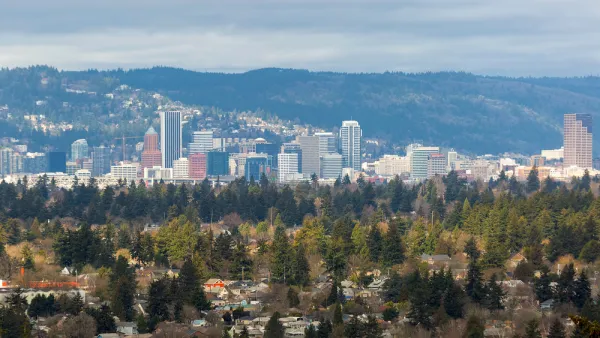
The 'Most Pro-Housing Reform in U.S. History' Expected for Approval Today in Portland
The Portland Residential Infill Project is expected for approval by the Portland City Council today, culminating a six year process that became more and more ambitious with every iteration.

Portland Adjusts Residential Infill Plan to Minimize Displacement
Portland wants to add density but doesn't want to displace current residents of low- and middle-income neighborhoods.
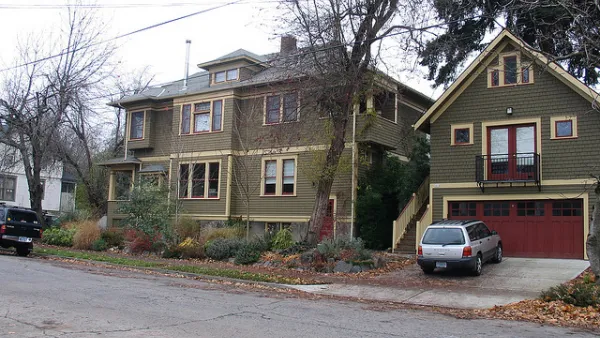
A Portland-Brand Building Boom: Accessory Dwelling Units
It's possible that construction permits for accessory dwelling units, also known as granny flats or mother-in-law units, could surpass permits for regular homes.

Planetizen Federal Action Tracker
A weekly monitor of how Trump’s orders and actions are impacting planners and planning in America.

California plans to bury El Niño’s downpour
If the state plays its cards right, it may be able to store a billion acre-feet of El Niño’s water in aquifers.

Desperate measures: Advocates weigh draining Lake Powell to fill Colorado River
Draining the reservoir could reduce evaporation losses by a couple hundred thousand acre-feet.

Housing is the top priority of Seattle’s sole new councilmember
Jenks campaigned on building 1,000 new units of affordable housing.

New tax cuts may slash $1.5 billion in funding for Miami transit, public parks
Amendment 3 will save Miami-Dade homeowners $2,700 in 2028.

Arizona, Wisconsin, Pennsylvania hope to finally advance climate goals post-midterms
The three states have spent years under Republican or divided control.

FREE Course: Walkable City 1: Why Walkability?
After describing his path towards focusing on walkability as the essence of good planning, Jeff Speck marches through his five principal reasons for making more walkable places.
Reinventing Malls: Planning Alchemy—Turning Gray Fields Into Gold
The course focuses on the opportunities and imperatives that shape reinvention of mall sites.

City of Rosemead
Rutgers University, Edward J. Bloustein School of Planning and Public Policy
One Hundred Miles
University of Michigan School for Environment and Sustainability (SEAS)
Hunter College, City University of New York (CUNY)
The Architects Foundation
City of Cambridge
Montrose County
The Pocatello Development Authority