A huge new pot of money is now available in Florida, created by the Amendment 1 tax on real estate transactions. Many in the state would like to see some of the revenue dedicated to preserving the state's eroding beaches.


"Passed by an overwhelming majority of Florida voters last fall, Amendment 1 was billed as a way to force lawmakers to make water quality and land conservation a priority," according to Tony Marrero.
"But officials from coastal counties are focused on the places where water erodes the land as they seek a share of the estimated $22 billion the mandate is expected to raise over the next two decades."
There seems to be a strong coalition of support for some of the Amendment 1 funding to go toward beach preservation, which has become a more critical issue in Florida since the last finding mechanism for such purposes was approved some 13 years ago.
The Florida Shore and Beach Preservation Association is advocating for lawmakers to dedicate between $47 million and $60 million annually to beach preservation over the next 20 years. Marrero adds: "Their case is bolstered by a report last week from the Legislature's Office of Economic & Demographic Research that showed $1 invested in beach renourishment generated $5.40 in sales tax revenue."
Read the full story: Calls grow louder for lawmakers to use Amendment 1 money for beach repair

Editorial: Florida Legislators should 'Stick to the Mission' on Conservation
A Miami Herald editorial expresses concern for a growing movement in the state legislature to raid the funding pool made possible by the recently approved Amendment 1, a statewide environmental-conservation funding measure.
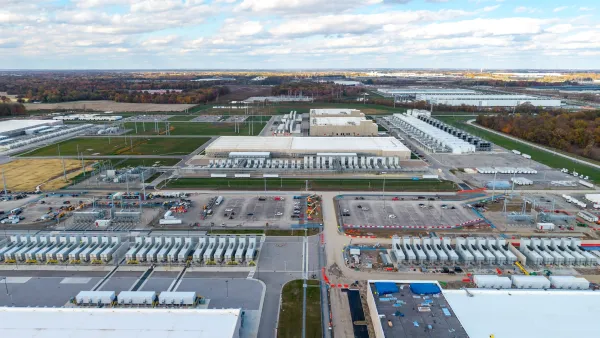
After the servers go dark
The rise and fall of communities with decommissioned nuclear facilities hold critical lessons for those considering hosting data centers.

What data center host communities can learn from former nuclear hubs
The sometimes painful process of decommissioning former nuclear facilities offers useful lessons for communities planning to host data centers.

Planetizen Federal Action Tracker
A weekly monitor of how Trump’s orders and actions are impacting planners and planning in America.

‘Going backwards:’ Baltimore mayor, students rally against state's transit funding plan
Maryland's proposed six-year plan provides no funding for Baltimore’s BMORE bus program and reduces its road maintenance funding.

Detroit to transform waterfront with $2.2 billion investment
Developers will convert about 18 acres of unused parking lot space into civic spaces.

HUD modernizes 50-year-old manufactured housing framework
The Next Generation Manufactured Housing Action Plan establishes new energy-efficiency standards for manufactured homes, and new guidelines for anchoring them.

New CA housing laws tear down development red tape
Recently-signed legislation makes building starter homes and ADUs cheaper and faster in California.

Metrolink finishes first expansion in 20 years
The transit agency is now one of very few in the United States to connect two major airports.

FREE Course: Walkable City 1: Why Walkability?
After describing his path towards focusing on walkability as the essence of good planning, Jeff Speck marches through his five principal reasons for making more walkable places.
Reinventing Malls: Planning Alchemy—Turning Gray Fields Into Gold
The course focuses on the opportunities and imperatives that shape reinvention of mall sites.

One Hundred Miles
County of Mendocino
planning NEXT
The Architects Foundation
University of Cincinnati Online
Montrose County
Northern Illinois Transit Authority (NITA)
The Pocatello Development Authority