Sarah Goodyear shares insight into a book by Carlton Reid titled "Roads Were Not Built for Cars," which details the secret history of the bicyclists that helped launch the fledgling automobile industry in the late 19th century.


Sarah Goodyear writes for CityLab:
"The book, which is engaging and anything but dry, tells a story that has been mostly lost to time and politics: how cycling pioneers in the late 19th century, many from the powerful ruling classes, lobbied successfully for the improvement of the road networks in the United States and Europe, and how many of those same leading cyclists then went on to become leaders in the fledgling automobile industry. In so doing, they steered the future of transportation away from rails and onto roads."
The article goes on to provide a lengthy interview between Goodyear and Reid. Here Reid discusses the ethos of personal freedom shared by bicyclists and the early motorists in the late 19th century: "For motoring to take off, you had to have a bunch of people who were happy to be off in the sticks mending stuff. Because the first cars weren’t terribly reliable. Who were the bunch of people who were comfortable being off in the sticks mending stuff? The bicyclists."
Read the full story: The Secret History of Cars Begins With Bicycles
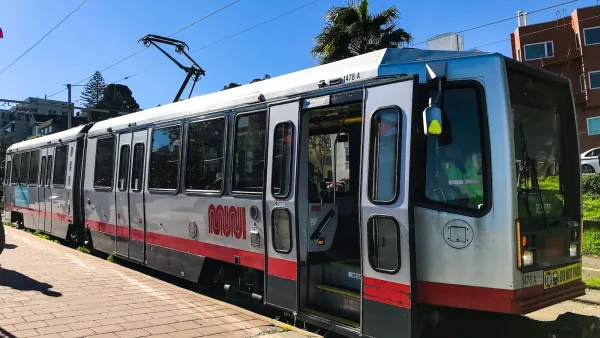
San Francisco cyclists push to allow bikes on Muni trains
The agency is one of few that bans bikes from its trains due to space constraints.
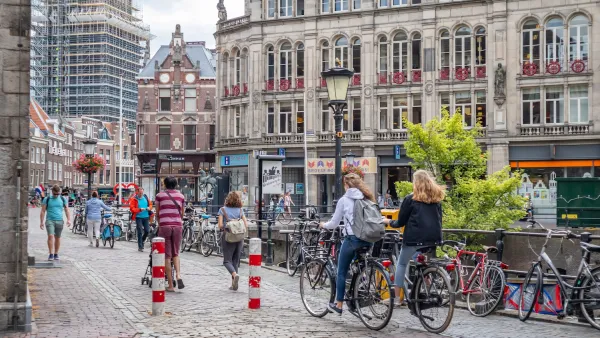
2025's 30 Most Bike-friendly Cities
Copenhagenize has released its list of top cities for cyclists. Spoiler alert: the United States doesn’t make the list.
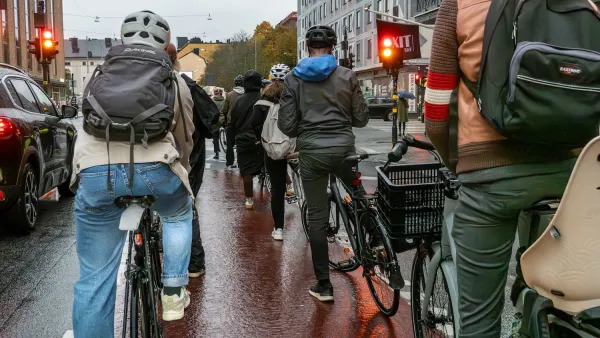
Cyclists may be Right to run Stop Signs and Red Lights. Here’s why
One researcher argues that the Idaho stop might not be such a bad idea after all.

Planetizen Federal Action Tracker
A weekly monitor of how Trump’s orders and actions are impacting planners and planning in America.

Washington state to charge fee to drivers with fuel-efficient cars
Revenue from the fee will go towards supporting the state’s highways.

Trump to blast ‘hydrocarbon highway’ through ‘world’s longest art gallery’
Environmental and historic preservation groups are suing to stop the project.

Minnesota Gold Line extension now has launch date
Plans to extend the Gold Line have existed since 2025.

Data centers need power – lower income, rural residents pay the price
In 2025, data centers paid only 38% of the energy infrastructure costs linked to their growth, with households, especially rural and low-income residents, bearing the remaining burden.

MBTA Green Line project moved to next phrase of CIG program
The modernization effort will cost $4.08 billion.

FREE Course: Walkable City 1: Why Walkability?
After describing his path towards focusing on walkability as the essence of good planning, Jeff Speck marches through his five principal reasons for making more walkable places.
Reinventing Malls: Planning Alchemy—Turning Gray Fields Into Gold
The course focuses on the opportunities and imperatives that shape reinvention of mall sites.

City of Charlotte
City of Rosemead
Rutgers University, Edward J. Bloustein School of Planning and Public Policy
University of Michigan School for Environment and Sustainability (SEAS)
Hunter College, City University of New York (CUNY)
The Architects Foundation
University District Partnership